

Quick Summary
- Primary Update: Indian travelers returning from Vietnam receive a statutory General Free Allowance of ₹50,000 for new merchandise and one duty-free laptop computer under Rule 5, alongside strict caps of two liters of alcohol and 100 cigarettes.
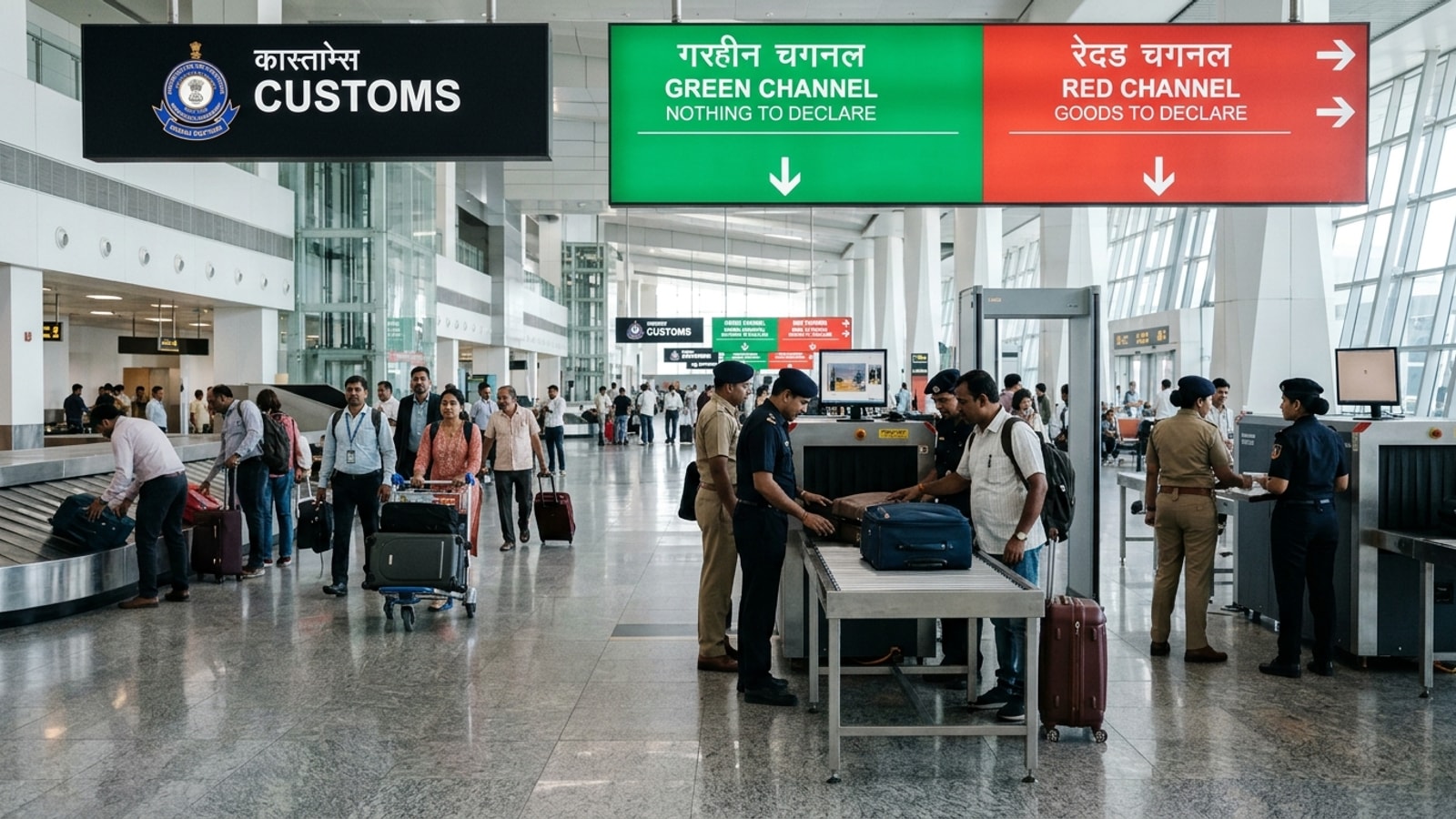
- Transit Impact: Direct flights from Hanoi (HAN), Ho Chi Minh City (SGN), and Da Nang (DAD) into Delhi (DEL T3), Mumbai (BOM T2), Bengaluru (BLR T2), Ahmedabad (AMD T2), and Kolkata (CCU) undergo inline X-ray baggage screening and targeted profiling at customs exits.
- Traveler Advice: Short-term tourists receive zero duty-free gold jewellery allowance; commercial and recreational drones remain completely banned under DGFT import mandates, vaping devices face immediate confiscation under PECA 2019, and packaged coffee or cashews pass freely if commercially sealed.
Direct air connectivity between Vietnam and India has expanded into one of the most heavily traveled international corridors in Southeast Asia. Carriers including VietJet, Vietnam Airlines, and IndiGo operate daily direct services linking Hanoi Noi Bai International (HAN Terminal 2), Ho Chi Minh City Tan Son Nhat International (SGN Terminal 2), and Da Nang International (DAD Terminal 2) to major Indian hubs including Delhi Indira Gandhi International (DEL T3), Mumbai Chhatrapati Shivaji Maharaj International (BOM T2), Bengaluru Kempegowda International (BLR T2), Ahmedabad Sardar Vallabhbhai Patel International (AMD T2), and Kolkata Netaji Subhash Chandra Bose International (CCU).
With Vietnam establishing itself as a premier destination for Indian holidaymakers, digital nomads, and shopping tourists, passenger baggage regularly contains a wide spectrum of purchases. Travelers frequently carry consumer electronics, premium smartphones, audio gear, traditional Vietnamese silk garments, lacquerware, vacuum-packed cashew nuts, specialty Robusta and Arabica coffee, and duty-free spirits acquired at outbound airport terminals.
Upon arrival at any Indian international port of entry, every passenger is subject to the statutory provisions of the Customs Act, 1962, and the Baggage Rules, 2016 (as amended), administered by the Central Board of Indirect Taxes and Customs (CBIC). Understanding the exact boundaries of duty exemptions, assessable valuations, and mandatory Red Channel declaration protocols protects returning travelers from unexpected duty assessments, punitive penalties, and baggage detentions.
Statutory Legal Framework for Vietnam Arrivals
Clearance through Indian customs operates on three distinct legal tiers: bona fide personal effects, the General Free Allowance (GFA), and restricted or prohibited commodities governed by specific statutory notifications.
Used Personal Effects vs. New Merchandise
Under Rule 3 of the Baggage Rules, 2016, bona fide personal effects required to satisfy the immediate daily needs of the traveler are cleared completely duty-free. This includes used clothing, personal footwear, personal toiletries, and an active primary personal smartphone. Personal effects exclude any merchandise carried in commercial quantities or intended for resale, gift distribution, or commercial exhibition.
General Free Allowance (GFA) Limits
For an Indian resident or a foreign national of Indian origin arriving by air from Vietnam, the statutory General Free Allowance stands at ₹50,000. Foreign tourists of non-Indian origin receive an allowance of ₹15,000.
The GFA applies to new, packaged, or unboxed articles carried as accompanied baggage. Any aggregate value of dutiable goods falling within the ₹50,000 cap enters free of duty. Dutiable items whose combined value exceeds ₹50,000 incur a standard customs duty rate of 38.5% (comprising 35% Basic Customs Duty + 10% Social Welfare Surcharge) on the value exceeding the allowance.
Strict Anti-Pooling Invariant
Indian customs regulations strictly forbid the pooling or aggregation of individual allowances across multiple passengers. Spouses, family members, or travel companions cannot combine their ₹50,000 allowances to clear a single indivisible item. For example, if a traveler purchases a camera or luxury device in Ho Chi Minh City costing ₹90,000, two family members cannot combine two ₹50,000 allowances (₹1,00,000 total) to make the item duty-free. The item will be attributed to one passenger, who receives a single ₹50,000 deduction, leaving the remaining ₹40,000 assessed at the 38.5% duty rate.
Electronics Allowances: Laptops, iPhones, and Smart Devices
Electronics represent a substantial portion of purchases made by Indian travelers visiting Southeast Asia. Customs inspectors at Indian international airports apply precise criteria to electronic items.
Rule 5 Laptop Computer Exemption
Under Rule 5 of the Baggage Rules, 2016, any passenger aged 18 years or older is legally permitted to import one laptop computer (notebook, portable PC, or MacBook) completely duty-free. This statutory exemption is granted over and above the ₹50,000 General Free Allowance.
The laptop must be accompanied personal baggage. A secondary laptop carried by the same individual does not qualify under Rule 5; its assessable value must either be absorbed by any remaining balance of the ₹50,000 GFA or face the standard 38.5% customs duty.
Carrying Multiple iPhones and Smartphones
A common scenario involves passengers carrying an existing Indian phone alongside a newly purchased iPhone acquired at retail outlets in Hanoi or Ho Chi Minh City:
- Primary Used Device: The traveler's active personal phone with an Indian SIM card and established personal data is recognized as an exempt personal effect.
- Second Device (Personal Gift or Upgrade): If a traveler carries a second phone, its assessable market value is measured against the ₹50,000 GFA. For budget or mid-range devices under ₹50,000, the phone clears duty-free if no other new items exhaust the allowance.
- High-End Flagship Phones: Flagship models such as the iPhone 16 Pro or iPhone 16 Pro Max carry price tags exceeding ₹1,10,000 to ₹1,40,000. Even after subtracting the ₹50,000 GFA, an assessable balance of ₹60,000 to ₹90,000 remains, generating an unavoidable customs duty obligation of approximately ₹23,100 to ₹34,650.
- The Unboxing Myth: Removing packaging, discarding factory boxes, or inserting a local SIM card does not convert a newly acquired phone into an exempt personal effect. Customs officers inspect IMEI registration records, serial numbers, battery health logs, and lack of domestic Indian carrier history. Presenting multiple newly activated phones as personal effects to bypass duty constitutes a false declaration under Section 77 of the Customs Act, exposing the traveler to confiscation and fiscal penalties.
Gold Jewellery, Coins, and Bullion Rules
Misconceptions regarding gold purchases in Southeast Asia frequently lead travelers into regulatory infractions at customs inspection checkpoints.
Zero Allowance for Short-Term Tourists
Short-term Indian tourists visiting Vietnam for holidays, business conferences, or weddings have zero duty-free gold allowance, regardless of whether the gold is in the form of jewellery, ornaments, or coins.
Under the statutory annexure to Rule 5 of the Baggage Rules, duty-free gold jewellery allowances are exclusively reserved for Indian passengers who have resided abroad continuously for more than one year:
- Eligible Male Passenger (>1 Year Stay Abroad): Up to 20 grams of gold jewellery, subject to a maximum financial value ceiling of ₹50,000.
- Eligible Female Passenger (>1 Year Stay Abroad): Up to 40 grams of gold jewellery, subject to a maximum financial value ceiling of ₹1,00,000.
Complete Ban on Gold Coins and Bars in Passenger Baggage
Gold coins, minted biscuits, medallions, and raw bullion bars (such as Vietnamese SJC gold bars) are strictly ineligible for the General Free Allowance or duty-free baggage provisions. Carrying commercial bullion without advance authorization, central bank clearance, and formal commercial import documentation violates Indian customs laws. Unreported gold bars or concealed ornaments discovered during luggage screening are seized under Section 110 of the Customs Act, with the carrier subject to prosecution under Section 135.
Alcohol, Tobacco, and Agricultural Produce Clearances
Specific quantitative limits apply to alcoholic beverages, tobacco products, and food items imported from Vietnam into India.
Alcohol and Tobacco Thresholds
Adult passengers aged 18 years and older may bring up to two liters of alcoholic liquor, spirits, or wine into India within their personal baggage allowance. This limit covers both duty-free purchases made at Vietnamese departure airports (HAN, SGN, DAD) and bottles packed inside checked baggage. Any quantity exceeding two liters cannot be cleared under baggage rules; excess volumes are either confiscated or subjected to commercial tariff rates exceeding 150%.
Tobacco limits are strictly enforced at a maximum of 100 cigarettes, 25 cigars, or 125 grams of manufactured tobacco per passenger.
Specialty Food Items: Coffee, Cashews, and Spices
Vietnam is world-renowned for specialty agricultural exports, which Indian travelers purchase extensively:
- Coffee (Whole Bean and Ground): Commercially packaged, roasted coffee beans and vacuum-sealed grounds (such as Trung Nguyen, Highlands Coffee, or artisanal Dalat Arabica) are permitted for personal consumption without special import permits. Raw green unroasted coffee beans are prohibited due to plant quarantine restrictions.
- Cashew Nuts and Dried Fruit: Processed, roasted, and vacuum-sealed cashew nuts, dried mango, and lotus seeds are permitted within reasonable personal quantities (typically up to 5 to 10 kg) without agricultural licensing.
- Spices and Tea: Packaged cinnamon bark, star anise, black pepper, and lotus teas in original commercial retail packaging are permitted.
- Prohibited Produce: Fresh tropical fruits (such as dragon fruit, mangosteen, or rambutan), raw seeds, live cuttings, and unsterilized soil are strictly prohibited under the Plant Quarantine (Regulation of Import into India) Order, 2003, and will be incinerated at port quarantine stations.
Absolute Prohibitions: Drones, Vapes, and Restricted Goods
Indian Customs enforces stringent border controls over specific technological and restricted goods:
- Complete Drone Import Ban: Under Directorate General of Foreign Trade (DGFT) Notification No. 54/2015-2020, the import of civilian drones—including popular recreational camera models such as the DJI Mini, Air, or Mavic series—in completely built-up (CBU), semi-knocked-down (SKD), or completely-knocked-down (CKD) form is banned via passenger baggage. Only authorized government agencies and certified R&D entities with prior DGCA and DGFT import licenses may import drones. Drones brought in passenger bags are detained at the airport on an Arrival Detention Receipt (ADR) and cannot be released for domestic clearance.
- Electronic Cigarettes and Vapes: Under the Prohibition of Electronic Cigarettes Act (PECA), 2019, the import, transport, and possession of e-cigarettes, vape pens, vape pods, heat-not-burn tobacco systems (such as IQOS), and nicotine vape juice are completely illegal in India. Customs officers confiscate these items immediately with zero reimbursement.
- Wildlife and Endangered Flora: Vietnamese agarwood (gaharu/oud), sandalwood, turtle shell ornaments, and ivory carvings are strictly prohibited under the Convention on International Trade in Endangered Species (CITES) and Schedule I of the Indian Wildlife Protection Act.
- Satellite Phones: Devices operating on Iridium, Thuraya, or Inmarsat satellite networks cannot enter India without prior written authorization from the Department of Telecommunications (DoT).
Customs Assessment Schedule (Vietnam to India)
The following structured table outlines the statutory allowances, duty rates, and clearance requirements for items arriving on flights from Vietnam:
| Commodity Category | Statutory Allowance / Threshold | Customs Duty Rate | Inspection & Operational Conditions |
|---|---|---|---|
| Used Personal Effects | No monetary limit (Rule 3) | 0% (Fully Exempt) | Used clothing, personal toiletries, primary personal phone, and worn watch. |
| General Free Allowance (GFA) | Up to ₹50,000 per passenger | 0% within cap; 38.5% on excess | Applies to Indian residents and travelers of Indian origin. Cannot be pooled across family members. |
| Personal Laptop Computer | 1 unit per passenger aged 18+ | 0% (Rule 5 Exemption) | Permitted duty-free in addition to the ₹50,000 GFA. Second laptop assessed under standard duty. |
| Secondary Smartphone / iPhone | Covered under ₹50,000 GFA | 0% if value < ₹50,000; 38.5% on excess | Must be declared at Red Channel if combined new purchases exceed ₹50,000. |
| Alcoholic Spirits & Wine | Up to 2 liters per adult (18+) | 0% within 2L cap; commercial rates above | Volumes exceeding 2 liters are detained or subject to >150% commercial customs duty. |
| Tobacco & Cigarettes | 100 cigarettes / 25 cigars / 125g | 0% within cap; dutiable above | Quantities exceeding standard caps face seizure or steep penal duty assessments. |
| Gold Jewellery (Tourists) | 0 grams | 38.5% to commercial rate | Short-term tourists have zero duty-free gold allowance. Must be formally declared. |
| Gold Jewellery (>1 Yr Stay) | Men: 20g (₹50k); Women: 40g (₹100k) | 0% within cap; concessional rate on excess | Requires documented proof of continuous overseas residency exceeding 365 days. |
| Gold Bars & Bullion | Strictly prohibited in baggage | Seizure / Criminal Action | Minted coins, biscuits, and bullion bars are barred from baggage clearance channels. |
| Packaged Coffee & Cashews | Reasonable personal use (5–10 kg) | 0% (within ₹50,000 GFA) | Must be commercially sealed, roasted, or processed. Raw agricultural produce is prohibited. |
| Civilian Camera Drones | Completely banned in baggage | Immediate detention (ADR) | DGFT notification bars consumer drones in passenger luggage; detained at port of entry. |
| E-Cigarettes & Vaping Gear | Completely banned in India | Immediate confiscation (PECA) | Total prohibition on import, possession, and transit; zero allowance or release permitted. |
Traveler Logistics Guide
Navigating the journey from departure in Vietnam to final customs exit in India requires structured preparation and adherence to airport clearance procedures.
Departure Preparation in Vietnam
- VAT Refund Claims (Noi Bai, Tan Son Nhat, Da Nang): If you purchased eligible retail goods exceeding 2,000,000 VND at participating tax-free stores in Vietnam, locate the Customs VAT Refund Inspection Counter before checking your luggage. Officers will inspect the invoices, tax refund declaration forms, and goods before stamping your paperwork. Proceed past immigration to the VAT refund payment bank counter to collect your refund in cash (VND or foreign currency).
- Invoice Organization: Retain original store receipts, credit card charge slips, and itemized bills for all newly acquired electronics, watches, or designer goods. Store these invoices inside your carry-on luggage or mobile device for immediate presentation.
- Liquor Packing Rules: If purchasing Vietnamese spirits (such as Nep Moi rice liquor or Dalat wine) outside the airport, pack them securely inside checked baggage wrapped in bubble wrap. Bottles carried in hand luggage will be confiscated at departure security checkpoints under international liquids, aerosols, and gels (LAGs) regulations.
Arrival Procedures at Indian Gateways
- Baggage Reclaim and Inline Scanning: At Delhi T3, Mumbai T2, Bengaluru T2, Ahmedabad T2, and Kolkata CCU, all checked baggage passes through automated inline X-ray screening before emerging onto carousel belts. Customs officers identify electronics, bottles, metal densities, and suspicious items, placing covert chalk markings or barcode tracking tags on bags. Tampering with or wiping off chalk marks is an offense under customs rules.
- Selecting the Correct Channel:
- Green Channel: Dedicated exclusively to travelers who have nothing to declare, carry no commercial quantities, have no prohibited items, and whose new personal purchases fall entirely within the ₹50,000 GFA.
- Red Channel: Mandatory for any traveler carrying items exceeding ₹50,000 in aggregate value, secondary unboxed electronics, gold ornaments, excess liquor, or any restricted item requiring declaration.
- The Assessment and Payment Process:
- Approach the Red Channel appraisal counter and inform the superintendent of the items you wish to declare.
- Present your purchase receipts. The customs appraiser calculates the assessable value in Indian Rupees using statutory exchange rates published by CBIC.
- The ₹50,000 GFA is deducted from the total eligible value, and a 38.5% customs duty is levied on the balance.
- Payments are accepted digitally via UPI, major credit cards, debit cards, or Indian currency at designated airport bank counters.
- Retain your signed Customs Baggage Receipt. This document serves as legal proof of legitimate duty-paid import during any subsequent domestic transit.
Frequently Asked Questions
Can I bring two iPhones from Vietnam to India without paying customs duty?
No. While one primary smartphone in active personal use is exempt as a personal effect, any second phone is categorized as dutiable merchandise. If the second phone's retail value is under ₹50,000, it can clear duty-free under your General Free Allowance provided you have no other new purchases. However, premium devices like the iPhone 16 Pro cost well above ₹1,00,000. After deducting the ₹50,000 GFA, customs duty of 38.5% is payable on the remaining value. Unboxing or removing factory packaging does not exempt the device from inspection and duty.
Am I allowed to bring packaged Vietnamese coffee and cashew nuts through Indian customs?
Yes. Commercially packaged, roasted coffee beans, ground coffee, and vacuum-sealed cashew nuts are permitted as processed foodstuffs for personal consumption within reasonable household quantities (typically up to 5 to 10 kg). They are duty-free if their total value remains within your ₹50,000 General Free Allowance. However, raw unroasted coffee beans, fresh fruits, and live agricultural plants are strictly prohibited under Indian plant quarantine laws.
Can I carry a camera drone purchased in Vietnam into India?
No. Under DGFT Notification No. 54/2015-2020, the import of consumer and commercial drones into India via passenger baggage is completely prohibited. Even compact, lightweight models under 249 grams (such as the DJI Mini series) cannot enter through passenger channels. If discovered during baggage X-ray screening at Indian airports, the drone will be detained on an Arrival Detention Receipt (ADR) and cannot be brought into the country.
How is customs duty calculated if my new electronics exceed the ₹50,000 allowance?
Customs duty on accompanied personal baggage is assessed at an effective statutory rate of 38.5% (comprising a 35% Basic Customs Duty plus a 10% Social Welfare Surcharge on the duty amount). If your total declared new merchandise is valued at ₹80,000, customs officers deduct your ₹50,000 General Free Allowance, leaving an assessable balance of ₹30,000. Applying the 38.5% rate results in an exact duty liability of ₹11,550. Declaring items honestly at the Red Channel ensures standard duty assessment without penal charges.