

Quick Summary
- Primary Update: Flying with domestic pets (dogs and cats) within India is strictly governed by carrier-specific conditions of carriage under DGCA guidelines and IATA Live Animals Regulations (LAR).
- Transit Impact: Akasa Air and Air India permit small pets inside the passenger cabin under strict weight and crate limits; SpiceJet restricts pets to the temperature-controlled cargo hold; IndiGo strictly bars all pets from cabin and hold, permitting only certified guide dogs.
- Traveler Advice: Book pet space at least 48 to 72 hours before flight departure, secure a registered veterinary fit-to-fly certificate dated within 24 to 72 hours of travel, ensure valid rabies vaccination administered at least 30 days prior, and use an IATA-compliant, leak-proof carrier.
Flying with pets on commercial aircraft requires navigating precise airline weight caps, dimensional container constraints, and strict civil aviation security protocols. In Indian commercial aviation, pet transport policies vary drastically between scheduled carriers. While select full-service and low-cost airlines have integrated dedicated pet-in-cabin programs, others prohibit live animals entirely or restrict carriage exclusively to the cargo hold.
Under Directorate General of Civil Aviation (DGCA) frameworks, live animal carriage is classified as accompanied excess baggage or manifested cargo. Pet weight is never deductible from standard passenger free baggage allowances, and pet acceptance remains contingent upon aircraft type, compartment environmental controls, and final approval from the pilot-in-command.
Airline Pet Policies in India: Cabin vs Cargo Hold
The choice of airline dictates whether your dog or cat can sit beneath the seat in front of you or must travel inside an air-conditioned cargo compartment.
1. Akasa Air ("Pets on Akasa")
Akasa Air operates one of the most structured pet carriage programs in domestic aviation. The airline permits domesticated dogs and cats across its Boeing 737 MAX fleet under two categories:
- Pet in Cabin (PETC): Pets weighing up to 7 kg, including the weight of an approved soft or hard carrier, are permitted in the passenger cabin. The container must fit completely under the seat directly in front of the passenger. Akasa limits cabin carriage to a maximum of two pets per scheduled flight, distributed across designated window and aisle seat rows.
- Pet in Cargo Hold (AVIH): Pets weighing between 7 kg and 32 kg (combined weight of animal and crate) must travel in the pressurized, temperature-controlled cargo hold as accompanied baggage. Animals weighing between 32 kg and 100 kg require specialized cargo handling and pre-cleared freight clearance.
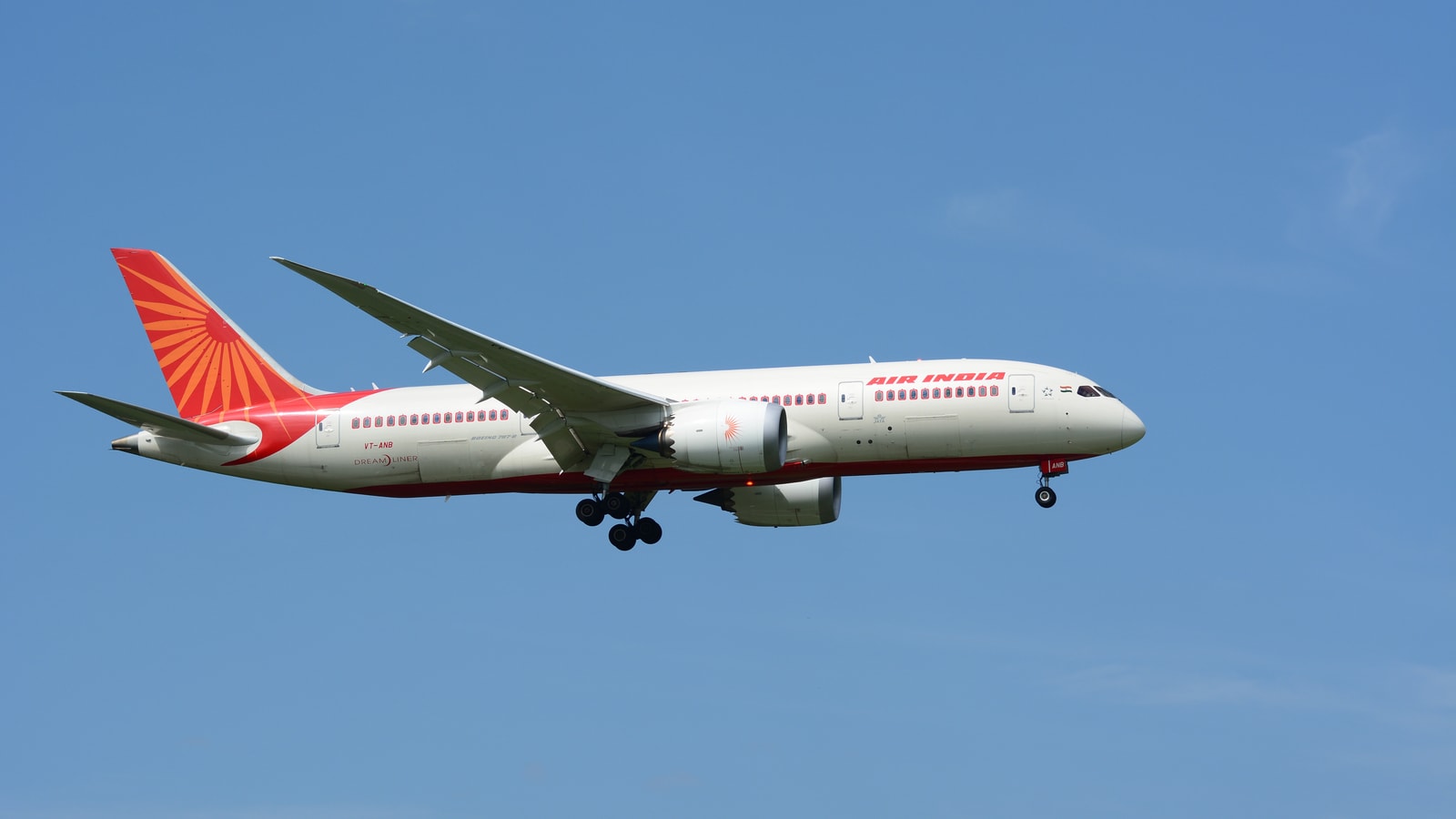
2. Air India
Air India permits domesticated dogs, cats, and small household birds on domestic sectors:
- Pet in Cabin (PETC): Small pets weighing up to 5 kg (combined weight of pet and carrier; select widebody configurations permit up to 7 kg upon station manager clearance) may travel in the cabin in Economy or Business Class. Maximum two pets are accepted per flight (typically one in the front cabin and one in the rear cabin, or seated with significant separation).
- Pet in Cargo Hold (AVIH): Pets exceeding cabin weight thresholds or large dog breeds travel in the pressurized, ventilated cargo hold in IATA-certified rigid travel kennels.
- Pricing: Air India treats pets as excess baggage. The total gross weight of the animal and its container is billed at the standard airport excess baggage slab (typically ₹550 per kg plus applicable GST), irrespective of whether the passenger carries other check-in luggage.
3. SpiceJet
SpiceJet does not permit pets inside the passenger cabin on any domestic or international flight, with the sole exception of certified service guide dogs assisting passengers with disabilities.
- Cargo Hold Carriage Only: SpiceJet accepts dogs and cats exclusively as accompanied baggage in the pressurized cargo hold (AVIH). Acceptance is restricted to Boeing 737 aircraft equipped with operational cargo heating and ventilation systems; pet transport is generally not available on regional turboprop (Q400) flights.
- Booking Window: Passengers must register pet travel requests with SpiceJet customer support at least 48 hours prior to scheduled departure.
4. IndiGo
IndiGo maintains a strict prohibition on live animals:
- Zero Pet Policy: IndiGo does not accept pets, birds, reptiles, or live animals of any kind in the passenger cabin or in aircraft cargo holds on domestic and international sectors.
- Service Dogs Exemption: The sole exception is certified service guide dogs accompanying visually or hearing-impaired passengers. A service dog travels free of charge on the cabin floor at the passenger’s feet, seated in non-emergency exit rows, provided credentials and medical certification are submitted at least 48 hours prior to flight departure.
Comparative Pet Carriage Parameters
The following operational breakdown outlines crate constraints, weight caps, pricing, and carriage modes across major scheduled airlines:
| Airline | Permitted Travel Mode | Max Cabin Weight (Pet + Crate) | Max Cabin Crate Sizer (L x W x H) | Cargo Hold Available | Standard Sector Fee (Cabin) | Advance Booking Window |
|---|---|---|---|---|---|---|
| Akasa Air | Cabin & Cargo Hold | 7 kg | 48 x 30 x 25 cm (Soft / Hard) | Yes (Up to 32 kg / 100 kg) | ₹4,999 (Hold: ₹9,999) | Min 48 hours prior |
| Air India | Cabin & Cargo Hold | 5 kg (Up to 7 kg on select flights) | 45 x 45 x 30 cm (Soft / Hard) | Yes (Up to 32 kg) | Excess Baggage Slab (~₹550/kg) | Min 48 hours prior |
| SpiceJet | Cargo Hold Only | Prohibited (Guide dogs exempt) | N/A (Hold crates per IATA LAR) | Yes (Boeing 737 only) | Cargo Excess Slabs | Min 48 hours prior |
| IndiGo | Prohibited | Prohibited (Guide dogs exempt) | N/A | No | Not Applicable | Not Available |
| Etihad Airways | Cabin & Cargo Hold | 8 kg | 40 x 40 x 22 cm (Soft container) | Yes | ~$1,500 / sector | Min 72 hours prior |
| Lufthansa | Cabin & Cargo Hold | 8 kg | 55 x 40 x 23 cm (Soft container) | Yes | €60–€100 (Continental) | Min 72 hours prior |
| Emirates | Cargo Only (Falcons exempt) | Prohibited in Cabin | N/A (Falcons permitted in cabin) | Yes (SkyCargo / AVIH) | Cargo / Manifest Rates | Min 72 hours prior |
Crate Dimensions and IATA Sizer Specifications
Airlines strictly enforce International Air Transport Association (IATA) Live Animals Regulations (LAR) for all pet containers:
-
Cabin Carriers (Soft-Sided Preferred):
- For cabin travel, soft-sided, water-repellent pet carriers are strongly recommended over rigid plastic boxes. Soft carriers can compress slightly beneath the forward aircraft seat without reducing interior airflow.
- The carrier must feature secure, claw-proof mesh ventilation panels on at least three sides.
- The base must be completely leak-proof, lined with an absorbent training pad or blanket.
- The animal must be able to stand upright, turn completely around, and lie down in a natural position without its head touching the top of the container.
-
Cargo Hold Kennels (Rigid Plastic Only):
- Soft bags and wire-mesh cages are strictly barred from the cargo hold.
- Crates must be constructed of rigid, high-impact plastic, fiberglass, or metal with welded metal door mesh.
- Fastening bolts must connect the top and bottom shells securely; snap-latch plastic clips alone are rejected by airline loading crews.
- Crate doors must feature a central locking mechanism that cannot be opened from the inside by paw pressure.
- Exterior accessible water bowls and food containers must be clamped to the wire door mesh so ground handlers can supply water during extended ground delays without unlatching the kennel.
Mandatory Veterinary Documentation
Passengers must present original physical veterinary records at the airport check-in desk. Digital copies on mobile phones are routinely rejected by airline duty managers:
- Fit-to-Fly Health Certificate: Issued and signed by a registered veterinary practitioner (holding a valid state or national veterinary council registration number). The certificate must verify that the animal is clinically healthy, free of infectious diseases, and fit to endure air transport. The document must be dated within 24 to 72 hours of flight departure (airlines reject certificates older than 3 days).
- Rabies Vaccination Certificate: Proof of active anti-rabies vaccination. The vaccine must have been administered at least 30 days prior to travel and must not have lapsed beyond 12 calendar months. Puppies and kittens under three months of age cannot be vaccinated against rabies and are categorically barred from air travel.
- Multi-Component Core Vaccinations: For dogs, valid vaccination records for Canine Distemper, Hepatitis, Parvovirus, and Leptospirosis (DHPPiL) are required. For cats, Feline Viral Rhinotracheitis, Calicivirus, and Panleukopenia (FVRCP) records must be up to date.
- Sedation Warning: DGCA rules and veterinary boards strongly counsel against administering sedatives, tranquilizers, or antihistamines to flying pets. Atmospheric pressure changes at cruising altitudes can induce sudden respiratory depression, cardiovascular shock, and hypothermia in sedated animals. Airlines reserve the right to deny boarding to any animal exhibiting signs of heavy sedation or drug-induced lethargy.
Airport Security and CISF Screening Protocols
Navigating airport security with a pet requires adhering to explicit Bureau of Civil Aviation Security (BCAS) and Central Industrial Security Force (CISF) procedures:
- Never Put Pets Through X-Ray Scanners: Under no circumstances should an animal be placed inside the tunnel baggage X-ray scanner. The conveyor scanner is calibrated exclusively for inanimate baggage and delivers dangerous radiation dosages.
- Frisking Booth Protocol: Upon reaching the CISF security checkpoint:
- Alert the screening officer that you are traveling with a cabin pet.
- Remove the pet from its carrier. The empty pet carrier is placed on the conveyor belt to pass through the X-ray machine.
- Hold your pet securely in your arms or on a short non-metallic leash and collar.
- Walk through the door frame metal detector (DFMD) with the animal.
- Proceed to a physical frisking booth or designated open inspection area where CISF personnel will inspect the animal visually and conduct explosive trace detection (ETD) swabs of your hands and the carrier exterior.
- Return the pet to the carrier immediately after clearing the screening point and lock all security zippers.
Traveler Logistics Guide
Pre-Flight Preparation (T-7 Days to Departure)
- Select Mid-Cabin Seating: When flying with a cabin pet on Air India or Akasa Air, emergency exit rows and bulkhead front rows are barred due to DGCA safety evacuation mandates. Select window or middle seats where under-seat space is clear of emergency life-vest structural obstructions.
- Pre-Book via Call Center: Never arrive at the airport expecting to add a pet on standby. Cabin quotas are limited to 2 pets per flight. Contact the airline reservations desk 48 to 72 hours prior to purchase the PETC/AVIH slot.
- Acclimate to the Crate: Train your pet to sleep and rest inside the travel carrier at home for at least one week before the flight to prevent panic, barking, or clawing during taxi and takeoff.
Day of Travel Timeline
- Fast the Animal (T-4 Hours): Withhold solid food for 4 to 6 hours prior to departure to minimize motion sickness, nausea, and in-flight defecation. Provide small sips of water up to two hours before departure.
- Arrive 3 Hours Early: Report to the airport terminal check-in counters at least 150 to 180 minutes before scheduled departure. Processing veterinary forms, verifying crate dimensions, weighing the animal, and issuing the excess baggage receipt takes 30 to 45 minutes.
- Terminal Walking: Exercise dogs outside the terminal building prior to entering the departure hall. Indian airports do not feature post-security indoor pet relief areas; ensure the animal relieves itself before clearing CISF security.
- In-Cabin Placement: The pet must remain fully enclosed inside the carrier under the forward seat throughout pushback, taxi, takeoff, cruise, and landing. Removing the animal from the carrier or placing it on your lap is a serious violation of in-flight safety rules.
Frequently Asked Questions
Can I carry a pet dog or cat on an IndiGo flight?
No. IndiGo enforces a strict zero-pet policy across all domestic and international flights. Pets are barred from both passenger cabins and aircraft cargo compartments. The only authorized exception is certified service guide dogs accompanying visually or hearing-impaired travelers, which require 48 hours advance clearance.
What happens if my pet and carrier weigh more than 7 kg on Akasa Air?
If the combined weight of your pet and its container exceeds 7 kg at the airport check-in scale, the animal cannot enter the passenger cabin. Provided the pet weighs 32 kg or less and is housed in an IATA-compliant rigid crate, Akasa Air ground staff will reassign the animal to the temperature-controlled cargo hold as accompanied baggage (AVIH), subject to the ₹9,999 cargo hold fee.
Does an airline provide pet carriers at the airport?
No. Airlines do not provide, rent, or sell pet travel crates or soft carriers at airport terminals. Passengers must procure an IATA-compliant carrier that meets exact dimensional and ventilation mandates prior to arriving at the check-in desk.
Can I take my pet out of the carrier while waiting at the departure gate?
No. Airport security and airline policies mandate that pets remain securely zipped or latched inside their approved carriers inside airport departure lounges, transit gates, and aerobridges. Animals are not permitted to roam freely on leashes inside the terminal.