

Quick Summary
- Primary Update: Apple AirTags, Samsung Galaxy SmartTags, Tile trackers, and Chipolo devices are officially permitted in both cabin baggage and checked luggage across Indian domestic flights and international itineraries under harmonized ICAO, BCAS, DGCA, FAA, and EASA safety frameworks.
- Transit Impact: Security screeners and automated Inline Baggage Handling Systems (BHS Level 1–4 CT-X-ray) permit coin-cell Bluetooth tracking devices containing under 0.3 grams of lithium metal without offloading or manual inspection; active cellular GPS trackers with larger rechargeable lithium batteries require specific airline clearance or cabin-only carriage.
- Traveler Advice: Keep trackers powered on inside checked bags without removing batteries; use Apple's iOS "Share Item Location" feature to generate secure tracking links for airline customer service agents if baggage is delayed or misrouted.
Regulatory Framework: Why Bluetooth Trackers Are Permitted in Checked Baggage
Air travel with Bluetooth-enabled luggage tags generated substantial confusion following early disputes over whether active transmitters and lithium batteries violated international hazardous material restrictions. Global regulatory bodies and Indian aviation security agencies resolved these ambiguities through explicit technical determinations.
The International Civil Aviation Organization (ICAO), the US Federal Aviation Administration (FAA), the European Union Aviation Safety Agency (EASA), and India's Directorate General of Civil Aviation (DGCA) categorize devices like Apple AirTags, Samsung Galaxy SmartTags, and Tile units as low-powered personal electronic tracking tags. These devices operate under three clear regulatory criteria:
- Lithium Content Threshold: Standard Bluetooth trackers use replaceable CR2032 lithium metal button cells (or equivalent small coin cells). These cells contain approximately 0.1 grams of lithium metal—substantially below the strict 0.3-gram limit established by ICAO Technical Instructions and DGCA Dangerous Goods Regulations for devices permitted in checked cargo holds.
- Radio Frequency Emission Levels: Bluetooth Low Energy (BLE) transmitters emit negligible electromagnetic radiation (under 10 milliwatts). Testing confirmed that BLE signals operate far below interference thresholds for modern aircraft navigation, communication, and fly-by-wire avionics systems.
- Thermal Runaway Risk: Button cell batteries lack the energy density necessary to initiate thermal runaway propagation, separating them completely from high-capacity rechargeable lithium-ion power banks and laptop packs, which remain strictly restricted to the aircraft cabin.
Indian aviation authorities, through the Bureau of Civil Aviation Security (BCAS) and DGCA Civil Aviation Requirements (CAR Section 11, Series C, Part I), allow passengers to place active Bluetooth tracking tags inside checked suitcases as well as carry-on cabin items.
Technical Specifications: Bluetooth Tags vs Cellular GPS Trackers
Airlines distinguish sharply between low-power Bluetooth beacons and high-draw cellular GPS units. Reviewing the specifications below clarifies what can remain in checked baggage versus what demands cabin placement.
| Tracker Device & Model | Battery Chemistry & Cell Size | Lithium Metal / Wh Rating | Cabin Baggage Permitted? | Checked Luggage Permitted? | Regulatory Screening Standard |
|---|---|---|---|---|---|
| Apple AirTag | Lithium Metal (CR2032) | ~0.10 g lithium metal | Yes (Unrestricted) | Yes (Unrestricted) | ICAO / BCAS / FAA compliant; no shutdown required |
| Samsung Galaxy SmartTag2 | Lithium Metal (CR2032) | ~0.10 g lithium metal | Yes (Unrestricted) | Yes (Unrestricted) | BLE + UWB compliant; safe for cargo hold |
| Tile Pro / Mate | Lithium Metal (CR2032 / Non-replaceable) | ~0.08–0.10 g lithium metal | Yes (Unrestricted) | Yes (Unrestricted) | Meets ICAO <0.3g limit; verified by inline BHS |
| Chipolo ONE / Card Point | Lithium Metal (CR2032 / Integrated) | ~0.09 g lithium metal | Yes (Unrestricted) | Yes (Unrestricted) | Compatible with Apple Find My / Google Find Hub |
| Pebblebee Clip / Card | Rechargeable Li-Polymer | <0.5 Wh capacity | Yes (Unrestricted) | Yes (Unrestricted) | Micro-rechargeable cell well below 2.7Wh limit |
| Cellular GPS Trackers (Tracki, Spytec) | Rechargeable Li-ion (Rechargeable) | 2.5 Wh to 10.0 Wh | Yes (Must meet cabin limits) | Conditional / Power Off | Active GSM/LTE transmissions require sleep mode |
| Smart Suitcase (Built-in Power Bank) | Lithium-ion Battery Pack | >10 Wh to 100 Wh | Yes (Must be removed) | Banned unless battery removed | Battery must travel in cabin; shell checks empty |
BCAS Inline X-Ray Screening at Indian Airports
At major Indian hubs—including Delhi Indira Gandhi International (DEL), Mumbai Chhatrapati Shivaji Maharaj International (BOM), Bengaluru Kempegowda International (BLR), Chennai (MAA), Hyderabad Rajiv Gandhi International (HYD), and Kolkata Netaji Subhash Chandra Bose International (CCU)—checked luggage moves through multi-tier automated Baggage Handling Systems (BHS) equipped with advanced Computed Tomography X-ray (CT-X-ray) scanners.
How Inline CT Scanners Process AirTags
- Automated Threat Recognition: Inline BHS Level 1 and Level 2 scanners analyze atomic number ($Z_{\text{eff}}$) and organic mass density. Small coin-cell devices match standard database signatures for consumer electronics accessories rather than prohibited explosive or incendiary assemblies.
- Exemption from Manual Physical Inspection: Unlike spare loose lithium-ion cylindrical cells (such as 18650 cells), vape mods, or high-capacity power banks—which trigger mandatory Level 3 physical reconciliation and passenger call-outs—CR2032 button cells inside an AirTag or SmartTag do not trigger automated baggage rejections.
- Physical Secondary Checks: On rare occasions where a tracker sits directly adjacent to dense metal hardware (such as heavy locks, shoe trees, or thick brass buckles), screener software may flag an image shadow. Airport screening personnel confirm the benign nature of the tag on high-resolution monitors without requiring passenger deplaning.
Airline Policies Across Major Indian and Global Carriers
Major commercial airlines operating in India and along primary international long-haul corridors officially endorse passenger tracking tags.
       Baggage Check-In Counter (IndiGo, Air India, Emirates, Singapore Airlines)
                                      │
           ┌──────────────────────────┴──────────────────────────┐
           ▼                                                     ▼
  Bluetooth Tracker (AirTag/SmartTag)                  Cellular GPS Unit (GSM/LTE)
           │                                                     │
  • CR2032 battery (<0.3g lithium)                      • High-capacity Li-ion cell
  • Low-power BLE beacon (<10mW)                        • Periodic high-gain broadcast
           │                                                     │
  Permitted in Checked Luggage                         Must be powered OFF or carried
  No shutdown or removal needed                        in cabin under IATA regulations
IndiGo
IndiGo accepts Apple AirTags and comparable tracking tags across domestic and 6E international networks. IndiGo ground handling staff at terminal check-in counters do not require passengers to remove or declare Bluetooth tags inside checked luggage.
Air India and Air India Express
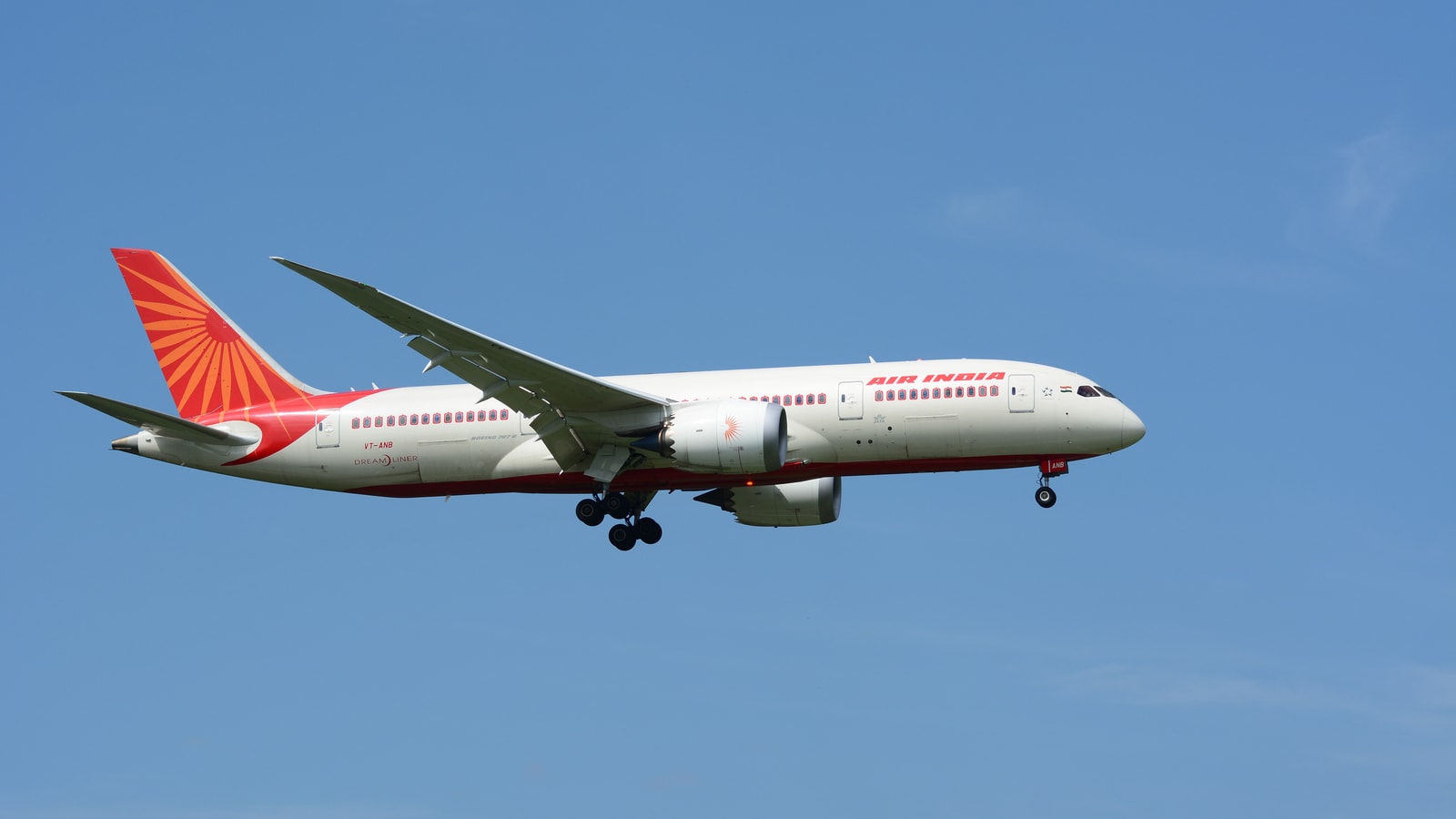
Air India permits passengers to track checked and cabin luggage with active Bluetooth tags across Boeing 777, 787, Airbus A350, and narrowbody fleets. Ground personnel are familiar with Apple AirTag signatures, and baggage resolution desks at Terminal 3 Delhi and Terminal 2 Mumbai accept passenger tracking coordinates to accelerate delivery of mishandled bags.
Emirates, Qatar Airways, and Etihad
Gulf hub carriers encourage tracking tags to streamline transit reconciliation through Dubai International (DXB), Doha Hamad International (DOH), and Abu Dhabi Zayed International (AUH). Transit security checkpoints allow bags containing verified AirTags to transfer between connecting flights without secondary holds.
Singapore Airlines, British Airways, and Lufthansa
Lufthansa lifted its temporary 2022 restriction after German aviation regulators and the ICAO confirmed that button-cell tracking tags posed no operational risk. Singapore Airlines and British Airways officially integrate passenger location data into their WorldTracer baggage resolution workflows.
The Apple "Share Item Location" Integration
A primary development for air travelers is Apple's "Share Item Location" architecture, integrated into modern airline baggage recovery systems.
- Direct Secure Link Sharing: Travelers experiencing delayed baggage can open the Find My application on an iPhone, iPad, or Mac, select their tagged luggage, and generate a temporary "Share Item Location" web link.
- Airline Desk Access: Passengers provide this secure URL to customer service agents at the airport baggage service desk. Airline personnel open the link on authorized customer service terminals to view the bag's exact real-time map location, nearby Bluetooth device detections, and location timestamps.
- Privacy and Expiration Protocols: The shared location link automatically disables as soon as the traveler is reunited with the bag, or after seven days have elapsed. Travelers can also revoke access manually at any moment with a single tap.
- Integration with Global Ground Handlers: Leading global aviation groups and handling agencies (including SITA, Swissport, and Dnata) utilize this interface to pinpoint missing bags trapped in transfer basements, remote tarmac staging areas, or incorrect aircraft containers (Unit Load Devices).
Traveler Logistics Guide
Following structured packing and digital preparation protocols prevents baggage delays and ensures immediate recovery if an airline misroutes a suitcase.
  PACKING & TRACKING WORKFLOW FOR AIRLINE FLIGHTS

  [1] Pre-Flight Preparation
      └── Test battery level in Find My / SmartThings app
      └── Replace battery if notification shows <20% reserve
      └── Pair device and assign clear label (e.g., "Main Samsonite Black")

  [2] Suitcase Placement Strategy
      └── Place tag inside internal zippered fabric pocket
      └── Position away from dense metal frame tubes and TSA locks
      └── Do NOT wrap in aluminum foil or heavy metallic shielding

  [3] Airport Check-In & Departure
      └── Confirm tag updates at departure terminal gate
      └── Check bag normally; no verbal declaration needed for CR2032 tags

  [4] Transit & Arrival Monitoring
      └── Check connection status during layovers (DXB, DOH, SIN, LHR)
      └── Verify arrival at carousel before approaching baggage counter

  [5] Irregularity Resolution (If Bag Missing)
      └── Immediately file Property Irregularity Report (PIR)
      └── Generate Apple "Share Item Location" link
      └── Provide URL and physical screenshot to baggage service agent
1. Battery Maintenance and Replacement Schedule
- Standard CR2032 batteries power an AirTag or SmartTag for roughly 12 months. Open the tracker management application three days before travel to verify battery health.
- Replace cells displaying low-charge indicators with standard CR2032 lithium button cells. When purchasing replacements, avoid bitterant-coated button cells with thick non-conductive coatings, which occasionally disrupt electrical contact in AirTag battery compartments.
2. Optimal Placement Inside Luggage
- Avoid Shielding: Place the tracker inside an interior fabric pocket near the center or top of the suitcase. Never place the tag inside metal travel vaults, aluminum cosmetic cases, or adjacent to heavy laptops and camera lenses, which block Bluetooth signals.
- Concealment: Keep the tag zipped securely inside luggage lining rather than attached to external handles with flimsy keyrings. Exterior tags risk being sheared off by high-speed airport baggage conveyor belts, sorter diverter arms, and cargo hold loading ramps.
3. Handling Lost Baggage at the Destination Airport
If your bag fails to appear on the arrival carousel:
- Check Real-Time App Location: Confirm whether the tag reports a location at your arrival airport (e.g., ramp area, baggage makeup room, or previous transfer hub).
- File a Property Irregularity Report (PIR): Proceed immediately to the airline's baggage service counter inside the secure arrival hall before passing customs. Do not leave the hall without obtaining a written PIR number with an assigned file reference (e.g., DELAI12345).
- Present Location Evidence: Inform the agent that the suitcase contains an active tracker. Show the live map reading, the timestamp of the last ping, and supply the "Share Item Location" link directly to the agent.
- Demand Delivery Confirmation: Under DGCA Passenger Charter rules in India and Montreal Convention standards internationally, the airline remains legally responsible for couriering recovered bags directly to your home or hotel address at airline expense.
Frequently Asked Questions
Will BCAS or CISF confiscate an Apple AirTag from my checked luggage at Indian airports?
No. Bureau of Civil Aviation Security (BCAS) and Central Industrial Security Force (CISF) personnel do not confiscate Apple AirTags or standard Bluetooth luggage trackers from checked baggage. The CR2032 lithium metal coin cell contains roughly 0.1 grams of lithium, well below the 0.3-gram limit permitted in aircraft cargo compartments under ICAO and DGCA dangerous goods standards.
Do I need to remove the CR2032 battery or power down my AirTag before flying?
No. Regulators and airlines specifically permit Bluetooth Low Energy trackers to remain active throughout the flight. The device operates at minute transmission strengths (under 10 milliwatts) that cause zero interference with aircraft instruments. Removing the battery defeats the purpose of tracking your luggage across connection hubs and tarmac transfers.
How does Apple's Share Item Location work with Air India and international airline baggage desks?
On devices running iOS 18.2 or later, open the Find My app, select your AirTag, and tap "Share Item Location." The app generates a secure web link that displays the live location of your suitcase on an interactive map. When you file a Property Irregularity Report (PIR) for delayed luggage, share this link with the airline representative. The agent opens the URL on their terminal to identify where the bag is sitting within the airport or transfer hub.
Can I pack an AirTag inside an international transit bag transferring through Dubai, Doha, or Singapore?
Yes. Transit hubs including Dubai International (DXB), Doha Hamad (DOH), and Singapore Changi (SIN) handle millions of transfer bags daily using automated high-speed sortation. AirTags and SmartTags are fully permitted in international transfer luggage and provide valuable visibility during tight 45-to-60-minute connections, alerting you if your bag missed the transfer flight before you reach your final destination.