

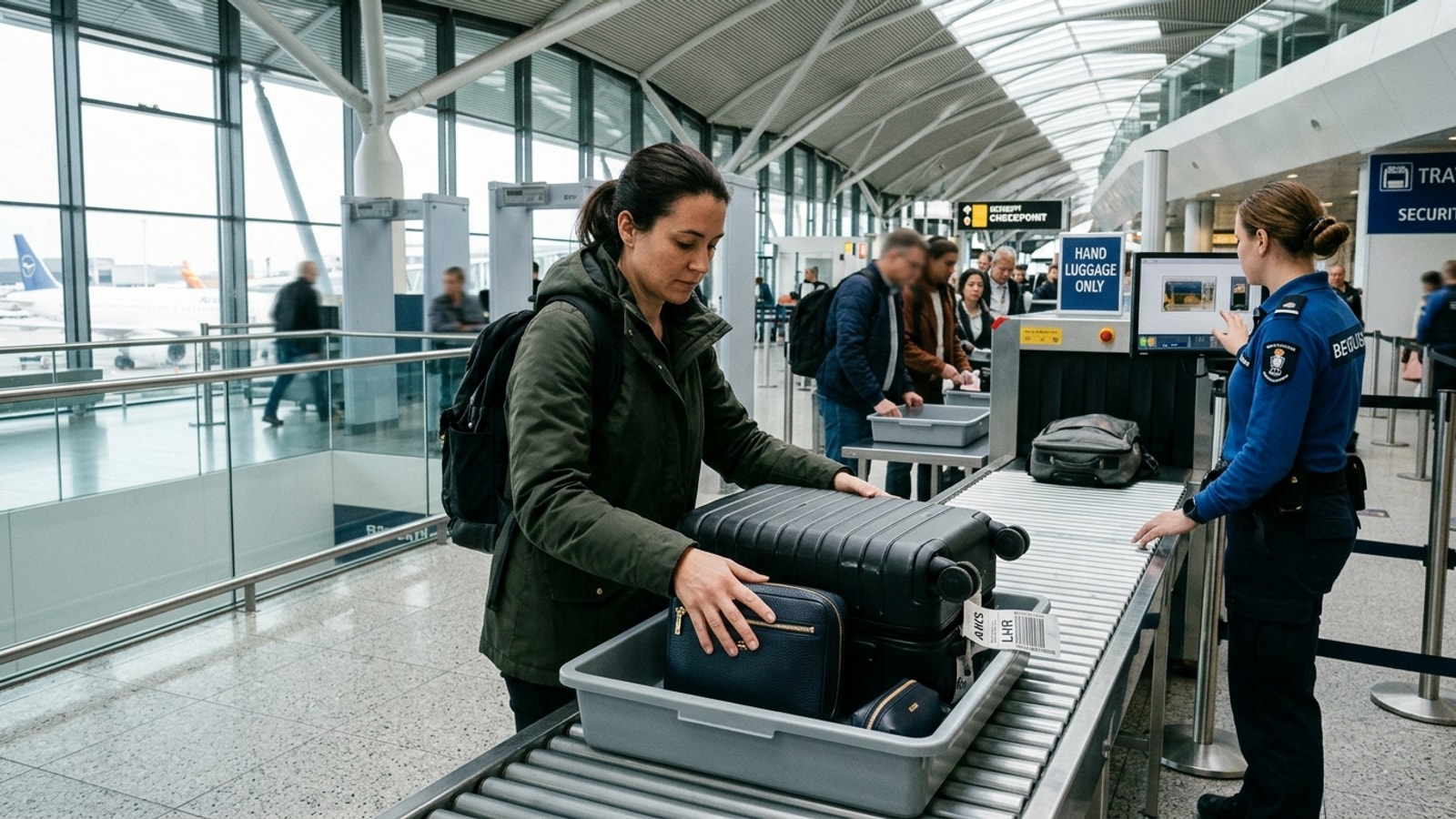
Quick Summary
- Primary Update: Aviation security regulators and commercial airlines strictly require passengers to pack high-value gold jewellery, precious gemstones, bullion, and cash exclusively in hand carry-on baggage; airlines completely disclaim financial liability for lost, stolen, or damaged valuables placed inside checked hold baggage.
- Transit Impact: Domestic flights across India enforce no statutory weight or value ceiling on personal gold jewellery, but Central Industrial Security Force (CISF) screening officers cross-examine dense metallic masses; commercial bullion or unaccounted cash exceeding statutory thresholds triggers immediate referral to Income Tax surveillance flying squads.
- Traveler Advice: Always carry jewellery inside a secure, un-checked backpack or handbag; never surrender baggage containing precious ornaments if gate agents demand gate-checking on crowded flights; carry original purchase invoices or wedding invitations for high-value collections; and secure an official Customs Export Certificate before flying abroad to prevent heavy import duties upon return.
Every week, tens of thousands of Indian families travel by air for weddings, religious ceremonies, and festive gatherings, transporting substantial collections of gold necklaces, diamond sets, bangles, and family heirlooms. Navigating airport terminals with high-value jewellery involves addressing two immediate operational concerns: clearing aviation security screening without confiscation delays and ensuring precious items are protected against theft or baggage loss.
Carrying precious metals on commercial flights sits at the intersection of civil aviation security protocols, commercial airline conditions of carriage, and statutory tax and customs regulations. Misunderstanding where and how gold should be packed leads to severe financial risks, invasive checkpoint questioning, or the irreversible loss of family heirlooms.
Cabin vs Checked Baggage: The Liability Exclusion Reality
The single most critical rule when traveling with gold jewellery is that it must never be placed inside checked luggage. All scheduled Indian and international carriers—including IndiGo, Air India, Akasa Air, SpiceJet, Emirates, and Singapore Airlines—explicitly classify jewellery, bullion, negotiable currency, and precious stones as unacceptable items for carriage in the aircraft cargo hold.
Under the Carriage by Air Act, 1972, and the international Montreal Convention 1999, commercial airlines operate under strict statutory caps regarding lost or damaged checked baggage:
- Domestic Flight Compensation Limits: On domestic flights within India, an airline's statutory liability for lost checked baggage is capped at approximately ₹350 to ₹450 per kilogram, up to an aggregate maximum of ₹20,000 per passenger, regardless of the actual contents of the bag.
- International Flight Compensation Limits: Under the Montreal Convention, liability for checked luggage is capped at 1,288 Special Drawing Rights (SDRs)—roughly ₹1.45 lakh to ₹1.5 lakh—per passenger, irrespective of whether the bag contained a designer dress or a ₹25 lakh bridal necklace.
- Explicit Exclusion Clauses: Carrier contracts (Conditions of Carriage) explicitly state that if a passenger packs jewellery, watches, cash, or precious metals inside checked baggage in violation of warnings, the airline bears zero liability for theft, pilferage, or mysterious disappearance by baggage handlers or ramp staff.
Ramp theft and baggage tampering remain persistent risks at cargo sorting facilities globally. Padlocks and zipper locks on checked suitcases provide negligible protection against illicit intrusion using basic tools. Consequently, both the Bureau of Civil Aviation Security (BCAS) and airline passenger guidelines demand that all jewellery remain in the passenger's immediate physical custody inside cabin hand luggage at all times.
CISF Security Screening: Metal Detectors and X-Ray Scanners
Passengers carrying valuable jewellery frequently worry about being stopped at Central Industrial Security Force (CISF) security checkpoints at Indian airports like Delhi Indira Gandhi International (DEL), Mumbai Chhatrapati Shivaji Maharaj International (BOM), and Bengaluru Kempegowda International (BLR). Understanding how checkpoint screening technology operates dispels common misconceptions.
+----------------------------------------------------------------------------------------------------+
|                                CISF AIRPORT SECURITY SCREENING PATHWAY                             |
+----------------------------------------------------------------------------------------------------+
                                                                                                     |
                                                                                                     +
           |                                                                                         |
           v                                                                             v
 [ PASSENGER PHYSICAL SCREENING ]                                              [ CABIN BAGGAGE X-RAY ]
           |                                                                                         |
           v                                                                             v
 Door-Frame Metal Detector (DFMD)                                             Dual-Energy X-Ray Scanner
           |                                                                                         |
    Alarm Triggers?                                                             High-Density Metal Mass?
    /            \                                                              /                      \
  YES             NO                                                          YES                       NO
   |               |                                                           |                     |
Hand-Held      Clear to Gate                                             Physical Inspection         Bag Cleared
Metal Detector (HHMD)                                                    (Pouch opened in tray)
(Mangalsutra/Rings checked)                                                    |
                                                                         Suspicious Bullion or Cash?
                                                                         /                         \
                                                                       YES                          NO
                                                                        |                            |
                                                                  ITD / DRI Referral            Clear to Gate
Door-Frame Metal Detectors (DFMD) and Worn Ornaments
Passengers are entirely permitted to wear standard personal jewellery while walking through the security door-frame metal detector.
- Everyday items such as gold wedding bands, thin chains, stud earrings, and lightweight mangalsutras rarely generate enough magnetic flux disturbance to trip modern DFMD systems.
- Heavy gold bangles, solid silver anklets (payals), broad temple jewellery chokers, or dense metallic hair ornaments will trigger an audible beep.
- When an alarm occurs, CISF personnel use a Hand-Held Metal Detector (HHMD) to localize the signal. Once the officer confirms that the signal originates from personal body ornaments rather than concealed weapons or contraband, the passenger is promptly cleared. You are not required to strip off daily-wear jewellery into open plastic trays unless specifically asked during high-threat security alerts.
Dual-Energy X-Ray Inspection of Packed Jewellery
Gold is one of the densest elements encountered in civil aviation security (atomic number 79; density 19.32 g/cm³). On dual-energy airport baggage X-ray monitors, inorganic substances with high atomic weights attenuate X-ray beams heavily and appear as distinct dark blue or pitch-black silhouettes.
- A pouch containing several gold necklaces, bangles, and rings will produce a dense, opaque shape that prevents the X-ray scanner from seeing through underlying bag contents.
- CISF screeners will systematically divert the tray for a manual bag search.
- During a secondary bag check, security officers will request that you open the zipper of the jewellery case to confirm that the dense object is personal jewellery and not a lead-lined container, explosive detonator, or prohibited tool.
- Once the screener visually identifies the ornaments, the bag is returned immediately. Passengers have the right to request that this manual inspection take place in a private screening room if opening a jewellery pouch publicly poses safety or privacy concerns.
CISF’s legal mandate under the Aircraft Act, 1934, and BCAS circulars is strictly confined to civil aviation security—specifically interdicting weapons, explosives, and dangerous goods. CISF screeners do not collect customs duties or assess personal taxes on domestic routes.
Domestic vs International Flights: Limits, Tax Proofs, and Paperwork
While the physical screening procedure is uniform, the legal and tax frameworks differ substantially between domestic flights within India and international departures.
| Metric / Scenario | Domestic Flight (Personal Jewellery) | Domestic Flight (Commercial Bullion / Bars) | International Flight Departure | International Flight Arrival (Return to India) |
|---|---|---|---|---|
| Approved Baggage Location | Cabin hand luggage only | Cabin hand luggage only | Cabin hand luggage only | Cabin hand luggage only |
| Aviation Security Limit | No weight limit (must fit 7kg cabin allowance) | No weight limit (must fit 7kg cabin allowance) | No weight limit (must fit 7kg cabin allowance) | No weight limit (must fit 7kg cabin allowance) |
| Screening Appearance | Opaque blue/black X-ray image; secondary visual check | Highly opaque block; mandatory physical inspection | Opaque blue/black X-ray image; visual verification | Standard customs X-ray scan at Green/Red Channel |
| Mandatory Documentation | Purchase bills or wedding invites (for heavy sets) | GST Tax Invoice, E-Way Bill, Hallmarking certificate | Customs Export Certificate (Appraisal Sheet) | Export Certificate or Foreign Purchase Bills |
| Primary Regulatory Body | CISF (Security) / CBDT (Income Tax checks) | CISF (Security) / DGGI / State GST squads | Indian Customs / CISF | Indian Customs (CBIC) |
| Seizure / Duty Risk | Unaccounted assets during election/tax surveillance | Confiscation if moving without e-way bills | Low (unless carrying prohibited antiquities) | High: 38.5% customs duty if lacking Export Certificate |
| Airline Loss Liability | Explicitly excluded for checked baggage | Explicitly excluded for checked baggage | Excluded in checked hold; Montreal Cap (1,288 SDRs) | Excluded in checked hold; Montreal Cap (1,288 SDRs) |
Domestic Flights: Quantity Limits and Income Tax Guidelines
Under Indian aviation regulations, there is no maximum legal limit on the weight or valuation of gold jewellery a passenger may carry on a domestic flight, provided the items fit within the standard cabin baggage allowance (typically 7kg for low-cost carriers like IndiGo and Akasa Air, or 7kg to 10kg on full-service carriers like Air India).
However, domestic passengers fall under the jurisdiction of the Central Board of Direct Taxes (CBDT). Under CBDT Instruction No. 1916 (upheld consistently across Indian tax tribunals):
- Tax authorities will not seize personal gold jewellery during inspections up to the following thresholds:
- 500 grams for a married woman
- 250 grams for an unmarried woman
- 100 grams for a male family member
- If a passenger carries quantities exceeding these thresholds—such as 1 to 2 kilograms of bridal gold for a family wedding—it is entirely legal, but the passenger should carry corroborating documentation: original jeweller tax invoices, hallmark receipts, or a copy of the wedding invitation card to establish legitimate family provenance.
- Cash and Bullion Curbs: If a passenger carries gold bullion bars, raw gold coins, or cash exceeding ₹50,000 to ₹10 lakh (particularly during State Legislative or General Election periods when the Model Code of Conduct is in force), CISF personnel are legally required to notify the airport Income Tax Investigation Directorate and police flying squads to inspect the funds.
International Departures: The Customs Export Certificate Trap
Traveling outside India with existing Indian gold jewellery requires advance planning. If you are flying to destinations such as Dubai, Thailand, Singapore, Europe, or the United States for an overseas family wedding, Indian Customs can stop you upon your return to India at the Red Channel.
Customs officers cannot easily distinguish whether your gold ornaments were taken from India or newly purchased abroad. Without prior proof, customs will demand import duty, Agriculture Infrastructure and Development Cess (AIDC), and GST, totaling up to 38.5% of the appraised value.
To avoid this, passengers must obtain an Export Certificate before leaving India:
- Arrival at the Airport: Arrive at the international departure terminal (T3 at DEL, T2 at BOM, T2 at BLR) 4 to 5 hours prior to your scheduled flight departure.
- Visit the Customs Departure Office: Before clearing immigration and security, report to the Customs Superintendent at the departure hall with your packed jewellery, original jewellery purchase invoices, passport, and boarding pass.
- Appraisal and Certification: The customs-empanelled appraiser examines the jewellery, records the gross weight, net gold weight, purity, stone weight, and descriptions, and takes photographs.
- Endorsement: The customs officer issues a stamped, signed non-transferable Export Certificate.
- Re-Entry Verification: When returning to India weeks or months later, declare the jewellery at the customs Red Channel and present the Export Certificate. Officers verify the weights against the document and clear the items completely duty-free.
Traveler Logistics Guide
Transporting valuable ornaments requires adherence to a strict operational checklist at every phase of air travel.
Pre-Departure Packing Protocol
- Use Dedicated Soft-Shell Cases: Pack jewellery in padded, zip-around jewellery organizers rather than loose velvet boxes, which consume excessive space and draw visual attention.
- Integrate into Personal Carry-On: Place the jewellery case inside your primary personal item—such as a laptop backpack, executive briefcase, or tote bag—rather than a rollaboard suitcase. A personal backpack remains under the seat in front of you throughout the flight, keeping it within sight and physical reach.
- Never Pack in Checked Suitcases: Never yield to the temptation of packing extra jewellery inside checked luggage to avoid cabin weight sizers.
Navigating Security Screening Checkpoints
- Keep Jewellery Inside the Bag: Do not place loose jewellery or unzipped jewellery pouches directly into plastic airport screening bins. Plastic bins pass through hundreds of hands, creating severe theft opportunities. Keep the pouch securely zipped inside your closed carry-on bag.
- Prepare for Secondary Inspection: If the X-ray operator diverts your bag for manual inspection due to metal density, calmly accompany the officer. Never allow the bag out of your line of sight.
- Request a Private Screening Enclosure: Under BCAS directives, every airport security checkpoint maintains private screening cubicles. If an officer asks you to expose valuable diamond or gold sets in a crowded concourse, politely request: "Please conduct this manual check inside the private inspection booth." The officer must comply.
Overhead Bin and Gate-Check Hazards
- Resist Compulsory Gate-Checking: On high-load flights operated by IndiGo, Akasa Air, or SpiceJet, gate agents frequently intercept passengers on the jet bridge and mandate checking wheeled rollaboard bags into the cargo hold due to overhead bin saturation ("pink gate-tagging").
- Valuables Extraction Mandate: If an airline agent insists that your cabin trolley must be gate-checked, immediately open the suitcase and remove your jewellery case, laptop, and medicine pouch to keep in your hands. Never surrender a bag containing jewellery to the aircraft hold under any circumstances.
- In-Flight Bin Placement: When stowing your carry-on in the overhead compartment, place it in the locker directly across from your seat rather than directly above your head. This lets you observe anyone opening the compartment during transit or disembarkation.
Frequently Asked Questions
Can I pack gold jewellery in checked baggage on IndiGo or Air India?
No. You should never pack gold jewellery, precious stones, or currency in checked baggage. Airlines explicitly exclude liability for valuables in their Conditions of Carriage under the Carriage by Air Act. If your jewellery is stolen or missing from the cargo hold, compensation is capped at statutory weight limits (approximately ₹350–₹450 per kg domestically, or 1,288 SDRs internationally), leaving you completely unprotected against substantial financial losses.
What is the maximum limit of gold jewellery allowed on domestic flights in India?
There is no statutory weight limit for personal gold jewellery on domestic flights under aviation security or DGCA regulations, provided your hand baggage complies with the airline's standard cabin allowance (typically 7kg). Under CBDT guidelines, married women may carry up to 500 grams, unmarried women up to 250 grams, and men up to 100 grams without proof of income. Higher quantities are permissible for weddings or family functions, but you should carry original purchase invoices or wedding invitations to address inquiries from tax surveillance teams.
Will CISF confiscate my gold jewellery at airport security screening?
No. The CISF screens passengers strictly for aviation security threats, including explosives, weapons, and dangerous goods. Because gold is a dense metal, it appears opaque on X-ray monitors and may trigger a routine physical bag inspection. Once the screener verifies that the item is personal jewellery, your bag is cleared. CISF officers do not seize personal jewellery on domestic flights unless they uncover suspected commercial smuggling, illegal bullion, or unaccounted cash exceeding statutory reporting thresholds.
How can I take gold jewellery abroad for a destination wedding without paying customs duty upon return?
Before departing India, report to the Customs Departure Office at the international airport terminal with your jewellery, original purchase invoices, passport, and boarding pass. Request an official Customs Export Certificate. An empanelled appraiser will record the exact weight, specifications, and photographs of the ornaments. When you return to India, present this certificate at the customs Red Channel to clear your jewellery completely duty-free.
What should I do if an airline gate agent forces me to gate-check my cabin trolley?
If an airline agent insists on gate-checking your rollaboard suitcase due to crowded overhead lockers, immediately inform them that the bag contains high-value personal valuables. Remove the jewellery case, electronic devices, and essential medications from the suitcase and carry them aboard by hand. Under airline carriage rules, passengers are strictly prohibited from checking valuables into the cargo hold.