

Quick Summary
- Primary Update: Indian Customs enforces strict baggage inspection protocols for passengers arriving from Amsterdam Schiphol Airport (AMS) and regional Dutch airports under the Baggage Rules 2016 framework for the 2026 travel season.
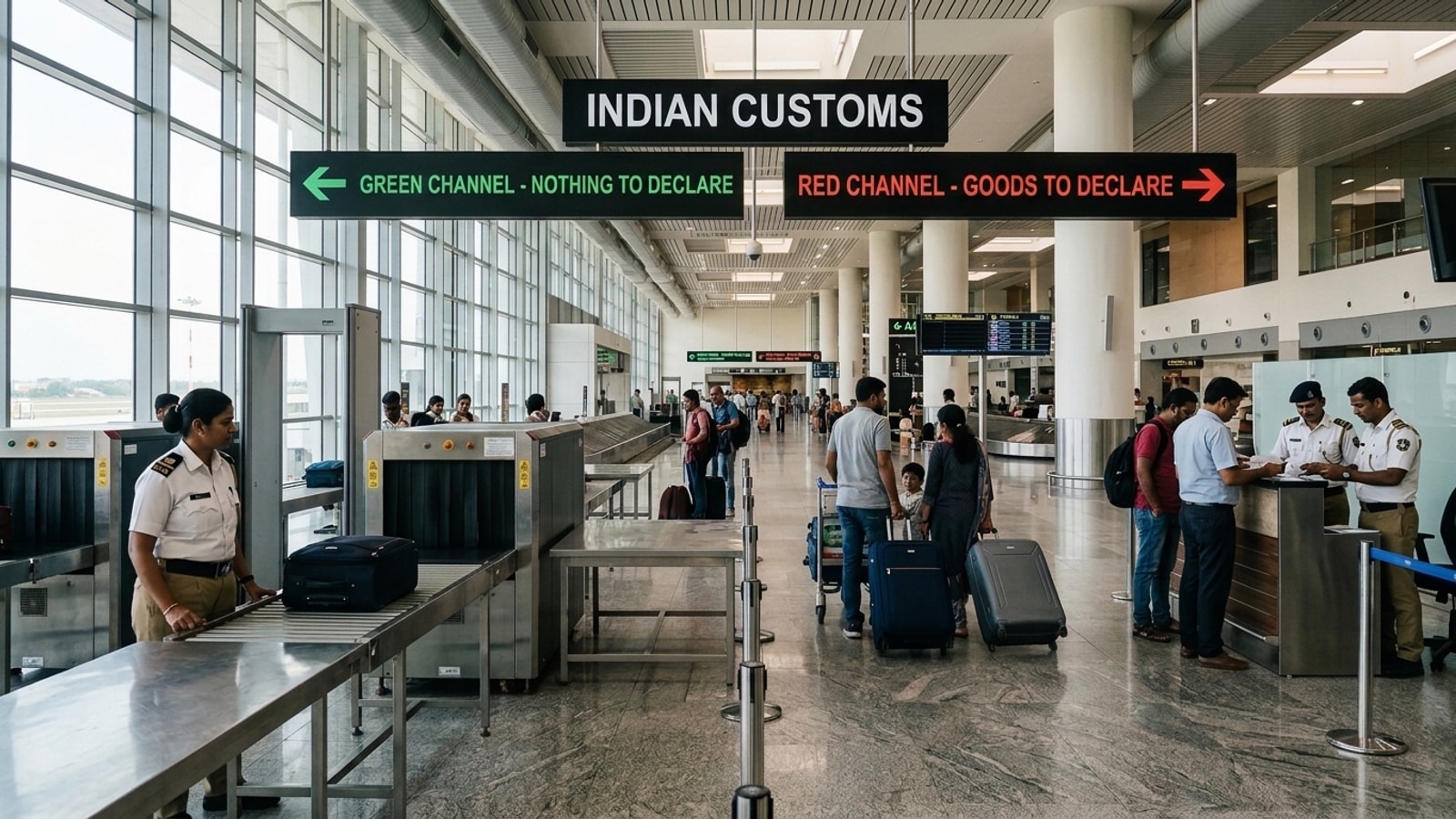
- Transit Impact: Direct KLM and Air India flights, as well as transit connections landing at Delhi (DEL), Mumbai (BOM), and Bengaluru (BLR), undergo baggage X-ray screenings; undeclared electronics, commercial Dutch goods, or restricted substances trigger mandatory Red Channel diversion with 38.5% baseline customs duty and statutory penalties.
- Traveler Advice: Adult travelers receive a ₹50,000 General Free Allowance (GFA) plus one duty-free personal laptop; all cannabis, CBD, and electronic cigarette products legally purchased in the Netherlands are strictly prohibited under Indian federal law and face immediate confiscation and criminal prosecution.
International travelers flying from the Netherlands to India navigate dual customs jurisdictions: the European Union export controls overseen by the Dutch Tax and Customs Administration (Douane) at Amsterdam Airport Schiphol, and the Central Board of Indirect Taxes and Customs (CBIC) border control checkpoints across Indian international arrival terminals.
With Amsterdam serving as a primary transatlantic and European transit hub connecting North America, the United Kingdom, and Western Europe to major Indian metropolises, understanding exact allowance thresholds prevents costly baggage detentions, penalty adjudications, and confiscations.
2026 Indian Customs Baggage Allowance Framework
Under Rule 3 and Rule 4 of the Indian Baggage Rules 2016 (as amended through 2026), international passengers arriving by air are categorized based on residency status, duration of overseas stay, and age. The general rules apply equally whether an itinerary originates at Amsterdam Schiphol or connects through European gateways.
| Category / Item Type | Duty-Free Allowance Threshold | Applicable Customs Duty on Excess | Mandatory Documentation / Clearance Channel |
|---|---|---|---|
| General Free Allowance (GFA) | ₹50,000 per adult passenger (Indian resident or tourist of Indian origin) | 38.5% composite duty (35% basic + 10% SWS) | Green Channel if within limit; Red Channel if exceeded |
| Personal Laptop Computer | 1 laptop unit duty-free (passengers aged 18 and older) under Rule 5 | 38.5% on second or commercial laptop units | Green Channel for first laptop; Red Channel for second unit |
| Gold Jewellery (Male Passenger) | Up to 20 grams, max value ₹50,000 (requires >1 year stay abroad) | 38.5% if exceeding weight/value; standard tariff if under 1 year | Red Channel mandatory declaration |
| Gold Jewellery (Female Passenger) | Up to 40 grams, max value ₹1,00,000 (requires >1 year stay abroad) | 38.5% if exceeding weight/value; standard tariff if under 1 year | Red Channel mandatory declaration |
| Gold Bars, Ingots & Coins | Nil duty-free allowance; strictly dutiable/restricted | 13.75% concessional (eligible NRIs) or 38.5% standard tariff | Red Channel mandatory; requires serial documentation |
| Alcoholic Beverages / Spirits | Up to 2.0 liters of spirits, wine, or beer per adult passenger | ~366.5% effective composite tariff (150% BCD + AIDC + SWS) | Green Channel (up to 2L); Red Channel for any excess |
| Tobacco / Cigarettes | 100 cigarettes, 25 cigars, or 125 grams of tobacco | Dutiable beyond allowance; commercial limits apply | Green Channel (within cap); Red Channel if exceeded |
| Commercial Packaged Dutch Cheese & Stroopwafels | Covered under ₹50,000 GFA if sealed and for personal consumption | Commercial quantities attract standard food import duties | Green Channel if personal; Red Channel if commercial quantity |
| Cannabis, CBD Oils & Edibles | Strictly prohibited (Zero tolerance under NDPS Act) | Absolute seizure, arrest, and non-bailable prosecution | Prohibited item; cannot be imported or declared |
| Commercial Drones & Unmanned Aircraft | Strictly prohibited in passenger baggage (DGFT directive) | Confiscation and Section 112 monetary penalties | Prohibited item; detained at airport customs warehouse |
General Free Allowance (GFA) and Pooling Restrictions
The ₹50,000 General Free Allowance permits eligible travelers to carry personal used items, gifts, and souvenirs without paying customs duty. However, Indian Customs strictly enforces statutory boundaries on how this allowance operates:
- Individual Entitlement Only: The ₹50,000 allowance is individual and non-transferable. It cannot be pooled or combined across family members or traveling companions. A husband and wife cannot combine their allowances to import a single high-value item worth ₹90,000 duty-free. The entire item is evaluated against one passenger's entitlement, and duty is assessed on the excess balance.
- Exclusion of High-Value Luxury Goods: The GFA cannot be used to absorb gold bars, raw silver, commercial electronics inventory, or commercial merchandise intended for resale.
- Children Under 10 Years: Minor children under the age of 10 traveling on an Indian passport or as passengers of Indian origin receive an allowance capped at ₹15,000, which applies exclusively to personal effects and toys.
- Foreign Tourists: Foreign tourists visiting India (non-Indian passport holders without OCI cards) receive an allowance capped at ₹15,000 for personal gifts and souvenirs.
Electronics, Laptops, and Smartphone Import Rules
Electronics purchased in the Netherlands, such as smartphones, tablets, cameras, and noise-canceling headphones, represent common items inspected at Indian airport screening belts.
Rule 5 Laptop Computer Exemption
Rule 5 of the Baggage Rules 2016 grants an explicit statutory exemption for one laptop computer:
- Any passenger aged 18 years or older is entitled to bring one laptop computer (notebook, MacBook, or portable PC) into India completely free of customs duty.
- This laptop exemption is granted in addition to the ₹50,000 GFA. The value of your primary personal laptop does not deduct from your ₹50,000 allowance.
- If a traveler carries two laptops (for example, a company-issued work machine and a personal laptop), only one unit qualifies for the Rule 5 duty-free exemption. The second laptop must be declared. Its appraised depreciated value is deducted from the ₹50,000 GFA. Any residual value exceeding the GFA incurs standard customs duty at 38.5%.
Carrying Multiple iPhones and Smartphones
Carrying a primary smartphone in personal use (unboxed, with an active SIM card and personal data) is classified as a personal effect under Rule 2 and enters duty-free.
- Bringing a second sealed or boxed smartphone (such as an iPhone purchased in Amsterdam or at Schiphol Duty Free) must be declared.
- If the value of the second smartphone is within the ₹50,000 GFA (and no other dutiable goods exhaust the allowance), it clears without duty.
- If the smartphone's purchase value exceeds ₹50,000 (e.g., an iPhone costing ₹1,10,000), customs officials deduct the ₹50,000 GFA, leaving an assessable value of ₹60,000. Duty at 38.5% is levied on that ₹60,000 balance, resulting in a payable tax of ₹23,100.
- Attempting to conceal multiple boxed smartphones in checked luggage to evade detection triggers seizure under Section 111 of the Customs Act, along with penalties under Section 112.
Gold Jewellery and Bullion Regulations
Indian Customs maintains stringent surveillance on gold imports due to price differentials between European/Middle Eastern bullion markets and domestic Indian exchanges.
Duty-Free Gold Jewellery for Returning Residents
Duty-free gold allowances apply exclusively to passengers who have resided outside India for a continuous period of at least one year:
- Gentlemen Passengers: Permitted up to 20 grams of gold jewellery, with an aggregate value cap of ₹50,000.
- Ladies Passengers: Permitted up to 40 grams of gold jewellery, with an aggregate value cap of ₹1,00,000.
- Short-Term Tourists: Indian residents returning from a European vacation or business trip of less than one year receive zero duty-free gold allowance. Any gold jewellery purchased abroad must be declared at the Red Channel and is taxed at the composite 38.5% rate.
Gold Bars, Coins, and Biscuits
Gold coins, raw gold bars, and bullion biscuits do not qualify for any duty-free baggage allowance, regardless of stay duration.
- Returning Non-Resident Indians (NRIs) who have stayed abroad for more than six months can import up to 1 kilogram of gold bars or coins by declaring them at the Red Channel and paying concessional customs duty in convertible foreign currency.
- Passengers returning from short visits cannot import gold bullion through passenger baggage channels. Undeclared gold coins or bars discovered during scanning are confiscated, and the passenger faces fiscal penalties and potential arrest under Section 135 of the Customs Act.
Dutch Specialties: Cheese, Chocolates, Beer, and Cannabis Prohibitions
Travelers departing Amsterdam frequently carry iconic Dutch culinary items and souvenirs. The regulatory classification depends on biological and statutory restrictions:
Gouda, Edam Cheese, and Stroopwafels
- Commercially packaged, vacuum-sealed hard and semi-hard cheeses (such as Gouda, Edam, or Maasdam) purchased from Dutch supermarkets or airport retail shops are permitted in checked baggage for personal consumption.
- Loose, raw, artisanal unpasteurized dairy, fresh meat, sausages, and poultry are restricted under Indian animal biosecurity rules and risk quarantine seizure by animal biosecurity officers at arrival ports.
- Dutch packaged waffles (stroopwafels), chocolates, biscuits, and confectionery clear freely within the ₹50,000 GFA.
Alcohol and Dutch Beers
- Every adult passenger (aged 18 or older) can import up to 2.0 liters of alcoholic beverages (including Dutch jenever, gin, spirits, wine, or Dutch beers such as Heineken) duty-free.
- The 2.0-liter volume cap is strictly enforced. It applies across all alcoholic types combined (e.g., you cannot bring 2 liters of spirits plus a 6-pack of beer).
- Any volume exceeding 2.0 liters cannot be cleared under the GFA. Excess alcohol incurs a steep aggregate customs tariff of approximately 366.5% (comprising 150% Basic Customs Duty, Agriculture Infrastructure Cess, and Social Welfare Surcharge).
Strict Federal Warning: Cannabis, Edibles, and CBD
While recreational cannabis and CBD products are legally sold in licensed Dutch coffeeshops and retail outlets in Amsterdam, India enforces zero tolerance under the Narcotic Drugs and Psychotropic Substances (NDPS) Act, 1985:
- Cannabis buds, weed-infused cookies, brownies, gummies, drinks, CBD vape cartridges, and hemp extracts are classified as illicit narcotics under Indian law.
- Carrying any quantity—even residual traces or medical CBD oil—results in mandatory arrest upon arrival in India.
- NDPS offenses are non-bailable, carry minimum sentences of 10 to 20 years of rigorous imprisonment, and lead to immediate blacklisting and passport impoundment. Travelers must rigorously verify that no confectioneries or wellness oils purchased in the Netherlands contain cannabis extracts or cannabinoids.
Prohibited Items: Drones, Vapes, and Satellite Phones
Several items legal to own and purchase in the Netherlands cannot be imported into India in passenger baggage:
- Civilian Drones (DJI, Autel, etc.): The Directorate General of Foreign Trade (DGFT) Notification No. 54/2015-2020 explicitly prohibits the import of drones in passenger baggage. Even nano-drones (<250g) and camera drones purchased for hobby use will be detained at Indian customs counters. Unclaimed drones are forfeited to the government.
- Electronic Cigarettes and Vapes: The Prohibition of Electronic Cigarettes Act (PECA) 2019 bans the import, sale, and transport of e-cigarettes, vape pens, and flavored cartridges. They cannot clear customs and are confiscated at arrival screening.
- Satellite Phones: Devices such as Iridium, Thuraya, or Inmarsat satellite communicators are strictly prohibited unless accompanied by prior written clearance from the Department of Telecommunications (DoT). Undeclared satellite phones result in immediate detention and police inquiry.
Traveler Logistics Guide
To ensure a smooth transition through customs upon arrival at Delhi Indira Gandhi International (DEL), Mumbai Chhatrapati Shivaji Maharaj International (BOM), Bengaluru Kempegowda International (BLR), or other Indian airports, follow this operational checklist:
Pre-Departure Preparation in Amsterdam
- Retain Purchase Receipts: Keep printed or digital copies of invoices for all high-value items, watches, perfumes, designer apparel, and electronics acquired in Europe. Customs officials rely on verifiable invoices to assess fair market value; in the absence of an invoice, officers apply the international retail database valuation, which is often higher.
- Pack Liquids in Checked Baggage: Dutch jenever, liqueurs, and wine bottles must travel in checked luggage unless purchased inside the airside duty-free zone at Amsterdam Schiphol and sealed in an authorized Tamper-Evident Bag (STEB) with the receipt visible.
- Download the ATITHI Customs Mobile App: The Central Board of Indirect Taxes and Customs provides the official ATITHI mobile application. Passengers can complete their advance baggage declaration digitally before landing, generating a QR code that customs officers scan at the Red Channel counter.
Arrival Channel Clearance Protocols
Upon collecting checked luggage from the baggage carousels in India, travelers must choose between two distinct channels:
| Clearance Channel | Eligibility Criteria | Action Required |
|---|---|---|
| Green Channel | Baggage strictly within ₹50,000 GFA, 1 laptop, up to 2L alcohol, personal used effects only. | Proceed directly towards exit; subject to random customs profiling and luggage X-ray scans. |
| Red Channel | Goods exceeding ₹50,000 GFA, second laptop, commercial quantities, gold jewellery exceeding caps, currency >$5,000 cash. | Present ATITHI declaration or declaration slip, declare items to Customs Officer, pay 38.5% duty via card/UPI, obtain official receipt. |
- Payment Methods: Customs duties can be paid via Indian debit/credit cards, UPI, or designated airport bank counters located adjacent to the Red Channel desks. Always obtain an official signed and stamped Customs Duty Receipt (Challan) before leaving the hall.
Frequently Asked Questions
Can my spouse and I combine our ₹50,000 allowances to bring an expensive item?
No. Indian Customs rules explicitly prohibit pooling of allowances. Each passenger's allowance is strictly personal. If a single item (such as an Apple MacBook Pro or a designer handbag) costs ₹90,000, it cannot be split across two passenger quotas. It will be assessed against one traveler, who receives their ₹50,000 deduction, leaving ₹40,000 subject to standard customs duty at 38.5%.
How much cash in Euros or Indian Rupees can I carry from the Netherlands to India?
Under Reserve Bank of India (RBI) regulations, Indian residents can bring up to ₹25,000 in Indian currency notes. For foreign currency (Euros or US Dollars), there is no upper limit on how much you can bring into India. However, if aggregate foreign currency notes exceed US$5,000 (or equivalent in Euros), or if total foreign exchange (cash plus travelers' checks) exceeds US$10,000, you must submit a Currency Declaration Form (CDF) at the Red Channel customs counter upon arrival.
What is the penalty for walking through the Green Channel with an undeclared iPhone?
If customs officers intercept a passenger in the Green Channel carrying an undeclared, boxed iPhone valued above the ₹50,000 allowance, the standard GFA exemption is forfeited. Customs assesses the full 38.5% customs duty on the entire value, plus a redemption fine (typically 10% to 25% of the market value) under Section 125, alongside an adjudication penalty under Section 112. Declaring the phone honestly at the Red Channel ensures you receive your ₹50,000 GFA deduction and pay only the legitimate duty on the balance, without any fines or penalties.
Can I carry cheese and stroopwafels in my cabin hand luggage?
Commercially packaged stroopwafels, dry biscuits, and chocolates are permitted in cabin baggage. However, soft or semi-solid cheeses (such as goat cheese, brie, or cheese spreads) are classified as liquids, aerosols, and gels (LAGs) by Schiphol airport security screeners and cannot exceed the 100ml container restriction in carry-on bags. Hard cheeses (mature Gouda) are generally accepted in hand luggage, but packing all cheese in checked luggage avoids delays at security checkpoints.