

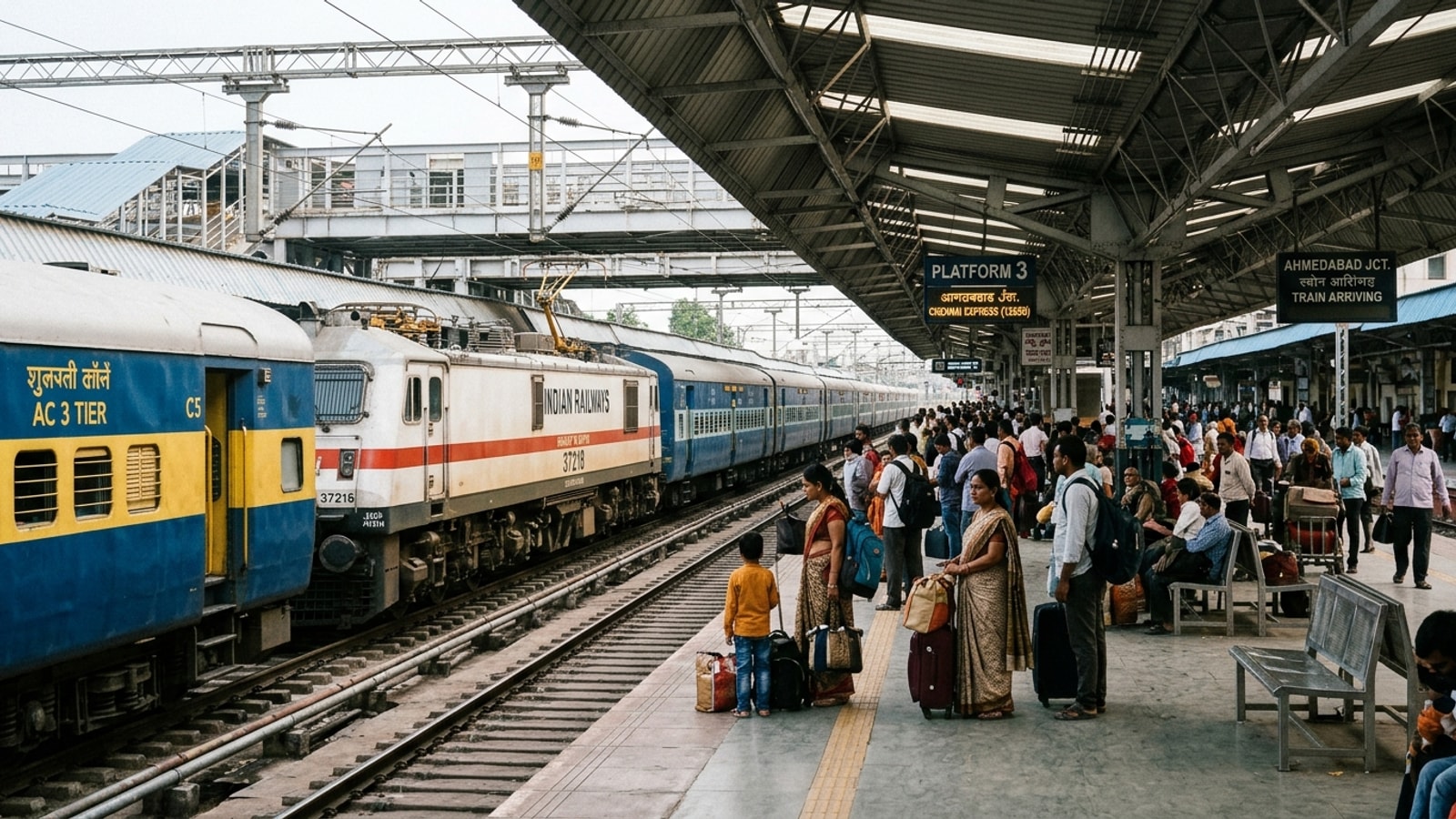
Quick Summary
- Primary Update: Indian Railways and IRCTC enforce the Connecting Journey Booking scheme under Railway Board Commercial Circular No. 67/2018, enabling passengers to link two separate PNRs to protect itineraries against transit disruptions.
- Transit Impact: Linking PNRs guarantees a 100% full refund on the connecting ticket without clerkage or cancellation deductions if the first train arrives late, alongside rights to alternative train accommodation endorsed by station authorities.
- Traveler Advice: Link PNRs during booking or post-issuance via the IRCTC portal before the first train departs, confirm primary passenger details match across both tickets, and file an online TDR within three hours of actual train arrival if a connection is broken.
Traveling across the Indian Railways network frequently requires transferring between two separate services when direct trains are unavailable, fully booked, or scheduled at inconvenient hours. Historically, booking two independent tickets carried immense financial and logistical risk. If the first train suffered an operational delay en route, the passenger would arrive at the interchange station only to find that the connecting service had already departed. Because the second train's reservation chart had already been prepared, the Passenger Reservation System (PRS) treated the passenger as a no-show, forfeiting the entire fare or imposing severe late-cancellation penalties.
To eliminate this vulnerability, the Ministry of Railways and the Centre for Railway Information Systems (CRIS) introduced the official Connecting Journey Booking and PNR Linking feature. Codified under Commercial Circular No. 67/2018 and integrated into the Indian Railway Catering and Tourism Corporation (IRCTC) booking portal and mobile app, this framework formally recognizes multi-leg rail journeys. Understanding the technical requirements of PNR linking, station cluster groupings, layover minimums, and Ticket Deposit Receipt (TDR) filing cutoffs ensures passengers retain complete financial protection and re-accommodation rights across every railway zone.
Architectural Mechanics of IRCTC Connecting Journey Booking
The Connecting Journey Booking facility establishes a digital relationship between two separate Passenger Name Records (PNRs). In railway terminology, the first leg is designated as the Main Journey (Train 1), while the second leg is designated as the Connecting Journey (Train 2).
[ ORIGIN STATION ] ======> TRAIN 1 (Main PNR) ======> [ INTERCHANGE JUNCTION / CLUSTER ]
                                                                  |
                                                    Minimum Layover Buffer Met?
                                                    Passenger Identity Matches?
                                                                  |
[ FINAL DESTINATION ] <=== TRAIN 2 (Connecting PNR) <=============+

* Operational Protection: If Train 1 delay breaks connection -> 100% Zero-Deduction Refund
Passengers can establish this link through three primary pathways:
- Simultaneous Booking on IRCTC: While initiating a train search on the IRCTC desktop website or Rail Connect app, travelers check the "Connecting Journey Booking" checkbox on the main search panel. The user selects and reserves Train 1, and the portal immediately prompts for the subsequent destination, automatically linking the generated PNRs.
- Sequential Booking with Pre-Existing PNR: When a traveler already holds a confirmed or RAC ticket for Train 1, they check "Connecting Journey Booking" during the search for Train 2. The portal prompts the user to enter the existing PNR number. The system queries the CRIS database, validates station eligibility and transit windows, and attaches PNR 1 to the new transaction.
- Post-Issuance Linking via User Dashboard: Travelers who booked both tickets separately can connect them retroactively through the "Link PNR" utility found under the "Connecting Journey Booking" tab within the "My Transactions" menu of their IRCTC account.
Integration Between PRS Counter Tickets and E-Tickets
A major strength of the railway framework is cross-platform interoperability. A passenger holding a computer-printed PRS counter paper ticket purchased at a physical railway station reservation office can link it to an online e-ticket booked on IRCTC. To complete this linkage:
- The counter ticket PNR must be entered on the IRCTC portal while booking the e-ticket leg, or linked through the dashboard.
- The mobile number recorded on the PRS counter reservation requisition form must match the mobile profile on the IRCTC account to pass two-factor one-time password (OTP) verification.
- Two physical counter tickets can also be linked by presenting both requisition slips simultaneously to the reservation clerk at any computerised PRS counter before reservation charts are prepared.
Station Cluster Rules and Geographical Compatibility
A frequent point of confusion among travelers is whether the arrival station of Train 1 must be physically identical to the departure station of Train 2. Indian Railways recognizes that major metropolitan transit centers operate multiple terminal stations connected by suburban rail, metro lines, and arterial roadways.
Under CRIS scheduling parameters, the destination station of Train 1 and the boarding station of Train 2 must either be the exact same station code or belong to the same notified Railway Station Cluster.
Major Approved Railway Terminal Clusters
- Delhi National Capital Region Cluster: New Delhi (NDLS), Delhi Junction / Old Delhi (DLI), Hazrat Nizamuddin (NZM), Anand Vihar Terminal (ANVT), Delhi Sarai Rohilla (DEE), and Delhi Cantt (DEC).
- Mumbai Metropolitan Cluster: Chhatrapati Shivaji Maharaj Terminus (CSMT), Dadar Central (DR), Dadar Western (DDR), Lokmanya Tilak Terminus (LTT), Bandra Terminus (BDTS), Mumbai Central (MMCT), and Borivali (BVI).
- Kolkata Urban Cluster: Howrah Junction (HWH), Sealdah (SDAH), Kolkata Chitpur (KOAA), Shalimar (SHM), and Santragachi (SRC).
- Chennai Metropolitan Cluster: Chennai Central (MAS), Chennai Egmore (MS), and Tambaram (TBM).
- Bengaluru Urban Cluster: KSR Bengaluru City (SBC), Yesvantpur Junction (YPR), Sir M. Visvesvaraya Terminal Bengaluru (SMVB), Bengaluru Cantt (BNC), and Yelahanka Junction (YNK).
- Hyderabad Twin Cities Cluster: Secunderabad Junction (SC), Hyderabad Deccan / Nampally (HYB), Kacheguda (KCG), and Lingampalli (LPI).
Connection Category      | Minimum Required Layover Window  | Maximum Allowable Layover Window

Same Railway Station     | Minimum 1 to 2 Hours             | Maximum 24 Hours
Inter-Cluster Stations   | Minimum 3 Hours                  | Maximum 24 Hours
If a passenger attempts to link two PNRs where the arrival of Train 1 at New Delhi (NDLS) and the departure of Train 2 from Anand Vihar Terminal (ANVT) have only an 80-minute scheduled gap, the CRIS validation engine rejects the link. Inter-cluster connections enforce a mandatory minimum buffer—typically three hours—to account for urban transit times across city lines.
Strict Identity Matching and Booking Constraints
To prevent scalping and ensure legitimate passenger protection, Indian Railways applies rigid data-matching rules to all linked PNR transactions:
- Passenger Detail Alignment: The passenger name, age, and gender on PNR 2 must correspond with the passenger details on PNR 1. On group tickets, the primary traveler whose name heads the itinerary must remain consistent.
- Single-Chain Limitation: A PNR can only be linked to one other PNR. Indian Railways does not permit cascading three-way linkages (PNR 1 to PNR 2 to PNR 3). Travelers completing three-leg itineraries must choose which connection carries the highest risk of disruption and link those two legs specifically.
- Boarding Point Modification Restrictions: Once two PNRs are linked, altering the boarding point on PNR 2 to a station outside the designated cluster breaks the linkage validation, nullifying missed-connection protections.
- Cancellation Independence: Voluntarily cancelling Train 1 does not automatically cancel Train 2. The secondary ticket remains active until the passenger explicitly cancels it, subject to standard cancellation rules if done voluntarily without train disruption.
Technical Specifications: Connecting Journey Policy
The following structured table outlines the operational parameters, timing cutoffs, and regulatory entitlements governing linked PNR journeys across Indian Railways:
| Transit Feature / Parameter | Operational Rule & Requirement | Prescribed Time Buffer | Passenger Entitlement & Refund Impact |
|---|---|---|---|
| Same-Station Connection | Arrival and departure at identical station code (e.g., NDLS to NDLS) | Scheduled gap between 1 and 24 hours | 100% refund of Train 2 fare if Train 1 delay breaks connection |
| Multi-Station Cluster Transfer | Transfer between designated cluster terminals (e.g., HWH to SDAH) | Minimum 3 hours; maximum 24 hours | Full refund on Train 2; urban transfer buffer legally safeguarded |
| Passenger Detail Matching | Name, age, and gender must match across both reservations | Validated at time of linking | Discrepant passenger names cause automatic rejection of link request |
| Tatkal Quota Linking | Connecting ticket (Train 2) booked under Tatkal (CK) quota | Booked within 24-hr Tatkal window | Missed connection overrides Tatkal zero-refund rule; full refund granted |
| Waitlist / RAC Interaction | PNR 2 status may be Confirmed, RAC, or Waitlisted at booking | Subject to chart preparation rules | If Train 1 arrives late, waitlist clerkage deductions are waived |
| Online TDR Filing Cutoff | Mandatory digital claim if connection missed at junction | Within 3 hours of actual arrival of Train 1 | Full refund processed to original payment method via CRIS audit |
| Station Master Certificate | Physical endorsement issued at the interchange station | Obtained immediately upon Train 1 arrival | Entitles traveler to alternative train travel in equivalent class |
| Origin Return Abandonment | Passenger elects to abandon journey and return to origin | Surrendered at connecting station | Full refund on both legs, deducting only distance travelled on Leg 1 |
Missed Train Protocols and 100% Refund Entitlements
When Train 1 experiences en route delays, weather diversions, or locomotive failures that cause the traveler to miss the departure of Train 2, the protective shield of the linking scheme activates automatically. Under standard railway rules, missing a train after reservation chart preparation results in a total loss of the ticket price. Under Commercial Circular No. 67/2018, the passenger receives comprehensive financial and operational relief.
                       TRAIN 1 ARRIVES LATE AT JUNCTION
                                                              |
              +-----------------------+-----------------------+
              |                                               |
              V                                               V
     [ OPTION A: DIGITAL ]                           [ OPTION B: PHYSICAL ]
   File Online TDR on IRCTC                       Approach Station Master / CRS
Reason: "Missed Connection..."                  Obtain Certificate of Late Running
Deadline: Within 3 Hrs of Arrival              Endorse Ticket for Next Available Train
              |                                               |
              V                                               V
   100% Zero-Clerkage Refund                       Board Next Train in Same Class
1. Full Refund Without Cancellation or Clerkage Charges
If the traveler chooses not to continue the journey, the entire fare paid for the second leg (PNR 2) is refunded in full. Unlike standard voluntary cancellations, Indian Railways does not deduct any flat cancellation fees (which range from ₹60 for Second Class to ₹240 for 1AC) or clerkage fees. The refund is credited directly to the original bank account, debit card, credit card, or UPI handle used during booking.
2. Tatkal Quota Exemption
Under standard conditions, confirmed Tatkal tickets carry an absolute zero-refund policy upon cancellation. However, when a Tatkal ticket is linked as PNR 2 in a Connecting Journey booking and the connection is broken due to the delay of Train 1, the zero-refund restriction is completely superseded. The passenger receives a full refund of both the basic railway fare and the entire Tatkal premium surcharge.
3. Total Journey Abandonment and Origin Return
If a passenger reaches the interchange junction late and decides that continuing the journey is pointless because an event, meeting, or interview has passed, they may abandon the entire itinerary. Upon surrendering the tickets at the interchange station:
- The passenger is entitled to a full refund for the untraveled portion of the itinerary.
- If the passenger requests to return to the originating station, the railway administration provides free travel on the next available return service, or issues a full refund for the entire ticket cost, retaining only the fare equivalent for the distance already traversed.
4. Cancellation of First Train by Indian Railways
If Train 1 is cancelled entirely by Indian Railways due to track maintenance, waterlogging, or severe weather disruptions, the cancellation of PNR 1 automatically triggers full refund eligibility for PNR 2. Passengers holding e-tickets receive an automatic refund for both PNRs without needing to file a manual TDR.
Alternative Travel Endorsement on Next Available Train
A missed connection does not necessarily mean the traveler must return home or purchase an expensive emergency ticket. Railway regulations empower local operating authorities to re-accommodate stranded passengers on subsequent services running on the same route.
Station Master and CRS Endorsement Powers
Upon arrival at the interchange junction, the passenger can present both linked PNRs to the Station Master, Station Superintendent, or the Chief Reservation Supervisor (CRS) at the platform concourse.
- Verification of Late Running: The station official accesses the Control Office Application (COA) and National Train Enquiry System (NTES) to confirm the actual arrival timestamp of Train 1 relative to the scheduled departure timestamp of Train 2.
- Physical Endorsement: The official endorses the physical ticket copy or e-ticket printout with an official station stamp and signature, documenting: "Missed connection due to late arrival of Train [Number] on [Date]. Permitted to travel by Train [Number] in [Class]."
- Berth Allocation by On-Board TTE: The passenger boards the designated subsequent train and presents the endorsed ticket to the Train Ticket Examiner (TTE). The TTE is authorized to allocate any vacant berth or unallotted RAC accommodation in the corresponding travel class without levying penalty fees, excess fare tickets (EFT), or difference of fare charges.
Traveler Logistics Guide
To protect multi-leg train travel against disruption, follow this operational checklist before departure, while en route, and upon reaching the interchange junction.
[ PRE-JOURNEY ]  * Verify passenger names and age match character-for-character across PNRs
                 * Verify scheduled layover meets 2-hour (same station) or 3-hour (cluster) rule
                 * Confirm "Connected PNR" banner appears in IRCTC booking history

[ EN ROUTE ]     * Track Train 1 live running status via NTES or official GPS tools
                 * Calculate real-time arrival buffer at the connecting station
                 * Alert TTE on Train 1 if the connection is running dangerously tight

[ AT JUNCTION ]  * If connection is broken, immediately note Train 1 actual platform arrival time
                 * Choice A: Approach Station Master within 1 hour for next-train endorsement
                 * Choice B: File online IRCTC TDR within 3 hours of actual arrival for refund
Step 1: Pre-Journey Linking Verification
- Log in to your IRCTC account and navigate to My Account > My Transactions > Booked Ticket History.
- Select PNR 2 and verify that the ticket details display the associated PNR 1 number under the heading Connected Journey Information.
- If the PNRs were booked separately and have not yet been connected, navigate to My Transactions > Connecting Journey Booking > Link PNR. Enter PNR 1 and PNR 2, verify passenger identities, and submit the link before the preparation of Train 1's first reservation chart (typically four hours prior to originating departure).
Step 2: En Route Disruption Monitoring
- While aboard Train 1, monitor live train operations using the official Indian Railways NTES app or verified GPS-based tracking services.
- If Train 1 incurs cumulative delays that reduce the layover at the interchange station below 30 minutes, prepare your travel documentation.
- Save offline digital copies of both e-tickets and keep government-approved photo identification (Aadhaar, Passport, or Voter ID) accessible.
Step 3: Action at the Interchange Station
If Train 1 arrives after Train 2 has already departed:
- Do not exit the station concourse immediately. Look at the station platform display or approach the Station Master / Station Superintendent office.
- Request a physical Late Running Certificate / Delay Slip showing the train number, date, and exact actual arrival time.
- If you wish to continue your journey, ask the Station Superintendent to endorse your PNR 2 ticket for the next departing express service heading toward your final destination.
Step 4: Online TDR Filing Protocol (For Fare Refund)
If you choose not to proceed and prefer a full refund:
- Open the IRCTC website or Rail Connect app immediately on your mobile device.
- Navigate to Train > Cancel Ticket / File TDR > File TDR.
- Select PNR 2 from your booked ticket list.
- Select the exact reason from the drop-down menu: "Passenger Not Travelled Due to Late Running of Connecting Train / Missed Connection" or "Train Late More Than Three Hours and Passenger Not Travelled".
- Submit the TDR. Note the unique TDR Reference Number generated by CRIS.
- Strict Filing Deadline: The TDR must be filed within three hours of the actual arrival of Train 1 at the interchange station. Filing after this three-hour window results in claim rejection by the zonal refund office.
Frequently Asked Questions
Can I link an offline PRS counter ticket with an online IRCTC e-ticket?
Yes. Indian Railways supports interoperability between paper PRS counter tickets and online e-tickets. When booking the second leg on the IRCTC website or app, check the "Connecting Journey Booking" option and input the 10-digit PNR from the counter ticket. The system verifies the station cluster and layover windows. The mobile number registered on the physical counter reservation slip must match the IRCTC user profile to complete OTP validation.
What happens to a Tatkal ticket if the connecting train is missed due to rail delays?
Under standard ticketing rules, confirmed Tatkal tickets are non-refundable upon cancellation. However, when a Tatkal ticket is linked as PNR 2 under the Connecting Journey Booking scheme, the delay of Train 1 invalidates the zero-refund restriction. If the connection is broken and an online TDR is submitted within three hours of Train 1's arrival, the passenger receives a 100% full refund of both the base railway fare and the Tatkal quota surcharge.
What is the maximum allowable layover window between two connecting trains?
The maximum allowable time gap between the scheduled arrival of Train 1 and the scheduled departure of Train 2 is 24 hours. If the scheduled layover exceeds 24 hours, the CRIS booking engine treats the two trips as independent itineraries and will not permit PNR linking. The minimum allowable gap is one to two hours for same-station transfers and three hours for transfers between different stations within a metropolitan cluster.
Can I change passenger names or travel dates after two PNRs are linked?
No. Once two PNRs are linked under the Connecting Journey scheme, the system locks passenger demographic details to prevent misuse. Any modification to passenger names, age, or travel dates requires delinking the PNRs, which can only be done if both tickets are still outside the chart preparation window. Modifying the boarding point to a station outside the designated cluster automatically invalidates the connection protection.