

Quick Summary
- Primary Update: Aviation safety regulators enforce strict segregation between installed device batteries and loose spare batteries. Spare lithium-ion and lithium-metal batteries remain strictly banned from checked luggage and must travel exclusively in cabin baggage with insulated terminals.
- Transit Impact: Loose alkaline batteries (AA, AAA, 9V) are technically permitted in checked luggage under global dangerous goods guidelines, but inline Level-4 explosive detection systems (EDS) at Indian and international hubs routinely flag loose cylindrical cell clusters, leading to delayed baggage loading, physical hold inspections, and mandatory passenger recall.
- Traveler Advice: Keep all spare batteries—regardless of chemistry—in carry-on luggage inside original retail packaging, dedicated hard-plastic battery cases, or with electrical tape covering exposed terminal contacts. Calculate Watt-hour ratings beforehand; personal spare batteries must stay under 100Wh unless granted prior carrier authorization.
Few airport security issues trigger more gate confusion, inline screening holdups, and luggage delays than carrying loose batteries. Whether travelers pack everyday AA alkaline cells for child toys, rechargeable NiMH cells for audio gear, high-output lithium camera spares for mirrorless rigs, or button cells for watches, battery chemistry and packing location dictate whether baggage passes security seamlessly or gets pulled aside for physical inspection.
Aviation safety mandates issued by the Bureau of Civil Aviation Security (BCAS), the International Air Transport Association (IATA), and the International Civil Aviation Organization (ICAO) treat batteries as regulated hazardous materials. In unpressurized or inaccessible aircraft cargo holds, uninsulated battery terminals that touch metallic items can create a short circuit, trigger intense localized thermal runaway, ignite surrounding fabric, and overwhelm automated fire suppression systems. Understanding the precise boundary between cabin baggage allowances and checked luggage bans ensures seamless transit through major aviation hubs worldwide.
Battery Chemistry Classification: Cabin vs Checked Permissions
Airlines and security screeners categorize batteries strictly by their chemical formulation, physical configuration, and energy capacity. Aviation security frameworks distinguish between three primary states: batteries installed inside personal consumer electronics, spare loose lithium batteries, and spare loose dry-cell alkaline or non-lithium rechargeable batteries.
BATTERY TYPE               INSTALLED IN DEVICE?       CABIN BAGGAGE        CHECKED BAGGAGE
-------------------------  --------------------       -------------        ---------------
Lithium-Ion / LiPo         YES (Camera, Laptop)       PERMITTED            PERMITTED*
                           (*Device must be fully powered OFF, no sleep/standby mode)

Lithium-Ion / LiPo Spares  NO (Loose Camera/Drone)    PERMITTED (<=100Wh)  STRICTLY BANNED

Alkaline / Dry Cell        YES (Mouse, Torch, Toy)    PERMITTED            PERMITTED
(AA, AAA, C, D, 9V)        NO (Loose Spares)          PERMITTED            ALLOWED BUT FLAGGED

Rechargeable NiMH / NiCd   NO (Loose Spares)          PERMITTED            ALLOWED BUT FLAGGED

Button / Coin Cells        YES / NO (Blister Pack)    PERMITTED            PERMITTED
(CR2032, LR44)

Lead-Acid / Wet Spillable  N/A (Car / Bike / UPS)     STRICTLY BANNED      STRICTLY BANNED
1. Spare Lithium-Ion and Lithium-Metal Batteries (Cabin Only)
Spare rechargeable lithium-ion batteries—such as those powering mirrorless cameras (Sony NP-FZ100, Canon LP-E6NH, Nikon EN-EL15c), drones, handheld action cameras, and portable power banks—are universally prohibited in checked baggage. If an aircraft cargo fire occurs, halon gas fire-extinguishing systems installed in passenger jet cargo compartments cannot reliably extinguish a self-oxidizing lithium thermal runaway fire. Consequently, BCAS circulars, DGCA regulations, and IATA DGR Table 2.3.A mandate that all loose lithium batteries travel exclusively in the pressurized aircraft cabin, where cabin crew can deploy specialized thermal containment burn bags and aqueous fire extinguishers if an overheating event occurs.
2. Alkaline and Dry-Cell Batteries (AA, AAA, C, D, 9V)
Standard disposable alkaline batteries contain zinc and manganese dioxide. Because they do not contain volatile lithium compounds or flammable liquid electrolytes under high pressure, international dangerous goods regulations technically permit non-spillable dry-cell batteries in both checked and cabin baggage. However, carrying loose alkaline cells in checked baggage represents a major practical operational risk. When luggage passes through automated Level-4 Inline Explosive Detection Systems (EDS) and Computed Tomography (CT) hold-baggage scanners at airports such as Delhi (DEL), Mumbai (BOM), London Heathrow (LHR), and Singapore Changi (SIN), clusters of loose metal cylinders combined with contacts appear dense and unidentifiable. Security personnel frequently flag such bags for manual physical inspection, resulting in luggage missing connecting flights or passengers being summoned to security rooms to open padlocks.
3. Nickel-Metal Hydride (NiMH) and Nickel-Cadmium (NiCd) Cells
Rechargeable AA and AAA cells commonly used by photographers and audio engineers fall under the alkaline/dry-cell regulatory umbrella. While legally allowed in checked luggage if isolated from short circuits, they should always be carried in cabin baggage inside protective plastic caddies to prevent false security alarms and terminal shorting.
4. Wet Spillable Batteries
Car batteries, motorcycle lead-acid batteries, and unsealed wet-cell industrial accumulators are strictly prohibited across both cabin and checked baggage on commercial passenger flights. The sole exception applies to non-spillable sealed lead-acid or gel batteries powering personal mobility aids and electric wheelchairs, which require advance airline coordination, electrical isolation, and specific ground handling documentation.
Watt-Hour Limits, Capacity Calculations, and Airline Thresholds
Aviation rules govern lithium battery allowances by energy capacity expressed in Watt-hours (Wh). For batteries where capacity is listed only in milliampere-hours (mAh) and voltage (V), passengers can calculate Watt-hours using the standard aviation formula:
$$\text{Watt-hours (Wh)} = \frac{\text{Capacity in milliampere-hours (mAh)} \times \text{Nominal Voltage (V)}}{1000}$$
For example, a standard camera battery rated at 7.2V and 2,280 mAh yields: $$\frac{2280 \times 7.2}{1000} = 16.42\text{ Wh}$$
Because 16.42Wh falls comfortably below the regulatory threshold of 100Wh, passengers may transport these spare packs in cabin baggage without prior airline approval.
| Battery Classification | Watt-Hour (Wh) / Lithium Content Limit | Cabin Baggage Allowance | Checked Baggage Allowance | Prior Airline Operator Approval |
|---|---|---|---|---|
| Small Lithium-Ion Spares (Camera, Phone, GoPro, Drone) | $\le 100\text{ Wh}$ | Allowed (Up to 20 individual units for personal use) | Strictly Forbidden | Not Required |
| Medium Lithium-Ion Spares (Professional broadcast video, large drone) | $> 100\text{ Wh}$ to $\le 160\text{ Wh}$ | Allowed (Maximum 2 spare units per traveler) | Strictly Forbidden | Mandatory Required |
| Large Lithium-Ion Batteries (Electric bikes, heavy equipment) | $> 160\text{ Wh}$ | Strictly Forbidden | Strictly Forbidden | Cargo Aircraft Only (Dangerous Goods) |
| Lithium-Metal Spares (Non-Rechargeable) | $\le 2\text{ grams}$ lithium content | Allowed (Reasonable personal quantities) | Strictly Forbidden | Not Required |
| Alkaline Dry Cells (AA, AAA, C, D, 9V, Button Cells) | Non-Lithium / Standard consumer sizes | Allowed (Unrestricted personal quantities) | Permitted (High screening delay risk) | Not Required |
| Installed Device Batteries (Laptops, Tablets, Trimmers, Shavers) | $\le 100\text{ Wh}$ | Allowed in hand luggage | Permitted only if powered completely OFF | Not Required |
Short-Circuit Protection Mandates
Carrying loose batteries loose in a backpack pocket or handbag alongside metal objects—such as keys, loose coins, metallic pens, charging cables, or foil wrappers—violates aviation safety mandates. When metal bridges the positive and negative terminals of a battery, it creates an instantaneous short circuit, producing rapid resistive heating that can melt plastic casings and ignite bag linings.
BCAS, TSA, and IATA security rules mandate that all spare batteries carried on board an aircraft must be protected against short circuits using at least one of the following approved methods:
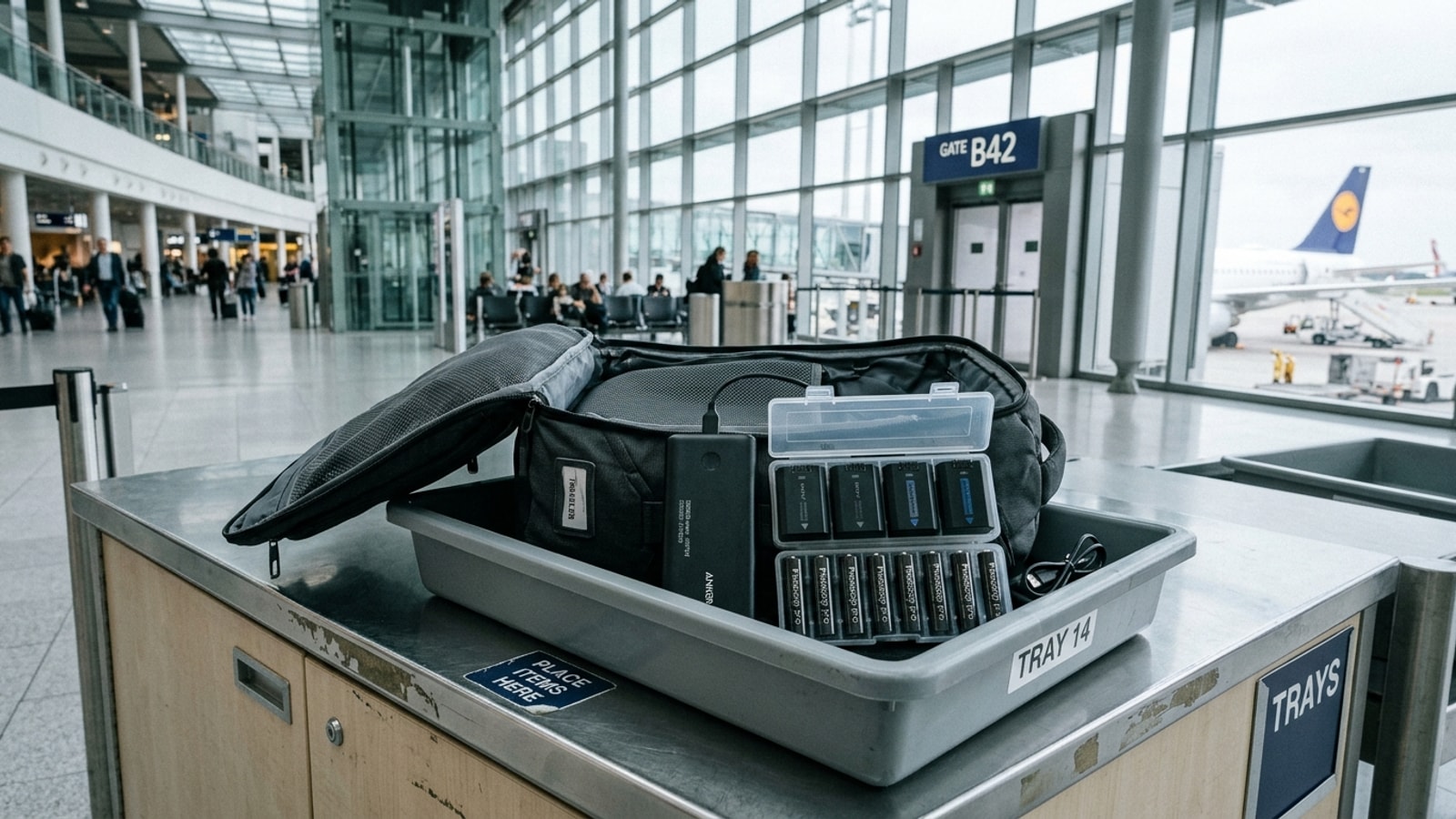
- Original Retail Blister Packaging: Leaving spare alkaline or camera batteries in unopened manufacturer packaging satisfies all international terminal isolation requirements.
- Non-Conductive Electrical Tape: Applying a piece of durable non-conductive electrical tape or Kapton tape directly over exposed positive and negative terminal contacts ensures physical isolation.
- Dedicated Plastic Battery Cases: Storing loose AA, AAA, or camera batteries in fitted hard-plastic battery caddies prevents pins or terminals from coming into contact with external conductors.
- Individual Sealed Plastic Pouches: Placing each spare battery inside its own individual zip-top plastic pouch ensures no two battery contacts can touch within the bag.
[ UNSAFE & PROHIBITED ]
Tossing loose batteries into a pocket with keys, coins, or cables.

[ COMPLIANT METHOD 1 ]           [ COMPLIANT METHOD 2 ]           [ COMPLIANT METHOD 3 ]
+---------------------+          +---------------------+          +---------------------+
| Original Retail     |          | Non-Conductive Tape |          | Dedicated Hard-Shell|
| Blister Packaging   |    OR    | Over Exposed Metal  |    OR    | Plastic Battery     |
| Unopened / Sealed   |          | Terminal Contacts   |          | Storage Caddy       |
+---------------------+          +---------------------+          +---------------------+
Airline Operational Policies: IndiGo, Air India, Emirates, and Global Carriers
Commercial carriers enforce consistent dangerous goods standards aligned with IATA guidelines, but individual airline ground handling policies feature operational nuances regarding quantity caps and gate-check procedures:
IndiGo Airlines
IndiGo strictly enforces the BCAS cabin-only policy for all spare lithium-based energy storage units. Passengers may carry up to 20 spare batteries under 100Wh in cabin baggage, provided they are insulated against short circuits. If ground personnel instruct a passenger to gate-check an oversized rolling cabin bag because overhead bins are full, the traveler must immediately remove all spare camera batteries, loose power packs, and high-drain electronics from the bag before surrendering it on the jet bridge. Surrendering a gate-checked bag containing spare lithium batteries constitutes a regulatory breach under the Aircraft Rules.
Air India & Air India Express
Air India permits spare batteries below 100Wh in hand luggage in quantities appropriate for personal consumer use throughout the journey. For commercial photographers or film crews traveling with broadcast batteries rated between 100Wh and 160Wh, Air India requires written airline dangerous goods approval at least 48 hours prior to flight departure. Passengers must declare these packs at the check-in counter for visual inspection and tagging.
Emirates, Qatar Airways & Etihad
Gulf carriers strictly enforce the 100Wh personal allowance in cabin luggage. Ground staff at hub airports such as Dubai International (DXB), Hamad International (DOH), and Zayed International (AUH) inspect carry-on bags at boarding gates. Loose batteries found without terminal insulation or exceeding the two-piece limit for 100Wh–160Wh units are confiscated on the spot.
Singapore Airlines, British Airways & Lufthansa
European and Southeast Asian network carriers adhere strictly to IATA Dangerous Goods Regulations Table 2.3.A. Lufthansa explicitly bans any spare battery exceeding 160Wh from passenger transit. Singapore Airlines enforces strict segregation during transit security screening at Changi Terminal 1, 2, 3, and 4; carry-on baggage containing untaped spare lithium camera batteries is routed to secondary screening for manual verification.
Traveler Logistics Guide
Navigating airport security with electronic gear and spare batteries requires systematic preparation before reaching the terminal check-in hall.
Pre-Departure Packing Protocol
- Label Legibility: Ensure the printed technical label showing voltage, mAh, or Watt-hour ratings on your batteries remains legible. If a third-party replacement battery has worn-off printing and security screeners cannot verify its energy rating, BCAS and international screening personnel have legal authority to confiscate the item.
- Isolate Installed Devices: For battery-operated devices packed in checked luggage (such as beard trimmers, cordless electric shavers, or power toothbrushes), verify that the power switch is locked or fitted with a protective cover. The device must remain completely shut down; standby or sleep modes are prohibited in aircraft holds.
- Carry-On Backpack Placement: Always pack spare camera batteries, AA/AAA packs, and power banks in your smaller under-seat personal item rather than your primary overhead rolling suitcase. If ground crew announce at boarding that cabin lockers are full and require gate-checking bags, your personal item stays with you, eliminating the frantic last-minute scramble to unpack lithium cells on the tarmac.
What to Do If Checked Baggage Is Flagged at Security
If you inadvertently packed loose batteries in checked luggage at an Indian airport:
- Inline X-Ray Alert: The automated inline baggage handling system routes the bag to a Level-4 physical inspection station.
- Terminal Announcement or Red Line Notice: Your name may be announced over the terminal public address system, or an airline agent will intercept you at the boarding gate requesting you accompany security to the Baggage Reconciliation System (BRS) room.
- Physical Unlocking: You must personally unlock the suitcase in the presence of CISF security officers and airline representatives.
- Confiscation and Re-Screening: Security officers will remove the prohibited batteries, issue a property confiscation receipt, and re-screen the unlocked suitcase before clearing it for aircraft loading.
Frequently Asked Questions
Can I carry standard AA or AAA alkaline batteries in my checked luggage?
Technically, international dangerous goods regulations permit alkaline dry-cell batteries in checked baggage because they do not pose the self-ignition hazards associated with lithium. However, doing so is strongly discouraged. Airport inline X-ray scanners detect dense cylindrical clusters with internal contacts, which look similar to restricted explosive components on security monitors. Bags containing loose batteries are routinely held back for manual security screening, causing missed flight connections. Pack all AA and AAA batteries in your carry-on luggage inside protective cases or original packaging.
How many spare camera lithium batteries can I bring on an IndiGo or Air India flight?
For standard consumer camera batteries rated at 100Wh or less (including Sony NP-FZ100, Canon LP-E6NH, and Nikon EN-EL15), passengers may carry up to 20 spare units in cabin baggage for personal use, provided all terminal contacts are taped or individually protected in plastic pouches. Spare lithium batteries of any kind are strictly forbidden in checked luggage.
Are rechargeable NiMH batteries allowed in cabin baggage?
Yes. Rechargeable Nickel-Metal Hydride (NiMH) AA and AAA batteries are fully permitted in cabin baggage. You must ensure the terminals are insulated using electrical tape or a dedicated plastic battery storage caddy to prevent metallic contact and accidental short circuits during flight.
Can I pack an electric beard trimmer or shaver with a built-in battery in checked baggage?
Yes, consumer grooming appliances with integrated, non-removable rechargeable batteries are permitted in checked luggage under BCAS and IATA regulations, provided the device is powered completely off and protected against accidental activation. Engage the physical travel lock or place the protective plastic cap over the power button. If the battery is removable, the spare or detached battery must travel exclusively in cabin baggage.
What happens if I forget a power bank or spare camera battery in my checked suitcase?
The airport inline explosive detection system will flag the high-density lithium cell on X-ray screening. Ground security will not load the bag onto the aircraft. Depending on airport protocols, security personnel will either cut your luggage lock to extract the battery or call you to the basement security screening area to retrieve the item. In many instances, the flight departs without the bag, leaving your luggage behind for retrieval on a later service.