

Quick Summary
- Primary Update: Toronto Pearson International Airport (YYZ) operates two physically separated passenger terminals—Terminal 1 (Air Canada and Star Alliance hub) and Terminal 3 (WestJet, oneworld, SkyTeam, and independent global carriers)—linked landside by the complimentary, driverless Terminal Link train operating 24 hours a day.
- Transit Impact: There is no airside pedestrian walkway or airside shuttle bus between Terminal 1 and Terminal 3. Every passenger transferring between the two terminals must clear Canadian border control (if arriving internationally), retrieve checked luggage if required, exit into the public arrivals hall, ride the Terminal Link train, and clear security screening at their departure terminal.
- Traveler Advice: Single-ticket passengers connecting within Terminal 1 benefit from airside connection corridors and automated baggage forwarding with a 75-to-90-minute buffer. Passengers executing inter-terminal transfers between Terminal 1 and Terminal 3, self-transfers on separate tickets, or connections involving US CBP Preclearance must schedule a minimum layover window of 120 to 180 minutes. Indian passport holders transiting between T1 and T3 must hold a valid Canadian visa, as Canada's Transit Without Visa (TWOV) program only applies to sterile transit within Terminal 1.
Toronto Pearson International Airport (YYZ), located 22 kilometers northwest of downtown Toronto in Mississauga, serves as Canada's primary commercial aviation hub and the key North American transatlantic and transpacific crossroads. Pearson handles tens of millions of passengers annually, connecting flights between India, the United Kingdom, Europe, the Middle East, Asia, the United States, and regional Canadian destinations.
Connecting at Toronto Pearson requires careful planning due to a unique terminal layout. Pearson functions with two massive, completely separate passenger buildings: Terminal 1 and Terminal 3. Terminal 2 was permanently decommissioned and demolished years ago, meaning no such facility exists today. Because no post-security airside walkway or bus connects Terminal 1 and Terminal 3, understanding the physical transition, automated train logistics, customs processing, and baggage handling is essential to avoid missed flights.
Terminal Architecture and Airline Operations
Airline allocations at Toronto Pearson are organized strictly by carrier alliances and bilateral ground-handling contracts:
| Terminal & Area | Gate Designations | Operating Carriers & Alliances | Connection Channel to Other Facilities |
|---|---|---|---|
| Terminal 1 (Domestic Pier) | Gates D01–D57 | Air Canada Domestic, Jazz Aviation | Airside walkways to Gates E and F; secure connection corridors |
| Terminal 1 (International Pier) | Gates E68–E82 | Air Canada International, Lufthansa, Swiss, Austrian Airlines, TAP Air Portugal, Scandinavian Airlines, EVA Air, Emirates | Airside transfer to Gates D and F; CBSA connection desks |
| Terminal 1 (US Transborder Pier) | Gates F58–F99 | Air Canada US flights, United Airlines | US CBP Preclearance facility; airside sterile corridors |
| Terminal 3 (Domestic & International) | Gates A01–A20, B01–B41 | WestJet, Air India, British Airways, KLM, Air France, American Airlines, Delta Air Lines, Cathay Pacific, Qatar Airways, Etihad Airways, Virgin Atlantic, PIA, Avianca, Porter Airlines | Landside Terminal Link train to Terminal 1 (no airside bridge exists) |
| Terminal 3 (US Transborder Pier) | Gates C30–C36 | American Airlines, Delta Air Lines, WestJet US flights | US CBP Preclearance facility in Terminal 3; landside train to T1 |
| Viscount Station | Ground Station | Remote parking hub, Value Park Garage, ALT Hotel | Terminal Link train terminus (4 min from T3, 6 min from T1) |
[ TERMINAL 1 ]                                                [ TERMINAL 3 ]
Air Canada & Star Alliance, Emirates                          WestJet, oneworld, SkyTeam,
Gates D (Domestic)                                            Air India, Qatar, Etihad
Gates E (International)                                       Gates A & B (Domestic/Intl)
Gates F (US Preclearance)                                     Gates C (US Preclearance)
      |                                                               |
[ Level 5 Platform ]                                          [ Level 3 Platform ]
      |                                                               |
      | <========== TERMINAL LINK TRAIN (LANDSIDE ONLY) =============> |
      |                  Runs 24/7 every 4-8 minutes                  |
      |                       Transit time: 2-3 min                   |
      |                                                               |
      +----------------------------> [ VISCOUNT STATION ] <-----------+
                                     Value Park, ALT Hotel

CRITICAL INVARIANT: No airside connection exists between Terminal 1 and Terminal 3.
Inter-terminal transit requires CBSA entry -> Baggage Claim -> Train -> Check-in/Security.
The Terminal Link Train: 24/7 Landside Transit
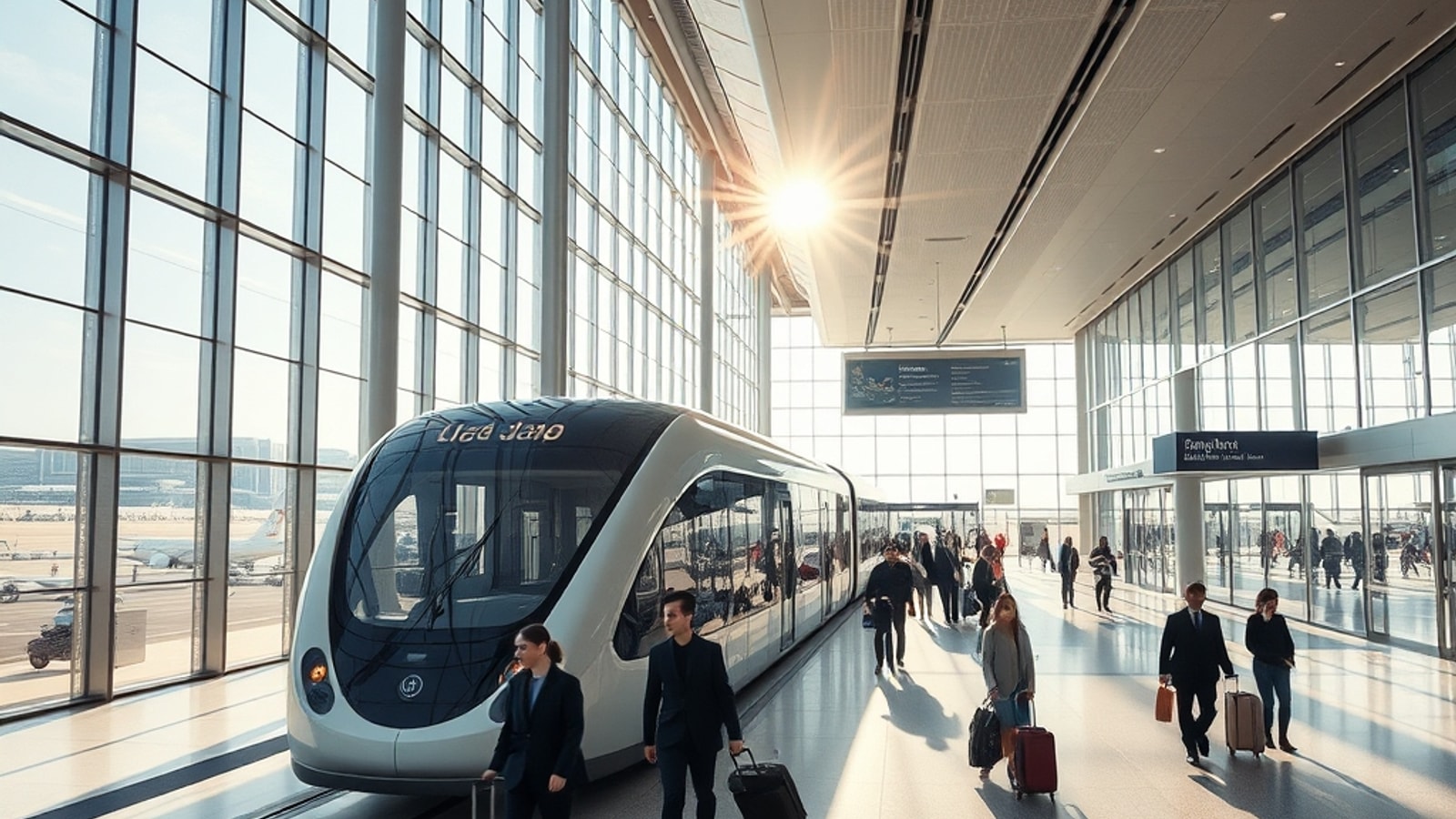
The Terminal Link Train is a complimentary, automated cable-propelled people mover system operating entirely outside the secure airside boundary. It represents the primary and official transit link between Terminal 1, Terminal 3, and the Viscount long-term parking facility.
Operational Specifications
- Operating Hours: 24 hours a day, 7 days a week, 365 days a year.
- Frequency: Every 4 minutes during peak daily hours (05:00 to 23:00); every 8 minutes during off-peak overnight hours.
- Travel Time:
- Terminal 1 to Terminal 3: 2 to 3 minutes.
- Terminal 3 to Viscount Station: 2 to 3 minutes.
- Total end-to-end trip (T1 to Viscount): Approximately 6 minutes.
- Fare: Free for all travelers, airport visitors, and employees. No ticket, pass, or boarding card is required to board.
- Accessibility: Fully wheelchair accessible with level boarding, wide automated doors, audio-visual announcements, and space for luggage carts.
Station Access Points
- Terminal 1 Station: Positioned on Level 5 of the Terminal 1 parking garage structure. Passengers arriving in the terminal take the escalators or elevators up from Level 2 (Arrivals) or Level 3 (Departures) to Level 5 and cross the covered pedestrian skybridge following clear overhead signs marked Terminal Link Train / Terminal 3.
- Terminal 3 Station: Positioned on Level 3 of the Terminal 3 pedestrian overpass. Travelers take elevators or escalators from Level 1 (Arrivals) or Level 2 (Departures) up to Level 3, where moving walkways lead directly into the train station lobby.
- Viscount Station: Ground level, serving the Value Park Lot, Value Park Garage, and adjacent airport hotel properties.
Minimum Connection Times (MCT) and Connection Profiles
The Greater Toronto Airports Authority (GTAA) and operating airlines establish Minimum Connection Times based on flight origin, destination, and terminal configurations. Real-world transfer planning must account for baggage claim delays, security screening queues, and US border preclearance windows.
| Connection Category | Inbound / Outbound Terminals | Minimum Connection Time (MCT) | Recommended Real-World Buffer | Baggage Forwarding Status |
|---|---|---|---|---|
| Domestic to Domestic | Terminal 1 to Terminal 1 | 40–45 minutes | 60 minutes | Checked through automatically |
| Domestic to Domestic | Terminal 3 to Terminal 3 | 40 minutes | 60 minutes | Checked through automatically |
| Inter-Terminal Domestic | Terminal 1 to Terminal 3 (or reverse) | 90 minutes | 120 minutes | Must claim and re-check bags (separate tickets) |
| Domestic to International | Terminal 1 to Terminal 1 | 45–60 minutes | 75 minutes | Checked through automatically |
| Domestic to International | Terminal 3 to Terminal 3 | 60 minutes | 90 minutes | Checked through automatically |
| International to Domestic | Terminal 1 to Terminal 1 (Air Canada) | 75–90 minutes | 105 minutes | Automated (Connections Baggage program; spot checks) |
| International to Domestic | Terminal 3 to Terminal 3 (WestJet/Intl) | 85–90 minutes | 120 minutes | Re-check required after CBSA primary inspection |
| Inter-Terminal International to Domestic | Terminal 3 to Terminal 1 (e.g., Air India to Air Canada) | 120 minutes | 150–180 minutes | Mandatory baggage claim at T3, train transit, re-check at T1 |
| International to US Transborder | Terminal 1 to Terminal 1 (AC/UA single ticket) | 85–90 minutes | 120 minutes | Bags transferred automatically; verify bag on screen at CBP |
| Inter-Terminal International to US | Terminal 3 to Terminal 1 (or reverse) | 120 minutes | 150–180 minutes | Mandatory baggage claim, landside train, bag drop, US CBP Preclearance |
| Domestic to US Transborder | Terminal 1 (D to F) or Terminal 3 (A to C) | 60–75 minutes | 90 minutes | Checked through; passenger clears US CBP in Toronto |
Connecting Within Terminal 1: Air Canada & Star Alliance
Terminal 1 is an integrated hub designed for rapid connections across domestic, international, and US transborder routes without the need to enter the public landside area if traveling on a single ticket.
INBOUND INTERNATIONAL ARRIVAL (Gates E)
                                                                               |
       v
[ Follow Purple "Connections" Signage ]
                                                                               |
       +-----------------------------------+-----------------------------------+
       |                                   |                                   |
       v                                   v                                   v
[ Connecting to Canada Domestic ]   [ Connecting to US Transborder ]    [ Connecting to Intl ]
- Scan boarding pass at e-Gates     - Enter dedicated F-Gate Corridor   - Proceed to Gates E
- CBSA Declaration Kiosk            - Electronic Bag Verification       - Security screening
- Baggage forwarded automatically*  - Clear US CBP Preclearance           if coming from
- Enter Gates D departures concourse- Enter Gates F departures lounge     unscreened origin

*Note: If CBSA kiosk displays a baggage inspection flag, passenger must retrieve bags.
1. International to Canada Domestic (Within Terminal 1)
- Follow the purple overhead Connections directional signage upon deplaning at Gates E.
- Scan your ongoing boarding pass at the automated connections access gates.
- Complete border processing at the Canada Border Services Agency (CBSA) Primary Inspection Kiosks.
- Under the Toronto Pearson Connections Baggage program, passengers on eligible Air Canada itineraries do not need to physically collect luggage. The bags transfer automatically behind the scenes.
- If your kiosk receipt indicates a special inspection code or your airline does not participate in automatic baggage transfer, proceed to the connections baggage hall, claim your luggage, deposit it on the domestic transfer belt, and pass through CATSA security screening into Gates D.
2. International to US Transborder (Within Terminal 1)
- Follow the purple Connections to USA (Gates F) signage.
- Enter the dedicated Transborder Connections security checkpoint.
- Approach the US Customs and Border Protection (CBP) preclearance processing area. As your boarding card is scanned, digital photographs of your checked bags appear on the CBP officer's monitor.
- After immigration and customs clearance, you emerge directly into the Gates F transborder departure concourse. When your flight arrives in the United States, it lands as a domestic flight, allowing you to walk straight out to ground transport or onward connections without further border checks.
Connecting Across Terminals: Terminal 1 to Terminal 3 (and Reverse)
Inter-terminal transfers require transitioning from one independent building to another via landside transit. This scenario frequently affects travelers arriving on long-haul international flights at Terminal 3 (such as Air India, British Airways, or Qatar Airways) connecting to domestic or US flights at Terminal 1 (Air Canada, United Airlines), or passengers arriving on domestic WestJet flights at Terminal 3 transferring to Star Alliance flights at Terminal 1.
Step-by-Step Inter-Terminal Execution Protocol
- Deplane and Clear Immigration: Follow signs toward Arrivals. International arrivals must clear CBSA passport inspection at the arrival terminal.
- Collect Checked Baggage: Even if bags were tagged through to your final destination at your overseas departure city, inter-terminal transfers between separate carriers (especially across alliances or separate tickets) almost always require personal baggage collection at the first Canadian point of entry.
- Exit the Sterile Zone: Hand your customs declaration slip to the border officer at the exit doors and step into the public arrivals lobby.
- Access the Terminal Link Train:
- From Terminal 3: Locate the elevators or escalators near Door B/C, ascend to Level 3, and walk across the pedestrian bridge to the train station.
- From Terminal 1: Ascend via elevators near Aisle 1 to Level 5, cross the skybridge above the parking structure, and enter the platform.
- Ride to the Target Terminal: Board the train. The ride takes under 3 minutes.
- Check-In and Bag Drop:
- At Terminal 1, descend from Level 5 to Level 3 Departures. Proceed to your carrier's check-in row (Aisles 1–3 for Domestic, Aisles 4–7 for International, Aisles 7–9 for US departures).
- At Terminal 3, descend from Level 3 to Level 2 Departures. Proceed to the designated check-in desks.
- Adhere strictly to the airline bag drop closure window, which shuts precisely 60 minutes prior to scheduled departure for international and US flights, and 45 minutes prior for domestic flights.
- Security Screening: Enter the security screening queues managed by the Canadian Air Transport Security Authority (CATSA). If departing for the US, you will proceed directly from CATSA security into the US CBP Preclearance hall.
Canada Transit Without Visa (TWOV) and Transit Visa Regulations
Travelers transiting Toronto Pearson on non-Canadian passports must understand Canadian immigration requirements. Many foreign nationals require either an Electronic Travel Authorization (eTA) or a Canadian Transit Visa.
The Transit Without Visa (TWOV) Program
Canada operates a Transit Without Visa (TWOV) program that permits nationals of specific countries—including eligible citizens of India, China, the Philippines, Indonesia, and Thailand—to transit through Toronto Pearson without obtaining a Canadian transit visa, provided strict conditions are satisfied:
- Valid US Visa: The passenger must hold a valid, unexpired US visa.
- Approved Airline: Travel must be on an approved carrier (such as Air Canada).
- Terminal 1 Sterile Transit Only: The connection must take place entirely within Terminal 1 on the same calendar day. The passenger cannot leave the secure international transit area.
- Direct Route: The flight must be connecting directly between the home country and the United States (or reverse).
Warning · Operational AdvisoryInter-Terminal Transit Invalidation for TWOV Travelers: The Canadian Transit Without Visa (TWOV) program strictly prohibits leaving the sterile airside transit area. Because the Terminal Link Train between Terminal 1 and Terminal 3 operates entirely landside in the public domain, transferring between Terminal 1 and Terminal 3 requires physical legal entry into Canada.
If an Indian passport holder arrives at Terminal 3 (for instance, on Air India) and holds a connecting flight departing from Terminal 1 (such as Air Canada or United Airlines), they cannot use TWOV. They must possess a valid Canadian Visitor Visa or Canadian Transit Visa prior to departure. Airlines will deny boarding at origin if this documentation is missing.
US CBP Preclearance Protocols at Toronto Pearson
Toronto Pearson is one of the world's largest US border preclearance stations, operating dedicated US Customs and Border Protection facilities in both Terminal 1 and Terminal 3.
Transborder Connection Rules
- When departing Toronto Pearson for a US destination, you complete all US entry requirements on Canadian soil.
- In Terminal 1, single-ticket transit passengers transfer internally via the F-Gate connections corridor. Checked baggage is tracked digitally; travelers confirm their bags via image monitors during CBP interview.
- In Terminal 3, passengers check in at Level 2, drop bags at the transborder baggage belts, clear CATSA security, and enter the Terminal 3 US CBP hall.
- Flights land in the United States at domestic arrival gates. Travelers step off the aircraft, bypass all federal inspections, and proceed directly to ground transport or onward domestic connection gates.
Traveler Logistics Guide
Exact Station Access and Wayfinding
- From Terminal 1 Arrivals: Exit baggage claim into the public meet-and-greet area on Level 1 or Level 2. Follow signs for Ground Transportation / Elevators to Level 5. Take the elevator to Level 5, step across the skybridge over the roadway, and enter the Terminal Link station.
- From Terminal 3 Arrivals: Exit baggage claim on Level 1. Locate the central elevator bank near Door B. Ride to Level 3, follow the elevated moving walkway over the access road, and enter the platform.
- Between Terminals for Departing Passengers: Check flight monitors before taking the train. Several international carriers operate code-shares; ensure you know the operating carrier's terminal before boarding.
Luggage Carts and Accessibility
- Luggage carts are permitted on the Terminal Link train. Carts are stationed near baggage carousels and train station entrances (a CAD $2 deposit or credit card pre-authorization may apply at select dispensers).
- Elevators at both stations accommodate heavy baggage carts, mobility scooters, and wide wheelchairs.
- Wheelchair assistance must be booked through your operating airline at least 48 hours prior to travel. If executing an inter-terminal transfer across separate tickets, you must request wheelchair escorts from both airlines independently.
Terminal Transfer Timeline Checklist
- Touchdown to Gate Arrival: 10 to 20 minutes (taxiing and deplaning).
- Immigration & Customs (CBSA): 15 to 45 minutes (faster with advance declaration via ArriveCAN).
- Baggage Delivery: 20 to 40 minutes at the carousel.
- Transit to Terminal Link Train: 5 to 10 minutes walking and elevator ascent.
- Train Waiting & Travel Time: 5 to 8 minutes.
- Re-Check Baggage at Destination Terminal: 15 to 30 minutes (must finish before T-60 cutoff).
- Security Screening (CATSA) & US CBP: 20 to 50 minutes during peak banks.
- Walk to Departure Gate: 5 to 15 minutes.
- Total Practical Inter-Terminal Transit Window: 90 to 180 minutes.
Overnight Layovers and Nearby Transit Accommodations
- Sheraton Gateway Hotel: Directly attached to Terminal 3 via a climate-controlled indoor walkway from Level 2 Departures. Accessible from Terminal 1 via a 2-minute ride on the Terminal Link train.
- ALT Hotel Toronto Airport: Located at Viscount Station. Board the Terminal Link train from either Terminal 1 or Terminal 3 and disembark at Viscount Station; the hotel entrance is situated immediately opposite the platform exit.
Frequently Asked Questions
Is there an airside shuttle bus between Terminal 1 and Terminal 3 at Toronto Pearson?
No. There is no airside transfer bus, secure tunnel, or post-security walkway connecting Terminal 1 and Terminal 3. All transfers between the two terminals must be completed landside outside the sterile security zone. Travelers must clear Canadian border control if arriving from abroad, collect luggage if transferring across separate tickets or airlines, exit to the public lobby, take the automated Terminal Link train, and clear CATSA security screening at their departure terminal.
Do I have to pick up my luggage when connecting at Toronto Pearson?
If you are flying on a single ticket entirely within Terminal 1 on Air Canada or partner Star Alliance carriers (such as arriving from Europe or Asia and connecting to a Canadian domestic destination), your luggage is typically checked through automatically under the Connections Baggage program. However, if your connection involves transferring between Terminal 1 and Terminal 3 (such as arriving on Air India at T3 and connecting to Air Canada at T1), or if you booked flights on separate tickets, you must collect your checked bags at the carousel, take them aboard the Terminal Link train, and re-check them with your onward airline.
Can Indian passport holders transit between Terminal 1 and Terminal 3 without a Canadian visa?
No. The Canadian Transit Without Visa (TWOV) program only applies to sterile transit within Terminal 1 for eligible travelers holding a valid US visa and flying on participating carriers (such as Air Canada). Because moving between Terminal 1 and Terminal 3 requires exiting the secure airside boundary and riding the landside Terminal Link train, passengers physically enter Canadian legal territory. Indian passport holders making an inter-terminal connection between T1 and T3 must hold a valid Canadian Visitor Visa or Canadian Transit Visa.
Where is Terminal 2 at Toronto Pearson Airport?
Terminal 2 no longer exists. Opened in 1972, Terminal 2 was permanently decommissioned and demolished in 2007 as part of the airport's expansion and the construction of the current Terminal 1 complex. Pearson operates exclusively with Terminal 1 and Terminal 3. Travelers should never attempt to find Terminal 2, as all operations are housed in either Terminal 1 or Terminal 3.