

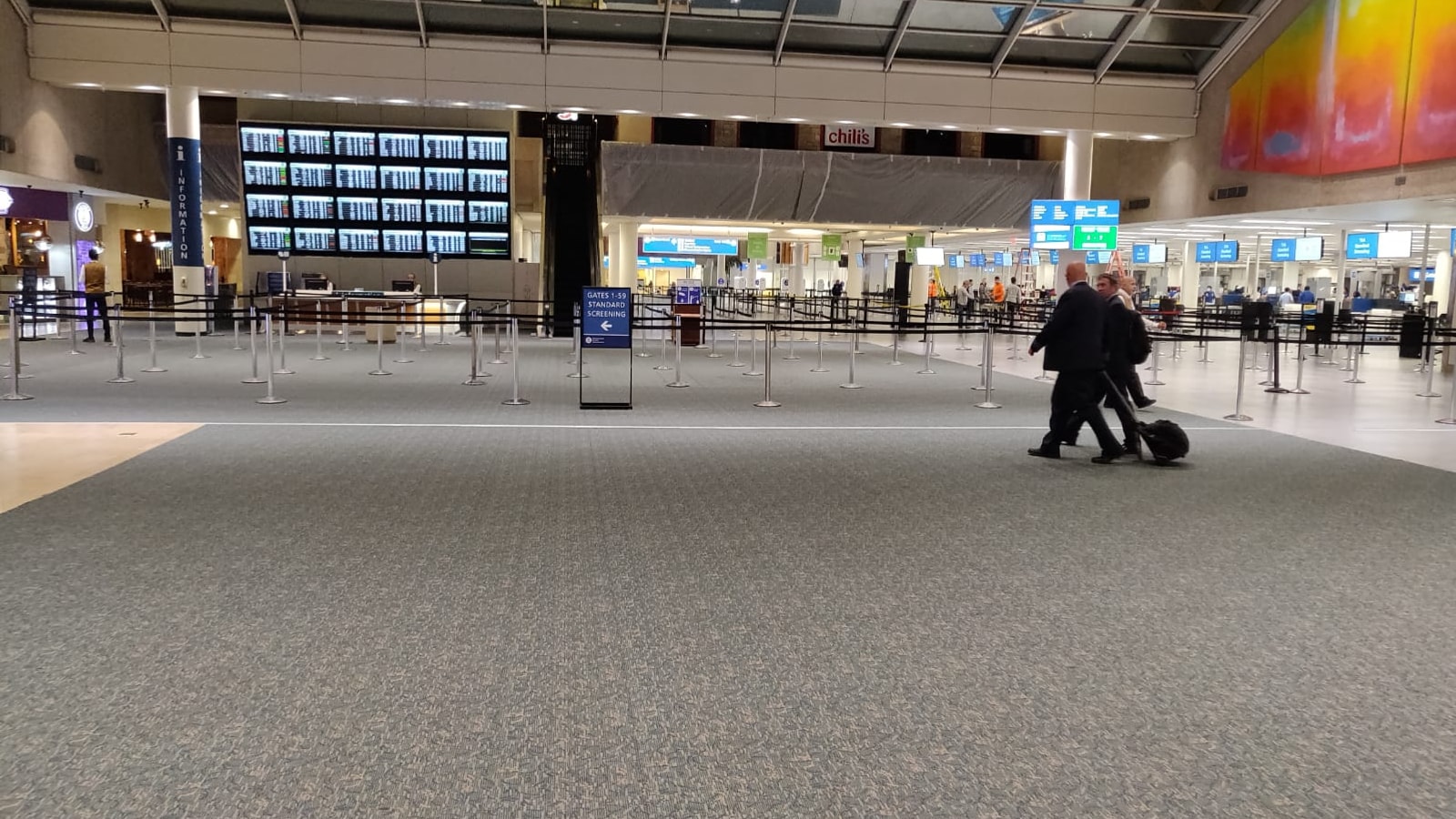
Quick Summary
- Primary Update: Orlando International Airport (MCO) separates flight operations across two physical zones: the North Terminal Complex (comprising landside Terminals A and B connected to four satellite airsides via automated people movers) and the South Terminal Complex (Terminal C, housing JetBlue and premier international carriers).
- Transit Impact: No airside post-security corridor exists between the North Terminal satellites or between North Terminal and Terminal C. Every transfer between different airsides or between Terminals A/B and Terminal C requires exiting to landside areas, riding an automated train, and re-clearing Transportation Security Administration (TSA) security checkpoints.
- Traveler Advice: Single-ticket domestic transfers within the same airside require a minimum connection time of 45 minutes, while transfers between different airsides demand 75 to 90 minutes. Domestic-to-Terminal C connections require 90 minutes, and international arrivals clearing U.S. Customs and Border Protection (CBP) at Terminal C or Airside 4 need a minimum buffer of 120 to 150 minutes to retrieve checked bags, clear customs, deposit transit luggage, and re-clear TSA screening.
Orlando International Airport (MCO) handles over 57 million passengers annually, ranking among the busiest passenger aviation hubs in North America. Serving as a massive focus city for Southwest Airlines, JetBlue, Frontier Airlines, and Spirit Airlines, as well as a major international destination for flag carriers from Europe, Latin America, and the Middle East, MCO presents unique operational complexities for transit passengers.
Unlike traditional single-concourse airports, MCO is organized around isolated airside satellite terminals and a distinct, multi-level southern terminal facility. Understanding the transit pathways—specifically the elevated Automated People Mover (APM) trains, landside baggage claim levels, and the lack of airside cross-terminal links—is essential to avoid missed flight connections.
[ AIRSIDE 1 (Gates 1-29) ] <---APM Train---> [ TERMINAL A ] <=== Central ===> [ TERMINAL B ] <---APM Train---> [ AIRSIDE 4 (70-99) ]
(Frontier, Copa, Avianca)                    Level 3 Ticketing  Atrium / Hotel Level 3 Ticketing    (Delta, Virgin, BA, LATAM)
                                             Level 2 Baggage                Level 2 Baggage
[ AIRSIDE 2 (Gates 100-129) ] <--APM Train-> Level 1 Ground                 Level 1 Ground <---APM Train---> [ AIRSIDE 3 (30-59) ]
(Southwest, Alaska)                                                                                 (United, Spirit, American)

                                          |                                           ^
                                          |         TERMINAL LINK APM SHUTTLE                                         |
                                          |      (4-Minute Landside Elevated Train)                                   |
                                          v                                           |

+---------------------------------------------------------------------------------------------------------------------+
|                                        SOUTH TERMINAL COMPLEX: TERMINAL C                                           |
|                                                                                                                     |
|   - Gates 230–245 (JetBlue, Aer Lingus, Emirates, Lufthansa, Norse, Icelandair, Azul, Breeze)                       |
|   - Co-located Brightline Florida High-Speed Rail Station                                                           |
|   - Dedicated Federal Inspection Services (FIS) CBP International Arrivals Facility                                 |
|   - 100% Landside APM Connection (Requires TSA Security Re-Screening to/from North Terminal)                        |
+---------------------------------------------------------------------------------------------------------------------+
Terminal Architecture and Airline Allocations
Orlando International Airport operates two distinct geographic terminal campuses separated by roughly one mile: the North Terminal Complex and the South Terminal Complex.
The North Terminal Complex (Terminals A and B)
The North Terminal is an iconic multi-story structure divided into two operational halves: Terminal A (North side) and Terminal B (South side). Both sides share a central public landside atrium that houses the Hyatt Regency Orlando International Airport, dining outlets, and airline ticket counters on Level 3.
Passengers departing from the North Terminal do not board flights inside the main building. Instead, passengers pass through security checkpoints on Level 3 and board dedicated, rubber-tired Automated People Mover (APM) trains that cross over tarmac ramps to four isolated satellite concourses:
- Airside 1 (Gates 1 to 29): Accessed from Terminal A Checkpoint (Gates 1–59 wing). Houses Frontier Airlines, Copa Airlines, Avianca, Volaris, WestJet, and Sun Country Airlines.
- Airside 2 (Gates 100 to 129): Accessed from Terminal A Checkpoint (Gates 100–129 wing). Serves as the primary operational hub for Southwest Airlines and Alaska Airlines.
- Airside 3 (Gates 30 to 59): Accessed from Terminal B Checkpoint (Gates 30–59 wing). Accommodates United Airlines, Spirit Airlines, and select American Airlines flights.
- Airside 4 (Gates 70 to 99): Accessed from Terminal B Checkpoint (Gates 70–99 wing). Accommodates Delta Air Lines, Virgin Atlantic, Air Canada, Aeromexico, LATAM, and designated international arrivals utilizing Federal Inspection Services (FIS).
The South Terminal Complex (Terminal C)
Opened to expand MCO’s international and domestic processing capabilities, Terminal C is an architecturally distinct facility situated south of the original airport footprint. It integrates modern experiential media architecture, automated RFID baggage tracking, and consolidated Federal Inspection Services (FIS) directly into its footprint.
Terminal C houses:
- Domestic Anchor: JetBlue Airways and Breeze Airways.
- International Flag Carriers: Aer Lingus, British Airways (select long-haul services), Emirates, Lufthansa, Norse Atlantic Airways, Icelandair, Azul Brazilian Airlines, and GOL.
- Brightline Florida Rail Station: The intermodal high-speed passenger train station connecting Orlando directly to West Palm Beach, Boca Raton, Fort Lauderdale, and Miami is directly attached to Terminal C via a covered pedestrian atrium.
Terminal Transfer Modes and Connection Logistics
Navigating between gates at Orlando International Airport requires travelers to understand whether their connection stays airside or forces a transit through the landside public zone.
Intra-Airside Transfers (Same Satellite Concourse)
If arriving on a domestic flight and connecting to another flight departing from the same satellite airside (for example, arriving at Gate 105 on Southwest and departing from Gate 122 on Southwest in Airside 2), the transfer is seamless.
Travelers simply deplane, check the gate information monitors, and walk directly through the concourse to their next gate. There is no need to board an APM train, exit through security, or re-screen carry-on items. Walking times rarely exceed 5 to 7 minutes.
Inter-Airside Transfers (Satellite to Satellite in North Terminal)
When connecting between airlines located in different North Terminal airsides (for example, arriving on Frontier at Airside 1 and connecting to Delta at Airside 4, or arriving on Southwest at Airside 2 and connecting to United at Airside 3), there is no airside bridge or shuttle connecting the concourses.
To execute an inter-airside transfer:
- Deplane at the arrival airside and proceed to the APM boarding platform.
- Board the automated shuttle train back to the Main Terminal (2-minute transit time).
- Exit the secure area into the public landside atrium on Level 3.
- Walk across the central atrium to the security checkpoint corresponding to the departure gate:
- Checkpoint for Gates 1–59 (serving Airsides 1 and 3)
- Checkpoint for Gates 70–129 (serving Airsides 2 and 4)
- Clear TSA security screening, including carry-on baggage x-ray and body scanning.
- Board the outbound APM shuttle train to the departing satellite airside.
This transfer requires an operational window of at least 75 to 90 minutes due to fluctuating security wait times at peak tourist arrival hours.
North Terminal (Terminals A and B) to Terminal C Transfers
Connecting between the North Terminal Complex (Airsides 1, 2, 3, or 4) and Terminal C requires utilizing the Terminal Link APM train.
The Terminal Link APM is a landside automated people mover that runs on an elevated guideway between the North Terminal Building and the South Terminal Complex.
- North Terminal Station Location: Level 3 on the Terminal B side, situated near the entrance to the Gates 70–129 checkpoint and the B-side food court.
- South Terminal Station Location: Directly inside the South Intermodal Facility, connected via an enclosed, air-conditioned walkway to the Terminal C check-in atrium.
- Operating Schedule: 24 hours a day, 365 days a year.
- Frequency: Trains depart every 2 to 4 minutes.
- Transit Travel Time: 3.5 to 4 minutes along the 1.5-mile track.
- Fare: Free of charge for all travelers, airport staff, and visitors.
Because the Terminal Link APM operates entirely outside the TSA sterile area, any passenger moving from Terminal A or B to Terminal C must exit through TSA exit lanes, ride the Terminal Link APM to Terminal C, and pass through TSA security at the Terminal C checkpoint on Level 2 before reaching Gates 230 to 245.
Detailed Terminal Connection Matrix
The following operational matrix outlines transit methods, physical distance equivalents, estimated travel times, security screening requirements, and recommended minimum connection buffers across Orlando International Airport:
| Origin Concourse / Terminal | Destination Concourse / Terminal | Primary Transit Mode | Typical Transit Time | TSA Security Re-Screening Required? | Recommended Domestic MCT | Recommended International MCT |
|---|---|---|---|---|---|---|
| Airside 1 (Gates 1–29) | Airside 1 (Gates 1–29) | Airside Walking | 3–6 minutes | No | 40 minutes | N/A |
| Airside 1 (Gates 1–29) | Airside 2 (Gates 100–129) | Inbound APM + Atrium Walk + TSA + Outbound APM | 20–35 minutes | Yes (Level 3 Checkpoint) | 75 minutes | 120 minutes |
| Airside 1 (Gates 1–29) | Airside 3 / 4 (Terminal B) | Inbound APM + Cross-Atrium Walk + TSA + Outbound APM | 25–40 minutes | Yes (Level 3 Checkpoint) | 80 minutes | 120 minutes |
| Airside 2 (Gates 100–129) | Airside 2 (Gates 100–129) | Airside Walking | 3–7 minutes | No | 40 minutes | N/A |
| Airside 2 (Southwest) | Airside 3 (United/Spirit) | Inbound APM + Cross-Atrium Walk + TSA + Outbound APM | 25–40 minutes | Yes (Level 3 Checkpoint) | 80 minutes | 120 minutes |
| Airside 3 (Gates 30–59) | Airside 4 (Gates 70–99) | Inbound APM + Level 3 Walk + TSA + Outbound APM | 20–35 minutes | Yes (Level 3 Checkpoint) | 75 minutes | 120 minutes |
| North Terminal (Airside 1–4) | Terminal C (Gates 230–245) | Inbound APM + Terminal Link APM + TSA Screening | 30–50 minutes | Yes (Terminal C Level 2) | 90 minutes | 150 minutes |
| Terminal C (Gates 230–245) | Terminal C (Gates 230–245) | Airside Walking | 4–10 minutes | No | 45 minutes | 90 minutes |
| Terminal C (International) | North Terminal (Airside 1–4) | CBP Customs + Bag Re-check + Terminal Link APM + TSA | 50–80 minutes | Yes (North Terminal Checkpoint) | N/A | 135–150 minutes |
| Brightline Station (South) | Terminal C Gates | Indoor Walking Bridge + TSA Screening | 10–15 minutes | Yes (Terminal C Level 2) | 60 minutes | N/A |
| Brightline Station (South) | North Terminal Airsides | Terminal Link APM + Atrium Walk + TSA Screening | 25–40 minutes | Yes (Level 3 Checkpoint) | 90 minutes | N/A |
Baggage Rules, Re-Check Protocols, and Customs Processing
Bag handling at Orlando International Airport depends strictly on whether itineraries are booked under a single interline ticket or self-connecting split tickets, and whether flights originate internationally.
Domestic Connections on a Single Ticket
Passengers traveling domestically on legacy carriers or interline partners (such as Delta to WestJet or United to select Star Alliance partners) have their checked luggage tagged straight through to their final destination airport.
Bags automatically transfer between aircraft under the supervision of airline ramp handlers. Travelers connecting across different airsides or between North Terminal and Terminal C do not collect baggage at baggage claim carousels on Level 2; they only carry hand luggage onto the APM shuttles and through TSA checkpoints.
Self-Connecting / Split-Ticket Transfers
Travelers holding separate bookings (e.g., flying Southwest into Airside 2 and connecting on a separately ticketed JetBlue departure from Terminal C, or Spirit into Airside 3 connecting to Frontier on Airside 1) must complete full luggage retrieval:
- Upon arrival, take the satellite APM train to the Main Terminal.
- Proceed down escalators to Level 2 Baggage Claim (Terminals A or B depending on the arriving airline).
- Claim all checked baggage from the carousel.
- If departing from another North Terminal airline, take the elevator back to Level 3 Check-in, locate the departing carrier's ticket desk, present documentation, and drop the baggage before the strict 45-minute domestic baggage cutoff.
- If departing from Terminal C, transport baggage to the Terminal Link APM station on Level 3 (B-side), ride the train to the South Terminal, enter the Terminal C check-in hall on Level 2, and drop bags at the departing airline counter.
Self-connecting passengers should allocate a minimum buffer of 3 hours between scheduled landing and departure to account for luggage offload delays and baggage drop cutoff deadlines.
International Arrivals and U.S. Customs (CBP) Clearance
All passengers arriving at MCO from foreign airports—with the exception of flights departing from foreign airports with U.S. Border Preclearance facilities (such as Dublin, Shannon, Nassau, or Canadian hubs)—must clear U.S. Customs and Border Protection inspection in Orlando.
MCO operates two international inspection facilities:
- Airside 4 Federal Inspection Station (FIS): Processes international flights operated by carriers utilizing the North Terminal (such as Virgin Atlantic, British Airways flights assigned to Airside 4, LATAM, and Aeromexico).
- Terminal C Federal Inspection Station (FIS): A high-throughput, facial-biometric processing facility handling long-haul international flights from Emirates, Lufthansa, Aer Lingus, Norse Atlantic, Icelandair, Azul, and British Airways Terminal C operations.
Step-by-Step International Transit Procedure:
- Passport Control: Pass through CBP primary inspection booths or automated biometric Global Entry / Mobile Passport Control (MPC) lanes.
- Luggage Retrieval: Collect all checked bags from dedicated international baggage carousels inside the customs hall. Under U.S. federal statutory regulations, all travelers entering the United States must personally possess their luggage through customs inspection, regardless of final destination.
- Customs Clearance: Exit through the CBP customs clearance point.
- Connecting Baggage Re-Check Desk:
- If flying on a continuous single-carrier or interline ticket (e.g., Lufthansa connecting to United, or British Airways connecting to American), airline transfer drop belts are positioned immediately outside the customs exit doors. Hand tagged bags to the baggage transfer agents.
- If flying on separate tickets, travelers cannot use the transit belt; bags must remain with the traveler onto the Terminal Link APM to the departing terminal’s main ticketing hall.
- Security Re-Screening:
- From Airside 4: Exit to the North Terminal Level 3 landside area, walk to the next departing checkpoint, and clear TSA screening.
- From Terminal C: If connecting to another Terminal C flight, proceed directly to the Level 2 TSA screening area. If connecting to a North Terminal flight, ride the Terminal Link APM from South Intermodal Station to North Terminal Level 3 B-side, and clear the corresponding North Terminal checkpoint.
Traveler Logistics Guide
To navigate terminal transfers at Orlando International Airport efficiently, follow these concrete operational directions and checkpoint guidelines.
Transit Directions Between Key Airport Nodes
- From Terminal A Baggage Claim (Level 2) to Terminal C: Take the elevator or escalator up to Level 3. Walk past the central atrium food court toward the Terminal B side. Follow overhead signage marked "Terminal C / Train to Gates 70–129 & Train Station". Enter the Terminal Link APM station, board the shuttle, ride 4 minutes to the Train Station, and follow the enclosed walkway directly into the Terminal C building.
- From Airside 2 (Gates 100–129) to Airside 4 (Gates 70–99): Ride the APM train from Airside 2 to the Main Terminal Level 3. Walk straight past the central food court to the opposite side of the building (Terminal B side). Locate the security checkpoint for Gates 70–129. Enter the TSA queue (or TSA PreCheck / CLEAR lane). Once through screening, follow signs to Gates 70–99 and board the APM shuttle to Airside 4.
- From Brightline Rail Station to Terminal A/B Gates: Disembark the Brightline train on Level 5 of the Intermodal Station. Take the elevator down to Level 3 to the Terminal Link APM platform. Board the train to the North Terminal (4 minutes). Exit at Terminal B Level 3, consult the flight monitors, and proceed to either the Gates 1–59 or Gates 70–129 TSA checkpoint.
Checkpoint Wait Times and Security Lane Amenities
- TSA PreCheck: Available at both North Terminal Level 3 checkpoints (Gates 1–59 and Gates 70–129) and at the Terminal C checkpoint on Level 2. Operating hours generally run from 04:00 to 20:30.
- CLEAR Lanes: Present alongside standard and TSA PreCheck queues at all three main checkpoints, offering biometric identity verification.
- MCO Reserve: GOAA provides "MCO Reserve", a free virtual queuing reservation system allowing passengers without TSA PreCheck to pre-book a dedicated security screening window up to 72 hours in advance. Lanes operate at the Gates 70–129 checkpoint and Terminal C from 05:00 to 17:00 daily.
Terminal Operating Facilities and Lounges
- Hyatt Regency Orlando International Airport: Directly accessible from the Level 3 landside atrium in the North Terminal. Day-use rooms, baggage holding, and business meeting rooms are available for long daytime layovers without needing ground transportation.
- The Club MCO (Airside 1 and Airside 4): Independent pay-per-entry and Priority Pass lounges located post-security near Gates 91 (Airside 4) and Gate 29 (Airside 1).
- Plaza Premium Lounge (Terminal C): Located on Level 2 near Palm Court, accessible to Priority Pass, DragonPass, and international premium cabin passengers departing from Terminal C.
- Airline Lounges:
- Delta Sky Club: Located in Airside 4 near Gate 71.
- United Club: Located in Airside 3 near Gate 43.
- American Airlines Admirals Club: Located in Airside 3 near Gate 55.
Frequently Asked Questions
Can I transfer between Terminal A and Terminal B without leaving the secure area?
No. Terminals A and B are the north and south halves of the landside Main Terminal building. All boarding gates are housed in four separate satellite airsides (Airsides 1, 2, 3, and 4) reached via automated trains. There are no post-security walkways connecting any of the satellite airsides to each other. Whenever you change between airlines located in different airsides, you must ride the shuttle train to the landside Main Terminal, walk through the central atrium, and clear TSA security screening at the other checkpoint.
How do I get from Terminal C to Terminal A or B at Orlando Airport?
To travel between Terminal C and Terminals A or B, take the free 24-hour Terminal Link APM train. The Terminal Link APM station is located inside the South Intermodal Facility (connected to Terminal C by a covered moving walkway) and arrives at Level 3 of Terminal B in the North Terminal building. The train journey takes approximately 4 minutes, with trains departing every 2 to 4 minutes. Once at the North Terminal, you can walk freely between the Terminal A and Terminal B ticketing counters and security checkpoints on Level 3.
What is the minimum connection time (MCT) needed for an international layover at MCO?
For travelers arriving on an international flight at MCO and connecting to an onward domestic flight, the recommended minimum connection time is 120 to 150 minutes (2 to 2.5 hours). U.S. federal customs regulations require all arriving international passengers to clear passport control, retrieve all checked baggage from the customs carousel, pass through customs inspection, hand baggage to the transfer re-check desk, and undergo full TSA security screening before reaching their domestic departure gate. If your connecting flight departs from a different terminal (e.g., arriving at Terminal C on Lufthansa and connecting to Southwest at Airside 2), budget at least 150 minutes.
Do I have to claim my checked luggage if connecting between flights in Orlando?
If you are booked on a continuous itinerary under a single airline ticket with domestic connecting flights (e.g., Delta to Delta within Airside 4, or United to United within Airside 3), your bags will be transferred automatically to your final destination. However, you must manually claim and re-check your bags in two specific scenarios: (1) if you booked separate tickets on unrelated airlines (such as Southwest into Terminal A and JetBlue out of Terminal C), or (2) if you arrive on an inbound international flight clearing CBP customs at MCO, where federal law mandates baggage re-claim prior to domestic bag-drop.