

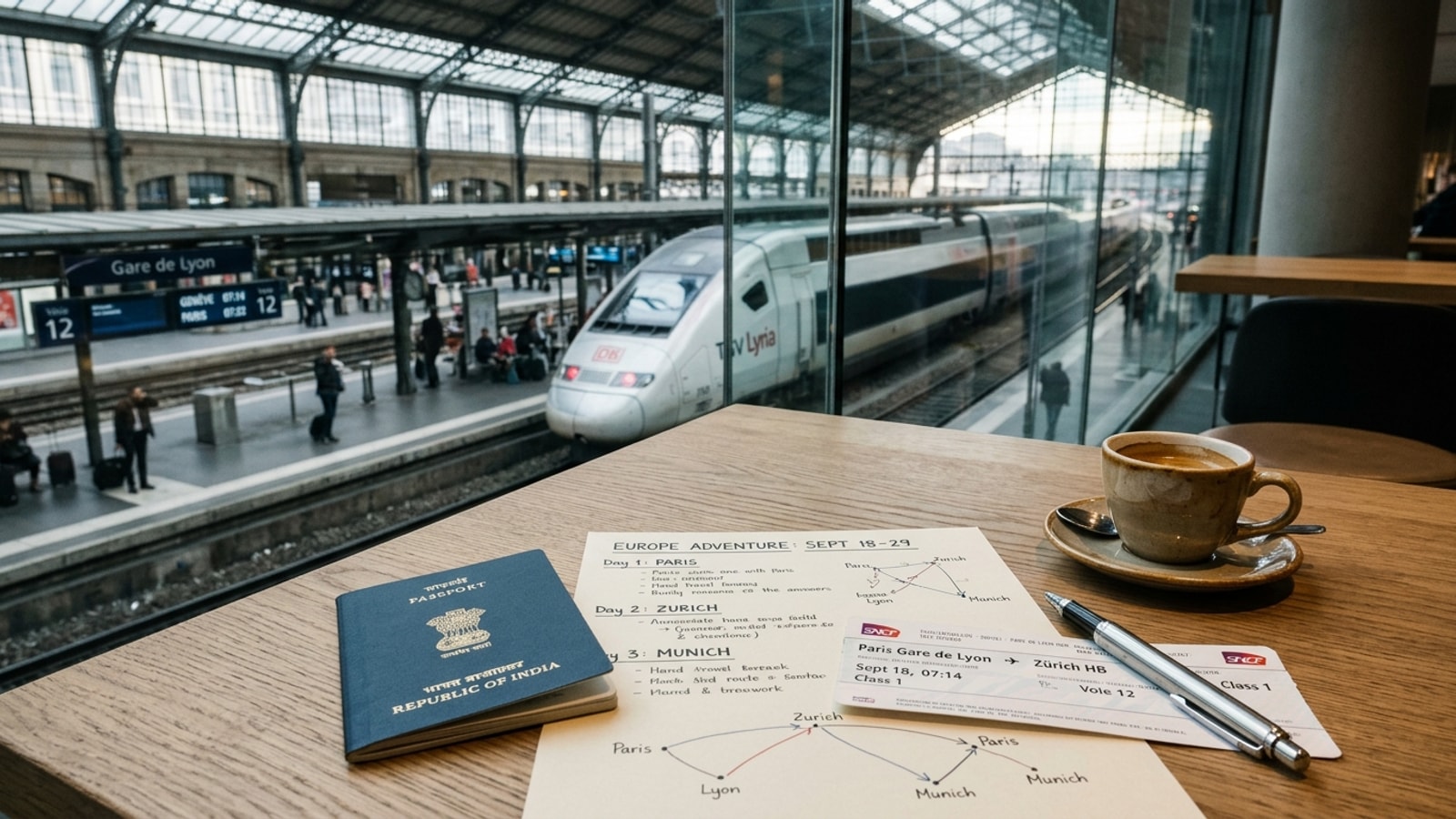
Quick Summary
- Primary Update: Under Articles 14 and 21 of the European Union Visa Code (Regulation EC No 810/2009), a personal cover letter and day-by-day travel itinerary serve as the primary executive narrative evaluated by consular officers to determine trip purpose, financial self-sufficiency, and home-country ties.
- Transit Impact: Consulates across France, Germany, Switzerland, Italy, and Spain strictly verify night counts against Article 5 jurisdiction criteria; calendar gaps between hotel vouchers, internal transport, and the cover letter cause swift application refusals under Standard Rejection Grounds 2 or 10.
- Traveler Advice: Structure the cover letter across six mandatory sections—salutation, trip justification, funding breakdown, employment ties, root-tie evidence, and an indexed document checklist—and accompany it with a realistic daily itinerary accounting for every single night and cross-border rail transfer.
The Strategic Role of the Cover Letter in Schengen Visa Decisions
When an Indian passport holder submits a Type-C short-stay Schengen visa application through VFS Global or BLS International, consular officers spend less than three to five minutes reviewing the file. During this rapid assessment, the personal cover letter operates as the executive summary of the entire dossier. While bank statements, income tax returns (ITR-V), hotel reservations, and flight itineraries provide raw documentation, the cover letter synthesizes these disparate components into a legally coherent travel narrative.
Under Article 14(1) of Regulation (EC) No 810/2009 (Community Code on Visas), applicants must present documents proving the purpose of the journey, accommodation arrangements, sufficient means of subsistence, and information establishing their intention to depart the Schengen area prior to visa expiration. The cover letter is the sole document where the applicant speaks directly to the visa officer, explaining the context of the trip, clarifying potential ambiguities in financial records, and explicitly establishing consular jurisdiction.
A poorly prepared or generic agent-drafted cover letter invites immediate scrutiny. If the dates in the letter deviate by even a single day from the hotel bookings, or if the itinerary fails to account for a night spent on an overnight train or ferry, the file risks triggering Article 21(1) of the Visa Code. This provision mandates that consular staff verify whether the applicant poses a risk of illegal immigration or lacks genuine travel intent, often resulting in an official refusal notice under Ground 2 ("justification for the purpose and conditions of the intended stay was not provided") or Ground 10 ("reasonable doubts as to your intention to leave the territory").
Core Structural Anatomy: The 6 Mandatory Clauses
To meet consular standards, an Indian applicant's cover letter must be typed, printed on clean A4 paper, and organized into six structured sections. Hand-written letters, emotional appeals, and cut-and-paste commercial templates are routinely flagged by processing staff.
1. Salutation, Formal Subject Line, and Applicant Identity
Address the letter to the specific consular post handling the jurisdiction (e.g., "The Visa Officer, Consulate General of the Federal Republic of Germany, Mumbai" or "Embassy of Switzerland, New Delhi"). The subject line must be unambiguous:
- Full Name (as per Passport): Exact spelling matching the machine-readable passport zone.
- Passport Number and Expiry Date: Valid for at least three months beyond the intended departure from the Schengen zone.
- Application Category: Short-Stay Type-C Tourist Visa (or Business/Visitor).
- Travel Window: Exact departure from India and return arrival date.
2. Purpose of Travel and Article 5 Main Destination Justification
Consular jurisdiction is governed strictly by Article 5 of the EU Visa Code. The applicant must explain why that specific embassy has competence over the application:
- Single Destination: State the country and cities to be visited.
- Multiple Destinations: Provide a clear night-count summary demonstrating that the competent Member State is the main destination (the country where the traveler spends the highest number of nights). If staying an equal number of nights across two nations (e.g., 4 nights in France and 4 nights in Switzerland), the letter must explain that the competent state is the country of first physical entry.
3. Comprehensive Financial Solvency and Budget Breakdown
Visa officers cross-reference the cover letter against submitted six-month bank statements. The letter must explicitly declare:
- Total trip budget allocated in Indian Rupees (INR) and converted to Euros (EUR).
- Source of funds: primary salary savings account, liquid fixed deposits, or mutual fund holdings.
- Daily subsistence calculation meeting the host nation's regulatory daily minimum (e.g., €120 per day for France without prepaid accommodation, €45 to €75 per day with confirmed prepaid hotels, CHF 100 per day for Switzerland).
- Explicit reference to attached salary slips (last 3 months) and Form 16 / ITR acknowledgments (last 2–3 assessment years).
4. Professional Status and Approved Leave Documentation
For salaried professionals in India, demonstrating stable employment is central to proving genuine temporary travel. The cover letter must specify:
- Current employer name, registered address, job title, and total tenure.
- Gross and net monthly remuneration.
- Reference to the formal No Objection Certificate (NOC) or approved leave sanction letter issued by the HR department, detailing the exact start and end dates of authorized leave.
- For self-employed applicants: business registration certificates (GST, Certificate of Incorporation, MSME/Udyam), partnership deeds, and recent company bank statements.
5. Demonstrating Domestic Roots and Unshakeable Ties to India
Under Section 21(1) of the Visa Code, every applicant is evaluated for potential overstay risk. The cover letter must clearly articulate socioeconomic ties pulling the traveler back to India:
- Family ties: spouse, minor children, or elderly parents remaining in India during the trip.
- Economic commitments: active commercial leases, home loan EMIs, or registered property ownership.
- Ongoing professional responsibilities: pending projects, client commitments, or corporate resumption dates immediately following the approved leave.
6. Chronological Document Index
End the letter with a numbered table of contents listing every supporting paper enclosed in the submission dossier. This index enables VFS verification counters and consular caseworkers to navigate the file without misplacing exhibits.
Constructing the Day-by-Day Travel Itinerary
The daily travel itinerary must never be presented as an unstructured paragraph. Consulates require a chronological, tab-delimited or table format detailing dates, cities, planned activities, accommodation details, and inter-city transit modes.
Date       | Location / City  | Planned Tourism Activities  | Overnight Stay /
           |                  |                             | Transit Mode

12-May-26  | New Delhi to     | Departure via LH 761 to     | In Flight / Hotel
           | Munich           | Munich; arrive 17:30; check | Excelsior Munich
           |                  | in, evening Marienplatz.    | Booking Ref #918234

13-May-26  | Munich           | Visit Nymphenburg Palace,   | Hotel Excelsior
           |                  | Deutsches Museum.           | Munich

14-May-26  | Munich to        | Morning train ICE 722 to    | Hotel Bristol
           | Salzburg (Day)   | Salzburg (1h 30m); visit    | Salzburg
           |                  | Fortress; return or stay.   | Booking Ref #441209
The Pace and Plausibility Test
Consular officers evaluate itineraries for physical feasibility. A common pitfall among Indian applicants is attempting to pack too many destinations into a tight window (e.g., landing in Paris, visiting Amsterdam the next morning, moving to Brussels that evening, and waking up in Zurich). Such breathless pacing flags the itinerary as artificial or commercially fabricated. Allow at least two to three nights in primary hubs and schedule visible rest or leisure buffers.
Internal Transit Documentation Rules
If the travel plan spans two or more Schengen countries, consulates expect verifiable proof of inter-city transit. While international long-haul flights from India to Europe are covered by the main flight reservation, cross-border European legs require attention:
- Rail Transfers: When crossing borders between major hubs (such as Paris to Zurich, Frankfurt to Amsterdam, or Rome to Florence), submit booked tickets or provisional timetables via operators like SNCF, Deutsche Bahn (DB), SBB, or Trenitalia.
- Low-Cost Intra-European Flights: If flying between non-adjacent states (e.g., Barcelona to Rome via Ryanair or Vueling), confirmed flight booking receipts must be included.
- Rental Cars: If self-driving through scenic routes (such as the German Alpine Road or Tuscany), attach a rental car confirmation voucher and international driving permit details.
- Overnight Trains (Nightjet): If spending a night on an overnight sleeper train, include the sleeper reservation voucher to account for the missing hotel night. Leaving an overnight transit gap without documentation generates an immediate query from visa officers.
Consular Scrutiny Standards: Comparing Major Schengen Missions
Different European missions in India apply varying levels of strictness regarding cover letters and intra-Schengen transit proof.
| Consular Mission | Itinerary Precision Expectation | Internal Transit Proof Mandate | Accommodation Matching Rule | Cover Letter Red Flags & Refusal Triggers |
|---|---|---|---|---|
| Germany (German Missions / VFS) | Extremely High; demands hour-by-hour logic for multi-city routes | Strictly required; DB train tickets or cross-border bus passes expected | 100% night match; hotel vouchers must state applicant's full name | Discrepancies between employer leave dates and travel window; vague funding declarations |
| France (France-Visas / VFS) | High; clear daily outline of sights and regions visited | Recommended for high-speed rail (TGV) and domestic flights | Mandatory confirmed bookings for every single night in Schengen area | Applying to France when night count in Switzerland or Italy is higher or equal |
| Switzerland (Swiss Embassy / VFS) | Very High; daily alpine and transit routing must be specified | Swiss Travel Pass booking or SBB rail reservations strongly advised | Full hotel confirmation required; Airbnb requires full host contact details | Insufficient daily bank balance per traveler (minimum CHF 100/day benchmark) |
| Italy (Italian Consulates / VFS) | Moderate to High; day-by-day historical and museum sightseeing | Frecciarossa or Italo train reservations expected between cities | Hotel vouchers must list all traveling family members by name | Generic copy-pasted itinerary templates lacking personal customization |
| Spain (BLS International) | High; distinct city breakdown (Madrid, Barcelona, Seville) | Renfe train tickets or confirmed domestic flights required | Confirmed hotel bookings with credit card guarantee required | Unexplained route backtracking (e.g., Madrid to Seville to Barcelona to Madrid) |
| Austria & Netherlands (VFS) | High; realistic multi-country central European routing | Railjet / Eurostar bookings required for cross-border transit | Every overnight stay must be matched with a refundable voucher | Lack of verifiable ties to India (missing Form 16, unverified employer NOC) |
Traveler Logistics Guide
To assemble an airtight submission package for VFS Global or BLS International in India, follow this chronological assembly process:
[Step 1: Calendar Grid] ──> [Step 2: Table Route] ──> [Step 3: HR Alignment] ──> [Step 4: Dossier Index]
(Align flight dates)        (Draft day-by-day)        (Verify NOC match)         (Organize A4 folder)
Step 1: Align the Calendar Grid
Before drafting a single word, place flight reservation dates, hotel vouchers, and company leave dates side by side.
- Ensure the flight departure date from India matches the start of the itinerary.
- Ensure the flight departure date from Europe matches the final hotel check-out date.
- Confirm that the total duration does not exceed the authorized leave dates stated on the employer's NOC.
Step 2: Draft the Tabular Routing Matrix
Create the day-by-day itinerary in a separate spreadsheet before integrating it into the cover letter or attaching it as an exhibit.
- Cross-check every date against hotel check-in and check-out times.
- Ensure city transfers occur during daylight hours or account for overnight sleeper transits.
- Double-check that the country representing your primary visa application holds the outright majority of overnight stays.
Step 3: Verify Employer NOC Alignment
Examine the wording of your employer's No Objection Certificate. The NOC must state:
- Your exact designation and monthly salary.
- The specific approved leave window (e.g., "authorized leave from 10-May-2026 to 25-May-2026 with duty resumption on 26-May-2026").
- An explicit statement that the company has no objection to your personal tourist travel in the Schengen zone.
- Company letterhead, official stamp, and wet or verifiable digital signature of the HR signatory.
Step 4: Organize and Index the Dossier
Assemble your physical submission folder in the exact sequence declared in your cover letter's document index:
- Printed Schengen Visa Application Form (signed and dated).
- Personal Cover Letter (signed with blue ink).
- Day-by-Day Travel Itinerary (if printed as a standalone multi-page exhibit).
- Verifiable Round-Trip Flight Itinerary (showing live PNR).
- Proof of Accommodation (hotel vouchers matching the itinerary dates).
- Proof of Intra-Schengen Transport (train tickets, car rentals, or domestic flights).
- Travel Medical Insurance Policy (€30,000 minimum coverage including medical repatriation, valid across all Schengen states).
- Financial Documents (original stamped 6-month bank statements, last 3 salary slips, ITR-V for last 2 years).
- Employment & Ties Proof (Employer NOC, company ID card copy, property index II deeds if applicable).
- Original Passports (current and all prior expired passports).
Important · Regulatory MandateNever staple documents together or place them inside plastic transparent sleeves when submitting at VFS Global or BLS counters. Use paper clips to organize sections. VFS intake staff remove all plastic binders and staples prior to scanning the file into consular systems.
Common Traps That Trigger Article 21 Inconsistencies
Visa caseworkers cross-check submitted documents for conflicting details. The most frequent errors leading to refusal notices include:
- The Unaccounted Overnight Gap: Submitting hotel bookings for May 10–14 in Paris and May 15–18 in Zurich, but omitting accommodation or sleeper train tickets for the night of May 14. This gap causes an immediate query regarding whereabouts and accommodation authenticity.
- Contradictory Purpose Declarations: Stating "tourism and leisure" in the cover letter while attaching an informal invitation letter from a resident friend in Germany. If visiting friends or family, the application must be declared as a private visitor visa, supported by a formal Declaration of Commitment (Verpflichtungserklärung), rather than disguised as pure tourism.
- The "Equal Nights" Misapplication: Spending 5 nights in France and 5 nights in Switzerland, but applying at the German Consulate because VFS appointments in New Delhi were easier to secure. Consular staff will cancel the appointment or refuse the application under Article 5 for lacking competent jurisdiction.
- Unverified Third-Party AI Output: Submitting generic cover letters generated by automated tools that include placeholder text, hallucinated train routes (e.g., claiming a direct 2-hour train between cities separated by 1,000 km), or irrelevant administrative references. Every operational detail must be manually verified.
Frequently Asked Questions
Should family members traveling together from India submit separate cover letters?
Yes. Every adult applicant, as well as minor children, must have an individual cover letter in their respective VFS submission folder. While the primary earning family member can state that they are financially sponsoring the spouse and children (attaching a signed sponsorship affidavit and their own financial documents), each applicant's letter must detail their individual identity, passport number, relationship to the sponsor, and a shared day-by-day itinerary.
Is it mandatory to submit pre-booked intra-Schengen train or internal flight tickets with the itinerary?
For single-country travel, internal transit proof is rarely required. However, for multi-country itineraries—especially those processed by German, Swiss, or Austrian consulates—proof of inter-city transit is strongly expected. While fully non-refundable tickets are not strictly mandatory under the baseline Visa Code, submitting confirmed rail reservations (such as Deutsche Bahn Sparpreis or SNCF Connect) or open rail passes significantly strengthens the credibility of the route.
How should the cover letter address an itinerary spanning multiple countries with identical night counts?
Under Article 5(1)(b) of the EU Visa Code, if an applicant spends an equal number of nights in two or more Member States (for example, 4 nights in Spain and 4 nights in France), consular jurisdiction defaults to the Member State whose external border the applicant enters first. The cover letter must explicitly cite this rule, stating: "As the itinerary involves an equal stay of 4 nights in Spain and 4 nights in France, this application is lodged with the Embassy of Spain in accordance with Article 5(1)(b) of Regulation (EC) No 810/2009, as Spain represents the first Member State of physical entry."
What financial calculation should be presented in the cover letter if hotels are already prepaid?
If your accommodations are fully prepaid and confirmed, highlight this clearly in the financial section of your cover letter. State the total amount already settled for hotels and airfares, and demonstrate that your remaining liquid bank balance covers food, local transport, museum admissions, and contingencies at the host country's daily subsistence rate (typically €45 to €75 per person per day, depending on the destination). Provide a clean mathematical breakdown showing that your available funds comfortably exceed the regulatory threshold.