

Quick Summary
- Primary Update: Immigration, Refugees and Citizenship Canada (IRCC) processes all standard Temporary Resident Visa (TRV / Visitor Visa) applications from India through the modernized IRCC Portal. Paper applications at visa application centres remain discontinued except for specific accommodation requests. Standard visitor visas are issued as multiple-entry foil counterfoils valid for up to 10 years (or up to one month prior to passport expiry).
- Transit & Application Costs: The statutory government filing fee is CAD $100 (
₹6,150) per applicant, plus a CAD $85 (₹5,225) biometric fee for individuals who have not enrolled fingerprints and facial biometrics with IRCC within the preceding 10 years. Total standard outlay per solo traveler is CAD $185 (~₹11,375).- Traveler Advice: Travelers who have held a Canadian visitor visa within the last 10 years or who currently hold a valid United States non-immigrant visa (B1/B2, H-1B, L-1, F-1) qualify for the CAN+ program. CAN+ waives mandatory financial documentation (bank statements, tax returns) and accelerates processing significantly. All other applicants must present verifiable liquid bank funds of at least CAD $5,000 to $8,000 (~₹3,00,000 to ₹5,00,000) per adult alongside clear ties to India to satisfy Section 179(b) of the Immigration and Refugee Protection Regulations (IRPR).
Canada remains one of the highest-volume international travel corridors originating from India, serving extensive family networks, corporate travelers, conference attendees, and leisure tourists. Navigating the Canadian Temporary Resident Visa (TRV) application requires rigorous attention to documentation standards, digital portal navigation, biometric scheduling, and Canadian border control requirements.
Unlike destination countries that evaluate applications during in-person consular interviews, Canada’s visa officers adjudicate visitor applications almost exclusively on the merits of the digital dossier uploaded to the IRCC portal. Understanding IRCC criteria—especially regarding genuine visitor intent, financial solvency, and verifiable home ties—is critical to securing an approval and avoiding common refusal grounds.
1. Statutory Fee Structure and Processing Tiers
Every traveler, including infants and minor children, must submit an individual TRV application. While families can group their files within a single IRCC portal account, each applicant incurs the statutory government processing tariff.
IRCC Visa and Biometric Fee Schedule
| Fee Category | Amount in Canadian Dollars (CAD) | Approximate Cost in Indian Rupees (INR) | Mandatory Conditions & Validity |
|---|---|---|---|
| TRV Visitor Visa Fee | CAD $100 | ~₹6,150 | Non-refundable; charged per applicant regardless of age |
| Individual Biometrics Fee | CAD $85 | ~₹5,225 | Covers digital photo and 10-digit fingerprint scan at VFS VAC; valid for 10 years |
| Family Biometrics Maximum | CAD $170 | ~₹10,450 | Capped rate for 2 or more family members applying simultaneously |
| Passport Transmission (Standard) | Nil (Included) | ₹0 | Free at the VAC where original biometrics were collected |
| VFS 2-Way Passport Courier | Optional | ~₹1,200 – ₹1,800 | Secure home pickup and return delivery of physical passport across India |
| VFS SMS / Tracking Notifications | Optional | ~₹350 | Real-time status updates via text message |
Exchange rates fluctuate; IRCC transactions are billed in CAD to international payment cards, while VFS supplementary services are billed locally in INR.
2. CAN+ Accelerated Processing Program
The CAN+ facilitation program is one of the most effective pathways to streamline a Canadian visitor visa application from India. Established to reward travelers with demonstrated immigration compliance in North America, CAN+ drastically reduces the evidentiary burden on the applicant.
                    CAN+ ELIGIBILITY EVALUATION
                                                              │
     ┌───────────────────────────┴───────────────────────────┐
     ▼                                                       ▼
Held Canadian TRV within                                Hold Valid Non-Immigrant
last 10 years?                                          United States Visa?
     │                                                        │
    YES ──┐                                             ┌── YES
          ▼                                             ▼
┌─────────────────────────────────────────────────────────────┐
│                 QUALIFIES FOR CAN+ PROGRAM                  │
│  - No 6-month bank statements required                      │
│  - No Income Tax Returns (ITR-V) required                   │
│  - Submit copy of US visa foil or past Canada visa stamp    │
│  - Expedited triage by IRCC New Delhi / Chandigarh / Manila │
└─────────────────────────────────────────────────────────────┘
          │ NO to both
          ▼
┌─────────────────────────────────────────────────────────────┐
│                 STANDARD TRV ASSESSMENT                     │
│  - Comprehensive 6-month bank statements with bank stamp    │
│  - 3 years ITR-V / Form 16 documentation                    │
│  - Employment verification, payslips, leave approvals       │
│  - Real estate, asset, and deep family tie disclosures      │
└─────────────────────────────────────────────────────────────┘
CAN+ Key Advantages and Rules
- Financial Waiver: You are not required to upload bank statements, fixed deposit certificates, or tax filings. You only need to demonstrate proof of qualifying travel (scanned passport pages with the US visa foil or prior Canadian TRV).
- Accelerated Timelines: CAN+ files are routed into dedicated assessment queues at IRCC processing hubs, frequently receiving decisions substantially faster than general visitor queues.
- Dual Status Verification: If applying under the US visa criterion, ensure your US visa remains valid at the time of IRCC application submission. Expired US visas do not trigger CAN+ eligibility (only expired Canadian visas within 10 years qualify).
3. Step-by-Step IRCC Portal Application Blueprint
IRCC maintains two online systems: the legacy GCKey portal and the modernized IRCC Portal. Unless specifically instructed otherwise, all standard visitor visa applicants from India should create an account on the new IRCC Portal (ircc.canada.ca).
Step 1: Create Your IRCC Portal Account
- Request an invitation code via email on the official IRCC portal landing page.
- Set up login credentials using an email address accessible throughout the 6 to 12-month lifecycle of your visa.
- Select "Apply to visit Canada" and choose "Visitor visa".
Step 2: Complete the Digital Questionnaire
The online form replaces the older downloadable PDF forms (IMM 5257). Ensure absolute data consistency across these critical questions:
- UCI Number: If you have previously applied for any Canadian visa, study permit, or express entry profile, enter your 8- or 10-digit Unique Client Identifier (UCI). Leaving this blank when you have a prior history creates file synchronization delays.
- National Identity Document: Enter your Indian Aadhaar number or Permanent Account Number (PAN) details.
- Employment and Educational History: Account for all years without leaving timeline gaps. Any unexplained gap in employment history often triggers requests for additional information.
- Funds Available for Travel: Enter an amount in CAD that directly corresponds to the liquid balances demonstrated in your supporting financial statement.
Step 3: Document Upload Specifications
All files must be uploaded in PDF, JPG, or PNG formats. Each single upload slot has a maximum file size limit of 4 MB. Merge related multi-page documents (e.g., 6 months of bank statements or 3 years of tax returns) into a single optimized PDF before uploading.
4. Comprehensive Document Checklist & Financial Benchmarks
Incomplete or poorly organized financial proof is the leading cause of TRV refusals under Section 179(b) of the IRPR (officer not satisfied that applicant will depart Canada at the end of their authorized stay).
Category                 │ Required Specifics

Passport & Travel History│ • Scanned bio-pages (current passport)
                         │ • Minimum 6 months validity remaining
                         │ • Scans of all valid/expired entry visas &
                         │   entry stamps (UK, US, Schengen, GCC, Asia)

Financial Proof          │ • Last 6 months bank statements with bank seal
(Standard Stream)        │ • Closing balance: CAD $5,000–$8,000 per adult
                         │ • Last 3 assessment years ITR-V acknowledgments
                         │ • Fixed deposit / mutual fund investment sheets

Employment & Income      │ • Formal employment letter on company letterhead
                         │ • 3 most recent monthly payslips
                         │ • Approved leave certificate showing return date
                         │ • If self-employed: GST cert, business bank acc

Purpose of Travel        │ • Day-by-day travel itinerary
                         │ • Provisional hotel reservations or host invite
                         │ • If visiting family: Host's Canadian PR card,
                         │   Notice of Assessment (NOA), invitation letter

Biometric Photo          │ • Digital file: 35mm x 45mm, plain white back
                         │ • Frame height of face: 31mm to 36mm
Financial Solvency Benchmarks
- Liquid Balance: IRCC officers assess liquid, readily accessible funds. Maintain an active balance of at least CAD $5,000 to $8,000 (approx. ₹3,00,000 to ₹5,00,000) for a 2- to 3-week trip. For a family of three, target CAD $12,000 to $15,000 in liquid savings.
- The "Lump-Sum" Trap: Officers immediately flag sudden, unverified large deposits made into checking accounts in the weeks leading up to the application. If transferring funds from a fixed deposit or family gift, provide documented paper trails (FD redemption receipts, gift deed affidavits).
- Tax Integrity: Ensure gross income reported on your ITR-V aligns with deposits shown in your primary salary or operational bank accounts. Discrepancies between declared tax income and banking volume raise credibility flags.
5. VFS Global India Biometrics Enrollment (VAC Protocols)
Once your application and biometric fee (CAD $85) are submitted, IRCC issues an official Biometric Instruction Letter (BIL) in your portal account, typically within 24 to 48 hours.
            BIOMETRIC PROCESS LIFECYCLE

1. Submit IRCC Application & Pay Fees (CAD $185)
                      │
                      ▼
2. Download Biometric Instruction Letter (BIL)
                      │
                      ▼
3. Schedule VFS VAC Appointment via VFS Global Portal
   (Must complete within 30 calendar days of BIL date)
                      │
                      ▼
4. Attend In-Person Appointment at VFS VAC
   - 10-digit digital fingerprint scan
   - High-resolution digital facial photograph
   - Passport barcode verification
                      │
                      ▼
5. Biometrics Linked to IRCC File (Valid for 10 Years)
Scheduling and Attending Your VAC Appointment
Biometrics must be completed within 30 calendar days from the issuance date on your BIL. Failure to enroll biometrics within this statutory window results in automated refusal of the application.
- Book Online: Register on the dedicated VFS Global Canada biometric booking portal for India (
visa.vfsglobal.com/ind/en/can). Select your preferred Visa Application Centre. - Indian VAC Locations:
- North: New Delhi, Chandigarh, Jalandhar
- West: Mumbai (BKC), Ahmedabad, Pune
- South: Bengaluru, Chennai, Hyderabad
- East: Kolkata
- Mandatory Appointment Checklist:
- Original physical passport (must contain at least two blank pages).
- Printed copy of the IRCC Biometric Instruction Letter (BIL) displaying barcodes.
- Printed VFS Appointment Confirmation receipt.
- Signed VFS Consent Form (one per applicant).
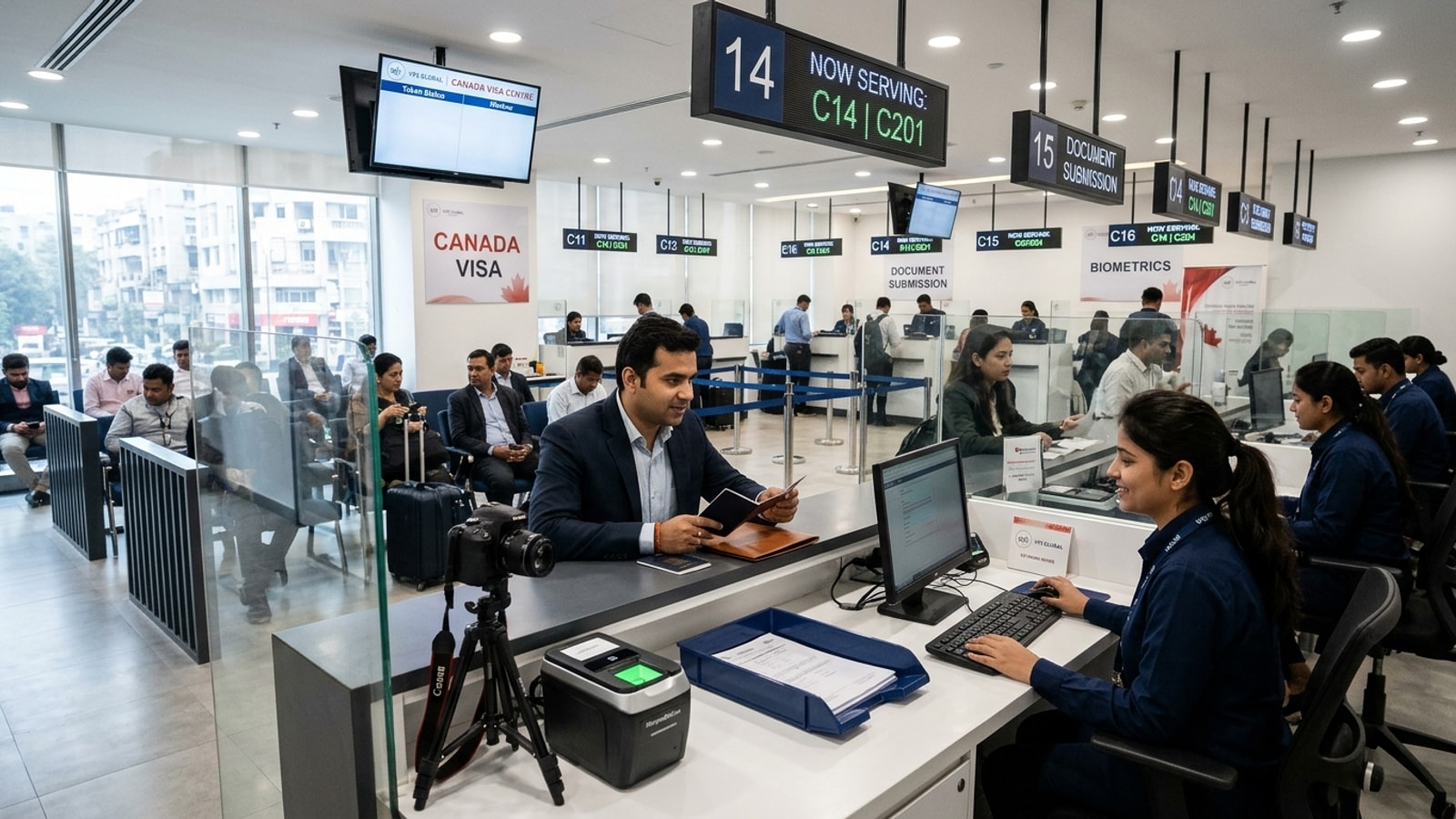
- On-Site Procedure: The appointment requires approximately 20 to 30 minutes. Staff capture a 10-digit fingerprint scan and digital facial portrait. Physical application documents are not collected during this stage.
6. Proving Strong Ties to India: Mitigating Section 179(b) Refusals
The most frequent statutory refusal reason cited by Canadian visa offices in New Delhi and Chandigarh is:
"I am not satisfied that you will leave Canada at the end of your stay as a temporary resident, pursuant to paragraph 179(b) of the IRPR, based on your ties to your home country, assets, and purpose of visit."
To overcome this presumption, assemble an intentional, well-structured "Ties to India" dossier uploaded under the "Client Information / Explanation Letter" slot:
Key Pillars of Home Ties
- Employment & Economic Anchors:
- An explicit No Objection Certificate (NOC) or sanctioned leave letter from your employer specifying: your designation, date of joining, monthly remuneration, sanctioned dates of leave, and confirmation that your role remains open upon your return.
- For business owners: GST registration certificates, partnership deeds, memorandum of association, and business tax returns establishing ongoing operational oversight.
- Family Responsibilities:
- Mention immediate family members remaining in India (dependent elderly parents, school-enrolled children, or non-accompanying spouse). Include copies of birth certificates or family ration cards where applicable.
- Immovable Real Estate & Property:
- Property registration deeds, municipal tax receipts, or agricultural land ownership records. While property alone does not guarantee visa issuance, it substantiates substantive geographic roots.
- Statement of Purpose (Cover Letter):
- Draft a concise, factual 1- to 2-page letter addressing the visa officer. Clearly detail:
- Exact travel dates and flight intent.
- Planned cities and accommodations (Toronto, Vancouver, Banff, Montreal).
- Breakdown of trip expenses and who is financing them.
- Concrete commitments mandating your return to India (professional deadlines, academic terms, family events).
- Draft a concise, factual 1- to 2-page letter addressing the visa officer. Clearly detail:
7. Original Passport Request (OPR) and VFS 2-Way Courier Transmission
When IRCC completes its assessment and approves your visitor visa, you will receive an email alert: "You have a new message in your account."
Logging into the portal will reveal the Original Passport Request (OPR), also titled the Passport Submission Letter.
Submission Protocols
- Strict 30-Day Limit: You must deliver your passport to VFS Global within 30 days of the OPR letter date. If your passport is held by another embassy (e.g., for Schengen or UK processing), submit an immediate IRCC webform request requesting an extension with documentary proof.
- Two-Way Secure Courier: VFS coordinates secure door-to-door courier service via domestic express logistics (typically Blue Dart). The courier collects the physical passport, OPR letter copy, and signed VFS consent form, routing them directly to the centralized visa processing office.
- Stamping Turnaround: Passport counterfoil printing and return delivery typically require 7 to 14 business days across major Indian metros.
8. CBSA Port of Entry Protocols: Arrival Kiosks and Authorized Stay
Securing the physical TRV sticker in your passport allows you to board a Canada-bound flight, but legal entry remains at the discretion of the Canada Border Services Agency (CBSA) at your first port of landing.
Major Ports of Landing
- Toronto Pearson International (YYZ): Terminals 1 and 3
- Vancouver International (YVR): Main International Terminal
- Montréal-Trudeau International (YUL): International Arrival Hall
- Calgary International (YYC): International Terminal
Primary Inspection Kiosks (PIK) and Advance Declaration
- Advance e-Declaration: You can complete your CBSA customs and immigration declaration up to 72 hours before departure using the official ArriveCAN app or web portal. This saves significant queue time upon arrival.
- Kiosk Operation: Upon deplaning, proceed to the bank of Primary Inspection Kiosks (PIK). Scan your passport bio-page, take an automated facial verification photograph, confirm your electronic declaration, and collect your printed kiosk receipt.
- CBSA Border Officer Interaction: Present your passport and kiosk receipt to the CBSA officer. Common questions include:
- "What is the purpose of your visit to Canada?"
- "How long do you intend to stay?"
- "Where will you be staying?"
- "How much currency or funds are you carrying?" (Currency over CAD $10,000 equivalent must be formally declared).
Understanding Authorized Duration of Stay
Unless the CBSA border officer writes a specific departure date beneath your entry stamp or issues a separate physical Visitor Record document, your authorized stay is automatically up to six months (180 days) from the date of entry. You must exit Canada on or before the 180-day threshold or apply for a visitor status extension at least 30 days before expiry.
9. Frequently Asked Questions (FAQ)
Can I travel to Canada immediately after my visa is approved without waiting for physical passport stamping?
No. Canada does not issue electronic travel authorizations (eTAs) to ordinary Indian passport holders. You must hold the physical visa foil counterfoil permanently adhered into your valid Indian passport to be boarded by airlines and processed by CBSA.
Does having an active US B1/B2 visa guarantee approval under CAN+?
No. While CAN+ waives financial proof and speeds up processing queues, it does not guarantee approval. The visa officer must still be satisfied with your admissibility, criminal background check, and lack of immigration violations.
What should I do if my passport expires before my 10-year Canadian visa?
Canadian TRVs are generally issued up to the exact expiry date of your passport minus one month. If your passport expires and you still have a valid Canadian TRV foil inside it, you may travel with both passports: the expired passport containing the intact, undamaged visa counterfoil, and your newly issued valid Indian passport. Ensure both passports bear matching biographical details.
Is travel medical insurance mandatory for entering Canada on a visitor visa?
While travel medical insurance is not legally mandatory for standard TRV holders (unlike the Canadian Super Visa for parents/grandparents), it is strongly advised. Hospitalization and emergency medical treatment in Canadian provincial healthcare systems can cost upwards of CAD $3,000 to $5,000 per day for uninsured international visitors.
What is the process if my application is refused under Section 179(b)?
Under Canadian immigration law, there is no formal administrative appeal for visitor visa refusals. You have two options:
- Reapply with New Evidence: Address every deficiency noted in the refusal letter. Obtain GCMS (Global Case Management System) officer notes to review the exact rationale before submitting a new application.
- Judicial Review: Apply to the Federal Court of Canada for judicial review within 60 days (applicable primarily if the officer made an error in law or ignored substantive evidence).