

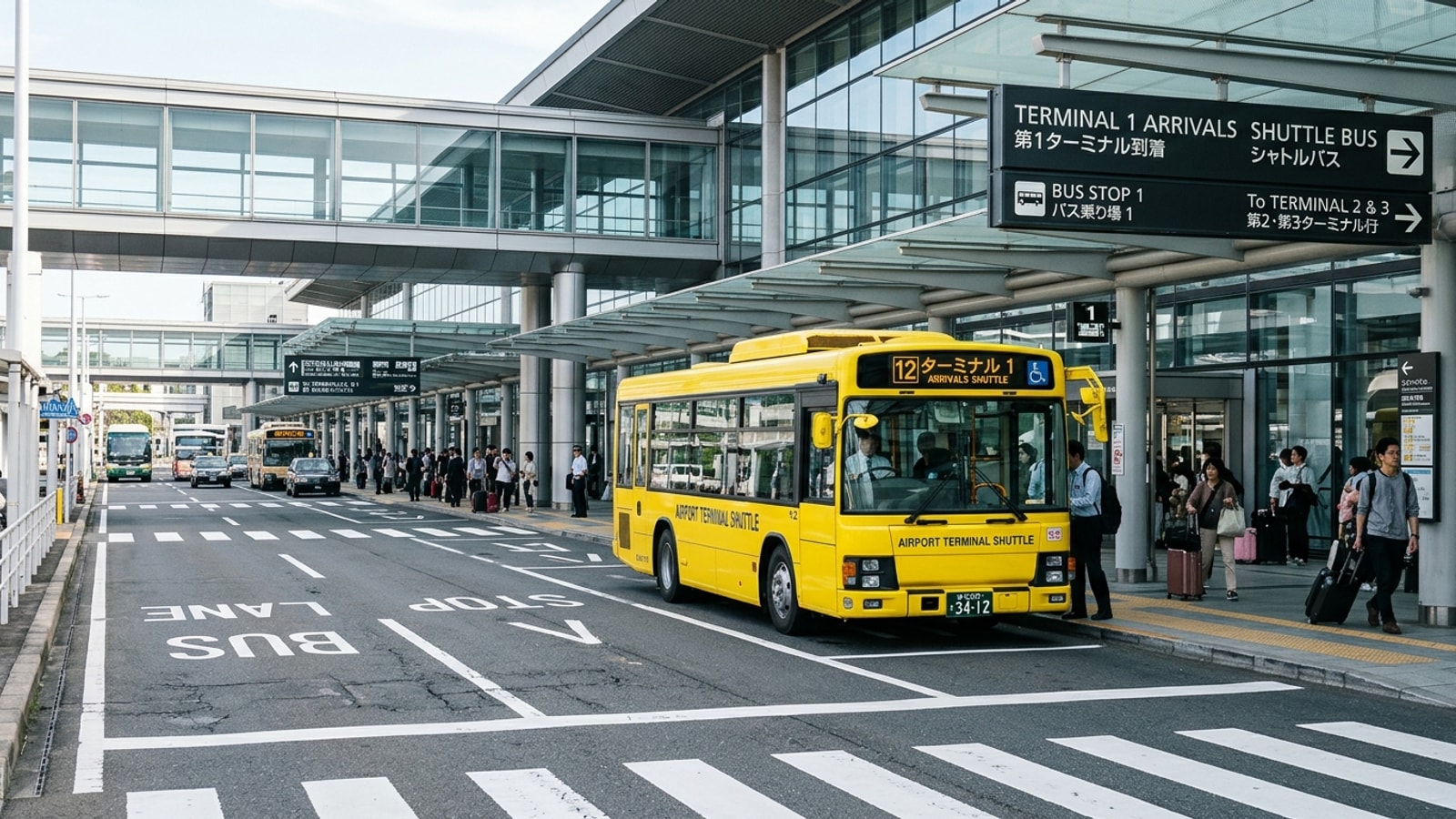
Quick Summary
- Primary Update: Tokyo Narita International Airport (NRT) operates three distinct passenger terminals separated by expansive airfield infrastructure. Terminal 1 and Terminal 2 are connected via landside shuttle buses (every 7 to 10 minutes) and a secure airside transit bus (every 15 to 20 minutes) for international-to-international transfers. Terminal 3 is a dedicated low-cost carrier terminal linked exclusively to Terminal 2 via a 500-meter covered pedestrian track and frequent shuttle buses.
- Transit Impact: Narita enforces a strict night flight curfew between 23:00 and 06:00 JST. All airside transit security checkpoints and secure holding areas close overnight. Passengers connecting between separate tickets or transferring to low-cost carriers at Terminal 3 cannot remain airside; they must enter Japan through immigration, retrieve checked luggage, and transfer landside.
- Traveler Advice: Budget at least 60 minutes for same-terminal international connections, 90 to 110 minutes for inter-terminal airside transfers between Terminal 1 and Terminal 2, and a minimum of 150 to 180 minutes (2.5 to 3 hours) for self-transfers involving Terminal 3. Travelers without Japanese visa exemptions must hold a pre-arranged transit visa or tourist eVisa when self-transferring, as airline sponsorship for an on-arrival 72-hour Shore Pass is discretionary and frequently rejected by budget airlines.
Navigating Tokyo Narita: Airport Architecture and Terminal Distribution
Tokyo Narita International Airport (IATA: NRT, ICAO: RJAA), situated approximately 60 kilometers east of central Tokyo in Chiba Prefecture, is Japan's primary long-haul transpacific and Asian gateway. Unlike compact single-facility hubs, Narita consists of three architecturally distinct passenger complexes spread across miles of taxiways and perimeter roads.
Understanding which airline operates from which terminal is essential before touching down in Tokyo, as arriving at the wrong terminal or boarding the wrong inter-terminal connector can trigger missed flights and expensive rebooking fees.
                          TOKYO NARITA AIRPORT (NRT)

+--------------------------+                         +--------------------------+
|        TERMINAL 1        |                         |        TERMINAL 2        |
|  - North Wing (SkyTeam)  |      Airside Shuttle    |  - Main Building (Gates) |
|  - South Wing (Star)     | <=====================> |  - Satellite Building    |
|  - ZIPAIR (Gates 11-29)  |     (Gates 28/59 <->    |  - Oneworld Alliance     |
|  - Railway: T1 Station   |        Gates 70/80)     |  - Railway: T2/3 Station |
+--------------------------+                         +--------------------------+
             ^                                                    ^
             |                                                    | 500m Walkway
             | Landside Yellow Bus (7-10 min)                     | or Orange Bus
             |                                                    v
             |                                       +--------------------------+
             |         Landside Direct Bus           |        TERMINAL 3        |
             +-------------------------------------> |  - Low-Cost Carriers     |
                                                     |  - Jetstar, Spring, Jeju |
                                                     |  - NO RAILWAY STATION    |
                                                     +--------------------------+
Terminal 1: Star Alliance, SkyTeam, and ZIPAIR
Terminal 1 is divided into two sweeping curved concourses: the North Wing and the South Wing, joined in the center by the Central Building.
- North Wing: Serves SkyTeam alliance carriers, including Air France, KLM Royal Dutch Airlines, Korean Air, Delta Air Lines partner flights, Vietnam Airlines, Saudia, and Aeromexico. Crucially, Japan Airlines' low-cost subsidiary ZIPAIR Tokyo operates exclusively from Terminal 1 North Wing (Gates 11–29), despite being an LCC.
- South Wing: Serves Star Alliance carriers, anchored by All Nippon Airways (ANA) and United Airlines. Other key operators include Air India, Singapore Airlines, Air Canada, Lufthansa, Austrian Airlines, SWISS, EVA Air, Asiana Airlines, Thai Airways, and Air New Zealand.
- Central Building: Houses duty-free boutiques, observation decks on the 5th floor, airline lounges (ANA Lounge, United Club, KAL Lounge), and the primary international security screening banks on the 4th floor.
- Rail Access: Basement Level 1 (B1F) connects directly to Narita Airport Terminal 1 Station, served by both JR East (Narita Express) and Keisei Electric Railway (Skyliner and Access Express).
Terminal 2: Oneworld Alliance and Independent Flag Carriers
Terminal 2 serves as the global hub for Japan Airlines (JAL) and the Oneworld alliance.
- Main Building & Satellite Concourse: Terminal 2 features a spacious Main Building linked to an elongated Satellite Concourse via a moving-walkway connecting bridge (which replaced the old automated cable-driven shuttle train in 2013). Walking from Main Building immigration to the farthest satellite gate (Gates 81–99) takes approximately 8 to 12 minutes.
- Resident Airlines: Japan Airlines (JAL), American Airlines, British Airways, Cathay Pacific, Finnair, Malaysia Airlines, Qantas, Qatar Airways, and Emirates, alongside regional operators like Starlux Airlines and Cebu Pacific.
- Rail Access: Basement Level 1 (B1F) connects directly to Narita Airport Terminal 2·3 Station.
Terminal 3: Dedicated Low-Cost Carrier (LCC) Terminal
Opened in April 2015 and substantially expanded in 2022, Terminal 3 is a functional, warehouse-style facility specifically designed for budget airlines.
- Resident Airlines: Jetstar Japan (GK), Jetstar Airways (JQ), Spring Airlines Japan (IJ), and Jeju Air (7C).
- Critical Architectural Constraint: Terminal 3 does not have a railway station. Passengers taking the JR Narita Express or Keisei Skyliner must detrain at Terminal 2·3 Station and either walk 500 meters along a dedicated outdoor covered corridor or take the free airport shuttle bus.
- Airside Isolation: Terminal 3 does not maintain airside sterile connections to Terminal 1 or Terminal 2. Any flight connection touching Terminal 3 requires clearing Japanese immigration, reclaiming baggage, and transferring landside.
Inter-Terminal Landside Transportation
Passengers transferring between terminals landside (outside the secure customs and immigration boundary) have three distinct transit mechanisms: free airport shuttle buses, the dedicated Terminal 2–3 pedestrian track, and commercial regional trains.
| Transfer Method | Terminals Connected | Frequency / Operating Hours | Transit Duration | Cost | Key Operational Detail |
|---|---|---|---|---|---|
| Yellow Shuttle Bus | Terminal 1 <-> Terminal 2 | Every 7–10 mins (06:00–23:00) | 10 minutes | Free | Departs T1 Stop 6; departs T2 Stops 8 & 18. |
| Orange Shuttle Bus | Terminal 2 <-> Terminal 3 | Every 3–5 mins (04:30–23:30) | 3 minutes | Free | Departs T2 Stop 1; departs T3 Stop 1. High frequency. |
| Green Shuttle Bus | Terminal 1 <-> Terminal 3 | Every 15 mins (06:00–22:30) | 12–15 minutes | Free | Direct link; bypasses Terminal 2 forecourt. |
| Pedestrian Running Track | Terminal 2 <-> Terminal 3 | Open 24 Hours | 6–9 minutes walk | Free | 500m blue-and-red rubber track, weather-shielded. |
| Keisei / JR Train | Terminal 1 <-> Terminal 2/3 | Every 10–20 mins (05:30–23:00) | 2–3 minutes ride | ¥150–¥170 | Requires passing rail fare gates; not recommended for transfers. |
1. Free Landside Terminal Shuttle Buses
Narita Airport operates three color-coded landside shuttle routes around the airport's public perimeter roadway. All buses feature low-floor accessible boarding and dedicated interior luggage storage racks.
       LANDSIDE BUS STOP LOCATIONS AT A GLANCE

       [Terminal 1] 1F Arrival Forecourt
       * Stop #6: Buses to Terminal 2 & Terminal 3

       [Terminal 2] 1F Arrival Forecourt
       * Stop #1: Shuttle bus to Terminal 3
       * Stop #8 & Stop #18: Shuttle bus to Terminal 1

       [Terminal 3] 1F Ground Transportation Level
* Stop #1: Shuttle buses to Terminal 2 & Terminal 1- Terminal 1 to Terminal 2 (Yellow Route): Leaves Terminal 1 from Stop 6 on the 1st Floor Arrivals forecourt. Buses drop off and pick up at Terminal 2 at Stop 8 (South Wing) and Stop 18 (North Wing). Travel time is approximately 10 minutes depending on ramp traffic.
- Terminal 2 to Terminal 3 (Orange Route): Operates on an intense 3- to 5-minute schedule between Stop 1 at Terminal 2 and Stop 1 at Terminal 3. Because the distance is under one kilometer, the journey takes only 3 minutes.
- Direct Terminal 1 to Terminal 3 (Green Route): Runs directly between Terminal 1 Stop 6 and Terminal 3 Stop 1 at 15-minute intervals, bypassing Terminal 2. The journey takes 12 to 15 minutes.
2. The 500-Meter Athletic Running Track (Terminal 2 to Terminal 3)
One of Narita's most distinctive architectural features is the dedicated pedestrian corridor linking Terminal 2 and Terminal 3.
- Design and Surface: Styled after an Olympic track, the pathway features blue rubberized tartan cushioning for departures and reddish-brown for arrivals. It is fully covered by protective roofing and enclosed on the sides against heavy rain and winter winds.
- Navigation and Amenities: The corridor is exactly 500 meters long from the Terminal 2 entrance lobby (near the 1F railway station exits) to the Terminal 3 departures hall. Large distance markers are stamped on the floor every 50 meters (e.g., "350m to Terminal 3"). Rest alcoves with benches and beverage vending machines are situated along the route.
- Walking vs. Bus Strategy: If an Orange Shuttle bus is not already boarding at Terminal 2 Stop 1, walking the track is almost always faster than waiting for the next bus. An average adult walking with rolling luggage covers the 500 meters in 6 to 8 minutes.
3. Commercial Train Links (Keisei and JR East)
Both the JR East line (Narita Express / Sobu Rapid) and the Keisei Electric Railway (Skyliner / Access Express / Main Line) operate between Narita Airport Terminal 1 Station and Narita Airport Terminal 2·3 Station.
While the train ride between the two stations takes just 2 to 3 minutes, this is not an airport transit people-mover.
- Passengers must purchase a valid train ticket (approximately ¥150 to ¥170) or tap a pre-loaded IC transit card (Suica, Pasmo, ICOCA).
- Passengers must navigate fare gates, descend deep escalators to the train platforms, and time their movement to scheduled suburban trains.
- Verdict: Use the free airport shuttle bus instead. Taking the train is only logical if you mistakenly board a regional train heading to the wrong terminal station.
Airside Sterile Transit: Connecting International-to-International
If you are flying internationally through Narita on a single through-ticket (e.g., United Airlines from San Francisco connecting to ANA to Singapore, or British Airways from London connecting to JAL to Sydney), you can transfer between flights without entering Japan, clearing immigration, or touching customs.
The Secure Airside Ramp Shuttle Bus
To move between Terminal 1 and Terminal 2 inside the sterile security perimeter, Narita Airport provides a dedicated airside shuttle bus operating on the airport taxiway apron.
- Terminal 1 Boarding Locations: Gate 28 (Central Building) and Gate 59 (South Wing).
- Terminal 2 Boarding Locations: Gate 70 (Main Building) and Gate 80 (Satellite Building).
- Operating Hours: 07:00 to 21:30 daily.
- Frequency: Every 15 to 20 minutes.
- Transit Duration: Approximately 15 minutes across active airport taxiways.
- Eligibility: You must present a confirmed onward international boarding pass departing from the destination terminal on the same calendar day.
Airside Security Screening and Liquid Rules (LAGs)
Every transit passenger passing through Narita—even those remaining in the same terminal—must undergo a mandatory international transit security screening before entering the departures level.
- Liquids, Aerosols, and Gels (LAGs): Liquids must be in containers of 100ml (3.4 oz) or less, packed inside a single clear, resealable 1-liter plastic bag.
- Duty-Free Alcohol and Perfume Confiscation Risk: If you purchased liquid duty-free items (bottles of whiskey, cosmetics, sake) at your departure airport or on board your first flight, they will be confiscated at the Narita transit security checkpoint unless they are packaged in an officially sealed Security Tamper-Evident Bag (STEB) accompanied by a valid purchase receipt issued within 24 hours. If in doubt, wait to purchase duty-free goods until after clearing Narita's transit security check.
- Electronics: Laptops, tablets, portable gaming devices, and large camera bodies must be removed from carry-on luggage and placed in separate inspection trays.
Minimum Connection Times (MCT) Matrix
Minimum Connection Times at Tokyo Narita vary drastically based on alliance partnerships, terminal geometry, and baggage routing. Booking connections below the following published thresholds exposes travelers to misconnections that airlines will not protect on separate bookings.
| Connection Route | Terminal Permutation | Minimum Connection Time | Recommended Traveler Buffer | Mandatory Baggage & Immigration Procedures |
|---|---|---|---|---|
| Int'l to Int'l (Same Terminal) | T1 to T1 (Star / SkyTeam) | 60 minutes | 90 minutes | Stay airside. Transit security screening only. Baggage checked through. |
| Int'l to Int'l (Same Terminal) | T2 to T2 (Oneworld) | 60 minutes | 90 minutes | Stay airside. Transit security screening only. Baggage checked through. |
| Int'l to Int'l (Inter-Terminal) | T1 to T2 / T2 to T1 | 90 minutes | 120 minutes | Airside shuttle bus (Gate 28/59 <-> Gate 70/80). Transit security required. |
| Int'l to Domestic (Single Ticket) | T1 (ANA) or T2 (JAL) | 90 minutes | 120–150 minutes | Clear immigration, collect luggage, clear customs, drop bags at domestic counter. |
| Int'l to LCC (Terminal 3) | T1/T2 to T3 (Jetstar/Spring) | 150 minutes | 180 minutes | Clear immigration, retrieve bags, customs, landside bus/walk, re-check by T-45m. |
| Domestic to Int'l (Single Ticket) | T1 (ANA) or T2 (JAL) | 60 minutes | 90 minutes | Luggage through-checked at origin. Clear outbound passport control. |
| Cross-Airport: Narita to Haneda | NRT to HND (Cross-City) | 210 minutes (3.5 hrs) | 270 minutes (4.5 hrs) | Clear immigration, collect bags, take Keisei/Keikyu direct train (90m) or bus. |
Immigration, Baggage Re-Check, and Japanese Shore Pass Rules
Navigating Japanese border controls during a Narita connection depends strictly on your ticket type, onward destination, and nationality.
       ARE YOU REQUIRED TO CLEAR JAPANESE IMMIGRATION AT NARITA?

                              [Your Flight Arrives at NRT]
                                           |
                    Is your onward flight departing from Terminal 3?
                                     /           \
                                  YES             NO
                                  /                 \
                      Must enter Japan               Are you connecting on a single
                     (Clear Immigration)             through-ticket to an int'l flight?
                                                     /                        \
                                                  YES                          NO (Separate Tickets)
                                                  /                              \
                                 Stay Airside: Sterile Transit             Must enter Japan
                                 (No visa or entry stamp needed)           (Clear Immigration, Claim Bags)
Single Ticket vs. Separate Ticket (Self-Transfer)
- Single Interline Booking: If your entire itinerary is on a single electronic ticket (e.g., ticket number starting with 016 for United, 205 for ANA, or 131 for JAL), your checked baggage will be tagged through to your final destination. You remain airside, follow green "International Connecting Flights" overhead signage, and do not present your passport to Japanese immigration officers.
- Separate Tickets (Self-Transfer): If you purchased two unrelated tickets (e.g., Singapore Airlines into Terminal 1, connecting to a separate Jetstar ticket from Terminal 3 to the Gold Coast, or United into T1 connecting to ZIPAIR in T1 North Wing):
- Airlines will not transfer your luggage automatically across separate bookings.
- You must pass through Japanese Immigration (Passport Control).
- You must descend to the baggage claim hall, retrieve your bags from the carousel, and pass through Japanese Customs.
- You must transfer landside to your departure terminal and check in at your onward airline's ticket counter before check-in closes (strictly 60 minutes prior for international flights, 30 to 45 minutes for domestic).
Japanese Shore Pass (Article 14 Rules)
Citizens of countries that do not have visa exemption agreements with Japan (such as India, China, the Philippines, Indonesia, and Vietnam) who book self-transfers or have overnight connections face significant legal restrictions.
Under Article 14 of the Japanese Immigration Control and Refugee Recognition Act, an immigration inspector at the port of entry may grant a temporary landing permit called a Shore Pass (寄港地上陸許可 - Kikōchi Jōriku Kyoka) allowing a stay of up to 72 hours for transit purposes.
Caution · Mandatory ComplianceRelying on a Shore Pass for a planned self-transfer at Narita is high-risk. A Shore Pass is an emergency discretionary concession, not an entitlement. Low-cost carriers (such as Jetstar, ZIPAIR, and Scoot) frequently refuse to board passengers without a pre-existing Japanese visa at the origin airport, because the operating airline must financially sponsor the Shore Pass application at Narita and assumes liability if the passenger is denied entry.
To qualify for an Article 14 Shore Pass:
- You must possess a confirmed onward ticket departing from Narita or another Tokyo airport (Haneda) within 72 hours.
- You must demonstrate sufficient funds for your layover stay.
- Your arrival and departure must be sponsored by your arriving airline carrier.
- You cannot have any history of Japanese immigration violations or deportations.
Best Practice: If you hold a passport that requires a visa for Japan and plan a self-transfer or overnight connection at Narita, apply in advance for an official Japan Transit Visa or an electronic single-entry tourist eVisa (available online to qualified passport holders). Never rely on an on-arrival Shore Pass as your primary travel plan.
Customs Electronic Declarations: Visit Japan Web
Japan Customs operates automated electronic customs declaration gates at all Narita terminals. Before your journey, complete the customs declaration on the official Visit Japan Web (VJW) service.
- The portal generates an individual QR code.
- At the baggage claim exit, scan your physical passport and the VJW QR code at the electronic declaration kiosk.
- Once processed, walk directly through the automated facial recognition customs gate without queuing for a manual customs inspector.
Overnight Layovers and the Narita Night Curfew
Unlike hubs such as Singapore Changi or Doha Hamad that operate around the clock, Tokyo Narita Airport is subject to a strict environmental noise curfew:
- Curfew Hours: 23:00 to 06:00 JST (with emergency allowances only up to 00:00 for weather-delayed operations).
- Terminal Airside Closure: All airside transit security checkpoints, boarding gates, and duty-free concourses close completely after the last evening departure (around 22:30). Passengers cannot sleep in the secure airside departure areas overnight.
- If you have an overnight connection, you must clear Japanese border control and enter Japan landside.
1. Nine Hours Narita Airport (Capsule Hotel in Terminal 2)
Located directly inside Terminal 2 on Basement Level 1 (B1F), adjacent to the Keisei and JR railway ticket barriers, Nine Hours Narita Airport is the most convenient overnight stay option for solo travelers and transit passengers.
- Facilities: Separate, card-key-secured male and female zones. Each cubicle features high-grade sleep pods, ambient lighting, power plugs, and complimentary sleepwear, slippers, and amenity kits.
- Showers: High-pressure shower stalls are available to overnight guests or bookable by the hour for transit passengers wanting a refresh without staying the night (¥1,000 for the first hour, ¥500 per additional hour).
- Reservations: Advance booking via their online platform is strongly recommended during autumn and spring peak travel seasons.
2. Narita Airport Rest House
The Narita Airport Rest House is the only conventional hotel located entirely on the airport grounds. While physically detached from the terminals, it provides free, dedicated perimeter shuttle buses running every 15 to 20 minutes from Terminal 1 (Stop 16) and Terminal 2 (Stop 32). It features standard Western hotel rooms, private en-suite bathrooms, soundproof windows, and breakfast buffets.
3. Landside Rest Zones for Budget Travelers
If you are stranded or on a strict budget, Narita allows landside overnight stays in designated public areas:
- Security: Chiba Prefectural Police and airport security guards patrol the halls continuously through the night. You will be asked to present your passport and onward flight booking around 01:00 to 02:00.
- Best Locations: The 1st floor central waiting room in Terminal 1 and the North Arrivals lounge in Terminal 2 offer padded bench seating without armrests, accessible AC power points, and adjacent 24-hour convenience stores (7-Eleven in Terminal 1 and Lawson in Terminal 2).
Luggage Services, Forwarding, and Amenities
Narita provides world-class baggage logistics counters that allow travelers to store luggage during layovers or ship heavy bags directly to their Japanese hotels.
       LUGGAGE SERVICES MATRIX

       Service        Counter Names          Locations          Rates / Conditions
       ---------------------------------------------------------------------------------
       Temporary      Yamato Transport       T1: 1F & 4F        Small: ¥530 / day
       Storage        JAL ABC                T2: 1F & 3F        Medium: ¥840 / day
                      Greenport Agency                          Large: ¥1,050 / day

       Luggage        Yamato ("Black Cat")   T1/T2 Arrivals     Next-day delivery across
       Forwarding     JAL ABC Delivery       Counter Banks      Honshu: ~¥2,200–¥3,500/bag
       (Takkyubin)

       Coin           Electronic & Key       T1: B1F, 1F, 4F    Small: ¥300–¥400 (24h)
       Lockers        Lockers (Suica/Cash)   T2: B1F, 1F, 3F    Medium: ¥500 (24h)
                                             T3: 2F Hall        Large: ¥800–¥1,000 (24h)
Hands-Free Travel: Luggage Forwarding (Takkyubin)
If you have a 12- to 24-hour layover in Tokyo before continuing to another international flight or domestic destination, do not haul heavy suitcases into Tokyo's crowded subway network.
- Visit the Yamato Transport (identifiable by the black cat logo) or JAL ABC counters in the 1F arrivals halls of Terminal 1 or Terminal 2.
- For approximately ¥2,200 to ¥3,500 per bag, your suitcases will be delivered directly to your hotel front desk in Tokyo, Kyoto, or Osaka by the following morning.
- You can travel unencumbered on the Keisei Skyliner or Narita Express with a light daypack.
Wi-Fi and Connectivity
- Free Airport Wi-Fi: Narita provides complimentary, unmetered public Wi-Fi across all three terminals (
FreeWiFi-NARITA). Connecting requires selecting the SSID, opening a browser window, and agreeing to the terms of use. - eSIM and SIM Vending: High-speed Japanese data eSIMs and physical travel SIM cards (docomo, SoftBank networks) are sold from automated vending machines located adjacent to the international arrivals exits in all terminals.
Step-by-Step Traveler Logistics Blueprints
Blueprint 1: International-to-International (Terminal 1 to Terminal 2 Airside)
Example: Arriving from Chicago on United (Terminal 1 South Wing) and connecting to Japan Airlines to Sydney (Terminal 2).
- Deplane: Follow the red/green overhead signs reading "Connecting Flights / Transit". Do not follow "Arrivals / Baggage Claim".
- Transit Security: Approach the central transit security checkpoint in Terminal 1. Display your onward boarding pass (paper or mobile). Remove laptops and 100ml liquids bag for X-ray inspection.
- Locate Airside Shuttle Bus Gate: Proceed to Gate 28 (Central Building) or Gate 59 (South Wing).
- Board the Airside Bus: Board the ramp shuttle bus. Buses depart every 15 to 20 minutes between 07:00 and 21:30. Enjoy the 15-minute drive past aircraft stands and runways.
- Arrive at Terminal 2: Disembark at Gate 70 or Gate 80. Ascend the escalator directly into the Terminal 2 international departures concourse.
- Gate Arrival: Check the electronic flight information displays (FIDS) for your departure gate. You are ready to board without ever setting foot in Japanese territory.
Blueprint 2: International Arrival to Low-Cost Carrier (T1/T2 to Terminal 3)
Example: Arriving from Singapore on Scoot (Terminal 1) and connecting to Jetstar Japan to Sapporo (Terminal 3) on separate tickets.
- Clear Passport Control: Follow overhead "Arrivals / Baggage Claim" signs to the 2F immigration hall. Clear passport control using your passport and VJW QR code.
- Collect Checked Baggage: Descend to 1F baggage claim. Retrieve all bags from the assigned carousel.
- Pass Customs: Scan your passport and VJW customs declaration QR code at the automated customs barrier.
- Exit to Public Forecourt:
- Option A (Direct Bus): Exit Terminal 1, head to Bus Stop 6, and board the direct Green Shuttle Bus to Terminal 3 (12–15 minutes).
- Option B (Via Terminal 2): Board the Yellow Bus to Terminal 2 Stop 8, walk across to Stop 1, and board the Orange Bus to Terminal 3 (total time: ~20 minutes).
- Terminal 3 Check-In: Enter Terminal 3 departures hall. Locate the self-service check-in kiosks for your airline (Jetstar / Spring). Print boarding passes and bag tags.
- Bag Drop: Drop your luggage at the automated bag-drop belts before the strict cutoff (strictly 30 minutes for domestic flights, 45 to 60 minutes for international).
- Security and Boarding: Clear Terminal 3 domestic/international security and proceed to your gate.
Blueprint 3: International Arrival to Domestic Japan Flight (ANA in T1 or JAL in T2)
Example: Arriving on Air India from Delhi into Terminal 1 South Wing, connecting to an ANA domestic flight to Osaka Itami (ITM).
- Clear Immigration: Proceed through standard international arrivals immigration on 2F.
- Retrieve Baggage (Mandatory Customs Law): Even if your luggage tag says "ITM", Japanese law requires all incoming passengers to clear customs at their first port of entry. Collect all checked bags.
- Clear Customs: Pass customs inspection on 1F.
- Transfer to Domestic Check-in Counters:
- In Terminal 1 South Wing, turn left immediately after exiting customs to the ANA Domestic Connections Counter on 1F. Re-tag and drop your bags.
- In Terminal 2, turn right after exiting customs to the JAL Domestic Transfer Counter on 1F.
- Domestic Security Screening: Ascend to the domestic departure gate area (Terminal 1: Domestic gates 141–148; Terminal 2: Domestic gates 150–155). Complete domestic security screening (liquids in plastic drink bottles are permitted on domestic flights after passing through an automated bottle scanner).
Blueprint 4: Cross-Airport Connection: Narita (NRT) to Tokyo Haneda (HND)
Example: Arriving from Los Angeles at Narita (Terminal 1) and departing on an international flight from Haneda Terminal 3.
Connecting between Tokyo's two airports requires traveling approximately 75 to 80 kilometers across the Greater Tokyo metropolitan area. A minimum connection window of 3.5 hours (210 minutes) is required, though 4.5 hours is strongly recommended.
- Clear Immigration, Baggage, and Customs: Complete full entry formalities at Narita.
- Access the Railway Station: Descend to B1F of Terminal 1 or Terminal 2.
- Board the Keisei Access Tokkyu: Purchase an Access Express ticket or tap your IC card at the Keisei ticket gates. Board the train marked "Access Express for Haneda Airport" (operated jointly with the Toei Asakusa Subway and Keikyu Line).
- Direct Journey: Stay on the train as it traverses Chiba, runs through the underground Asakusa subway line beneath central Tokyo, and emerges onto the Keikyu Airport Line.
- Arrive at Haneda: Disembark directly at Haneda Airport Terminal 3 Station (for international flights) or Haneda Airport Terminal 1·2 Station (for domestic flights). Total transit time: approximately 95 minutes.
Frequently Asked Questions
Can I transfer between Terminal 1 and Terminal 2 at Narita without entering Japan?
Yes, provided you are traveling on a single through-ticket with your luggage tagged to your final destination and both flights depart on the same calendar day. Follow signs for "Connecting Flights", pass through the transit security checkpoint, and board the free airside inter-terminal bus at Gate 28 or Gate 59 in Terminal 1, or Gate 70 or Gate 80 in Terminal 2. The airside bus operates from 07:00 to 21:30.
Can I transfer to Terminal 3 without passing through Japanese immigration?
No. Terminal 3 is completely disconnected from the airside sterile transit network. All flights departing from Terminal 3 are low-cost carriers that do not participate in sterile baggage interlining. You must pass through Japanese Immigration, collect your luggage, pass customs, and transfer to Terminal 3 landside via the free shuttle bus or the 500-meter pedestrian track.
Do Indian or non-visa-exempt passport holders need a visa to transit Narita?
If you have a same-calendar-day international connection between Terminal 1 and Terminal 2 on a single ticket, you do not need a Japanese visa because you remain inside the airside sterile zone. However, if your connection involves separate tickets, an overnight layover, a transfer to Terminal 3, or a transfer across Tokyo to Haneda Airport, you must enter Japan and will require a pre-issued Japan Transit Visa, tourist eVisa, or an on-arrival 72-hour Shore Pass. Because airlines frequently refuse to sponsor Shore Passes for separate bookings, securing a visa in advance is strongly recommended.
Can I walk between Terminal 1 and Terminal 2?
No. There is no pedestrian walkway linking Terminal 1 and Terminal 2. The distance between them across the airport perimeter is several kilometers. You must take the free landside Yellow Shuttle Bus (Stop 6 at T1; Stops 8 & 18 at T2), which takes approximately 10 minutes.
How do I get to Terminal 3 from the train station?
Terminal 3 does not have its own train station. Take the JR Narita Express or Keisei Skyliner to Narita Airport Terminal 2·3 Station. Exit the ticket gates to the 1F arrivals forecourt and choose between:
- The Orange Shuttle Bus from Stop 1 (runs every 3 to 5 minutes, 3-minute ride).
- The 500-meter blue-track pedestrian corridor (a flat, weather-protected 6- to 8-minute walk).
What happens if I have an overnight layover at Narita?
Narita Airport closes its airfield and secure airside concourses overnight between 23:00 and 06:00 due to local noise curfews. You cannot sleep airside at your departure gate. You must clear immigration landside. For sleeping accommodations, book a sleep pod at the Nine Hours Narita Airport capsule hotel inside Terminal 2 (B1F), stay at the airfield Narita Airport Rest House (shuttle from T1 Stop 16 or T2 Stop 32), or use the 24-hour landside rest seating areas in Terminal 1 or Terminal 2.
Are my duty-free liquids safe when connecting through Narita?
Only if they are purchased after clearing Narita's transit security screening or sealed inside an official Security Tamper-Evident Bag (STEB) with a receipt from the preceding 24 hours. Any loose liquids, drinks, or cosmetics exceeding 100ml in ordinary retail bags will be confiscated at the transit security checkpoint.